


10 Tips for Choosing a 5 Axis CNC Milling Machine
Choosing a 5 axis CNC milling machine is not just a question of adding two rotary axes. The right choice depends on the parts you make, the materials you cut, and the tolerances you must hold. A titanium aerospace component with deep pockets places different demands on a machine than a small aluminum impeller. So does a busy shop floor with limited space.
The International Federation of Robotics’ World Robotics 2024 report counted 4,281,585 industrial robots operating in factories worldwide in 2023. That figure describes industrial robots, not CNC machine sales. It does, however, show the wider shift toward automated production, where machine integration and reliable workflows matter. For five-axis machining, buyers should also examine spindle performance, rotary-axis accuracy, tool capacity, control features, and support after installation. A long specification sheet can look impressive. It may still miss the shop’s real bottleneck.
Machining researcher Dr. Tony Schmitz’s published work focuses on machining dynamics. Paraphrased, its practical lesson is that machine capability alone cannot ensure stable cutting; process dynamics matter, too. That matters. This guide offers ten practical checks for comparing a 5 axis CNC milling machine, from work envelope and accuracy to programming, maintenance, and total ownership cost. Some trade-offs are easy to overlook, especially when a quoted price excludes tooling or training. The final choice should fit both today’s parts and the shop’s realistic plans for tomorrow.
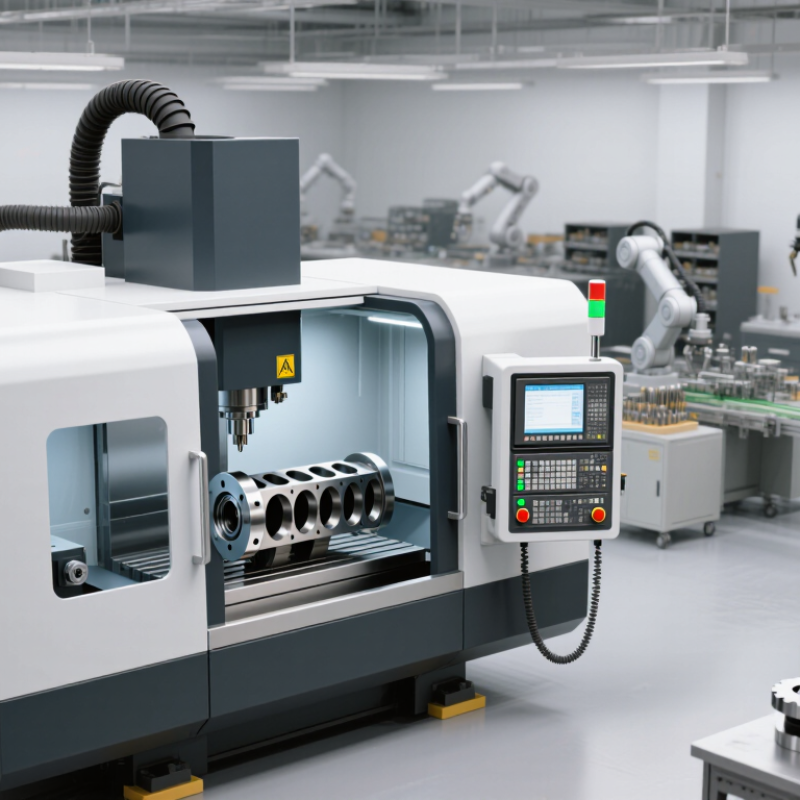
Define Your Machining Needs and Part Requirements
Before comparing machine specifications, list the parts the machine must actually produce. Record each part’s maximum dimensions, material, tightest tolerance, surface-finish target, and expected annual quantity. Include awkward features, too: a deep pocket or angled hole may determine whether the tool can reach without repositioning. Small details matter.
Separate current work from possible future work. A large table is not useful if most parts are small, while a high-speed spindle may be a poor fit for heavy cuts in steel. Note the workpiece weight, fixture height, tool length, and clearance around the rotary axes. Then estimate setup frequency and batch size. Five-axis machining can reduce repositioning, but complex fixturing and programming still take time. A common planning mistake is to assume every part will benefit equally.
Staffing belongs in the requirements list. Deloitte and The Manufacturing Institute’s 2024 study estimates that U.S. manufacturing may need 3.8 million workers by 2033, with up to 1.9 million jobs at risk of going unfilled. That makes controls, training time, and setup repeatability practical selection criteria, not minor conveniences. Ask suppliers to demonstrate a representative part, using your material, tolerance, and fixture concept. Check the finished part and cycle details—not just the machine’s headline accuracy. I would still leave room for revision; early estimates are often optimistic.
10 Tips for Choosing a 5 Axis CNC Milling Machine - Define Your Machining Needs and Part Requirements
| Tip | What to Define | Why It Matters | Practical Check |
|---|---|---|---|
| 1. List the parts you plan to machine | Record part dimensions, weight, material, features, and expected production volume. | Machine capacity and configuration should match the actual part mix, not just the largest or most complex example. | Prepare representative drawings or CAD models for typical parts and the largest planned part. |
| 2. Define the required work envelope | Identify the maximum part size, fixture size, tool access needs, and clearance required during rotary motion. | Usable capacity can be smaller than the machine’s advertised axis travel once the table, fixture, tool, and part are accounted for. | Ask for a collision or reachability review using the actual part and fixture assembly. |
| 3. Decide between 3+2 and simultaneous machining | Determine whether the work can be completed at fixed tool orientations or requires coordinated movement of all five axes. | 3+2 machining indexes the rotary axes and then cuts with the linear axes; simultaneous five-axis machining coordinates all axes during the cut. | Review toolpaths for undercuts, continuously changing tool orientation, and complex blended surfaces. |
| 4. Match the machine to your materials | Specify the materials and grades to be cut, such as aluminum, steel, stainless steel, titanium, or engineering plastics. | Material affects cutting forces, heat, chip control, spindle requirements, tooling, and the need for coolant or chip-management systems. | Use planned cutting conditions and representative tools to assess spindle power, torque, speed range, and coolant needs. |
| 5. Set realistic accuracy and finish targets | Define critical tolerances, geometric requirements, surface-finish targets, and inspection methods. | Achievable results depend on the machine, workholding, tools, thermal conditions, programming, and measurement process—not the machine alone. | Request a test cut or capability evaluation using a representative material, setup, and inspection plan. |
| 6. Evaluate rotary-axis capacity and access | Check rotary travel, table or trunnion capacity, allowable workpiece mass, and available tilt and rotation angles. | Rotary limits and fixture geometry determine which faces and features are reachable without repositioning the part. | Verify that the loaded fixture stays within the machine’s specified mass and moment limits throughout the planned motion. |
| 7. Check spindle and tool-system requirements | Identify required tool interface, tool length, cutter diameter, spindle speed, torque, and the number of tools needed. | Long tools may be necessary for deep features but can increase deflection and collision risk; tool capacity affects unattended production. | Confirm that the tool magazine accommodates the planned tool set and that the spindle suits both roughing and finishing operations. |
| 8. Plan workholding and setup strategy | Define how parts will be located, clamped, supported, and accessed from multiple sides. | Five-axis machining can reduce repositioning, but poor fixture design can restrict tool access or allow vibration and movement. | Include clamps, vises, tombstones, or dedicated fixtures in the collision and clearance review. |
| 9. Confirm software and operator readiness | Assess CAM software, postprocessor support, simulation, machine kinematics, and staff experience with five-axis programming. | Accurate machine simulation and a properly validated postprocessor help reduce programming errors and collision risk. | Check that the software supports the machine configuration and that staff training is included in the implementation plan. |
| 10. Consider production and support needs | Estimate required output, shift pattern, automation needs, maintenance access, service response, and available floor space. | Cycle time and overall productivity depend on the complete process, including loading, probing, tool changes, chip removal, and downtime. | Compare the full installation requirements and planned workflow, not only the machine’s cutting specifications. |
Related Posts
-
How to Choose a CNC Vertical Machining Center in 2026
-
How to Optimize Your Workflow with a 5 Axis Milling Machine
-

10 Best Precision CNC Machining Techniques for High Quality Parts?
-

What is a Milling Machine and How Does it Work in Manufacturing Process
-

How to Choose the Best 5 Axis CNC Milling Machine for Your Needs?
-
Ultimate Guide to Best 5 Axis CNC Milling Machine Comparison for International Buyers