Menü öffnen Menü schließen

How to Choose a High Precision Machining Supplier

Choosing a high precision machining supplier is not just a price comparison. It is a decision about whether a shop can repeatedly hold tight tolerances, document its work, and communicate problems early. A turned stainless-steel sleeve may look simple, yet a small bore variation can affect assembly, sealing, or service life. Details matter.

Quality expert Joseph M. Juran described quality as “fitness for use.” That principle is useful when evaluating a machining partner: parts must meet the drawing and perform in their actual application. Ask how the supplier verifies critical dimensions, controls tool wear, and manages inspection records. Request sample reports, not just assurances. Look for calibrated equipment, clear process controls, and relevant experience with your material and tolerances. A polished website is not proof, and even a strong audit can miss a weak handoff between engineering and production.

This article outlines practical ways to assess a high precision machining supplier, from equipment and quality systems to communication, lead times, and total cost. Compare evidence against your own requirements. A supplier with impressive machines may still struggle with changing revisions or rushed orders. That can be easy to overlook. Where possible, review a representative part or run a controlled first article before committing to recurring production. The best choice is rarely the shop that promises everything; it is the one that explains its limits, shows its controls, and earns confidence through consistent results.

How to Choose a High Precision Machining Supplier

Define Your Part Requirements and Precision Targets

Before requesting quotes, turn the drawing into measurable acceptance criteria. Mark dimensions that affect fit, sealing, movement, or load, then assign realistic tolerances to each. A ±0.01 mm callout may be necessary on a bearing seat, but wasteful on a nonfunctional outside edge. Specify units, datum references, material condition, surface finish, and edge breaks. Small details matter.

Include inspection conditions, too.

A 20 mm bore measured with a shop-floor gauge can produce different results from a temperature-controlled CMM inspection. NIST’s Guide to the Expression of Uncertainty in Measurement explains why measurement uncertainty belongs in interpreting results. Ask suppliers how they will verify critical features, what equipment they use, and how often instruments are calibrated. Request sample inspection reports before production, not after a disputed shipment.

Set precision targets with function and process capability in view.

Ask for capability data on similar features and clarify whether it reflects a stable process or a one-time sample. ASQ’s quality-cost guidance places poor quality costs at roughly 15–20% of sales, a reminder that vague specifications can become expensive. That estimate is broad, not a prediction for your part. I still see drawings with tight tolerances everywhere; sometimes the designer has not checked whether assembly needs them. Review the print with the supplier and revise unclear requirements before tooling or machining begins.

Assess Equipment, Processes, and Engineering Expertise

When assessing a high precision machining supplier, look beyond machine counts. Ask whether the equipment can hold your part’s tolerances across its full size and material range. A five-axis machine may reduce repositioning, but only if its work envelope and fixturing suit the part. Request recent calibration records and maintenance schedules. Numbers need context. A capable supplier can explain how thermal drift, tool wear, and vibration are monitored during production. A polished equipment list alone does not prove consistent results.

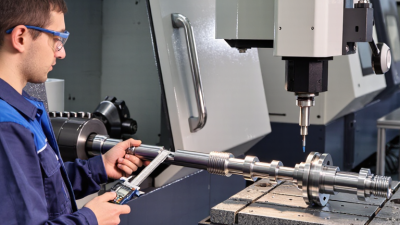
Examine the process from drawing review to final inspection. Ask how operators select datums, manage tool offsets, and verify critical dimensions. For a close-tolerance bore, for example, check whether inspection happens during machining or only after the part is finished. That matters. Look for documented setup instructions, inspection records, and clear handling of nonconforming parts. Engineering expertise shows in useful questions about material condition, surface finish, and functional fit. It also shows in practical design feedback, such as flagging a feature that is difficult to measure. Even experienced teams can overlook a detail; discuss how they record revisions and confirm the latest drawing is in use.

Verify Quality Controls and Relevant Certifications

A machining supplier’s quality system should be visible in everyday records, not just a certificate on a wall. Ask for evidence, not promises. Request a sample inspection report showing measured dimensions, tolerances, and the equipment used. Check whether gauges and coordinate measuring machines are calibrated on a documented schedule. For a close-tolerance bore, the report should identify the actual reading, not simply mark it “passed.”

Verify that each certification is current and covers the facility and processes handling your parts. ISO 9001 may indicate a structured quality system; specialized standards may matter in regulated industries. A certificate alone does not prove a specific component will meet your drawing. Ask how material lots are traced, how nonconforming parts are contained, and what corrective action follows a repeated defect. Small details matter. A practical review can include a recent audit finding or a first-article inspection record, with sensitive customer information removed. I still find traceability easy to overlook when comparing quotes, yet it can make a real difference when a measurement needs investigation.

Review Production Capacity, Communication, and Delivery

A high-precision machining supplier should explain how its available equipment matches your part, not just list machine models. Ask how many suitable machines are in regular use, what tolerances they routinely hold, and whether inspection capacity can keep pace with production. A sample inspection report, with measured features tied to your drawing, is more useful than a broad promise. Ask about backup capacity, too. Machines need maintenance.

Communication matters when a drawing changes or a measurement falls outside tolerance. Agree on one technical contact and define when you expect updates, such as after first-article inspection or before a production run. Share revision-controlled drawings and confirm that both teams are using the same version. Small details matter. A quick reply is helpful, but a clear reply that names the affected feature and proposed next step is better.

Delivery estimates should account for setup, material availability, inspection, and packaging—not machining time alone. Ask for a schedule with dated checkpoints, then compare it with the supplier’s recent performance on similar work. Clarify how delays will be reported and whether partial shipments are practical. No schedule is perfect; I would still ask what assumptions sit behind the promised date. That question can reveal risks early, while there is room to adjust.

Compare Quotes, Risk, and Long-Term Supplier Fit

How to Choose a High Precision Machining Supplier

Compare Quotes, Risk, and Long-Term Supplier Fit

A machining quote is more than a unit price. Compare what each supplier includes: material certification, first-article inspection, finishing, packaging, and delivery terms. Ask how tolerances are measured, not just whether they can be met. A clear inspection plan should name the gauge, sampling frequency, and record format. That detail matters. A lower quote may leave inspection or rework costs unclear, so request assumptions in writing before comparing totals.

Risk deserves equal weight. McKinsey’s 2020 survey of supply-chain executives found that 93% planned to make their supply chains more resilient. The survey covers supply chains broadly, not machining alone, but its lesson applies: check capacity, backup equipment, material sourcing, and communication when schedules slip. Ask for a sample inspection report and a realistic lead-time range. Then assess fit over repeated orders: response speed, corrective-action quality, and willingness to flag a drawing issue early. Price still matters. So does consistency. One imperfect signal is easy to overlook: a polished quote can hide vague process controls. Score suppliers against the same criteria, and revisit those scores after the first production run.

How to Choose a High Precision Machining Supplier

Compare Quotes, Risk, and Long-Term Supplier Fit

Suggested weighting framework, not an industry benchmark: prioritize quality systems and inspection capability, then compare total cost, technical fit, delivery performance, and supply risk. Adjust the weights to match your part complexity and project needs.