What Are Fixtures and Jigs Used For?
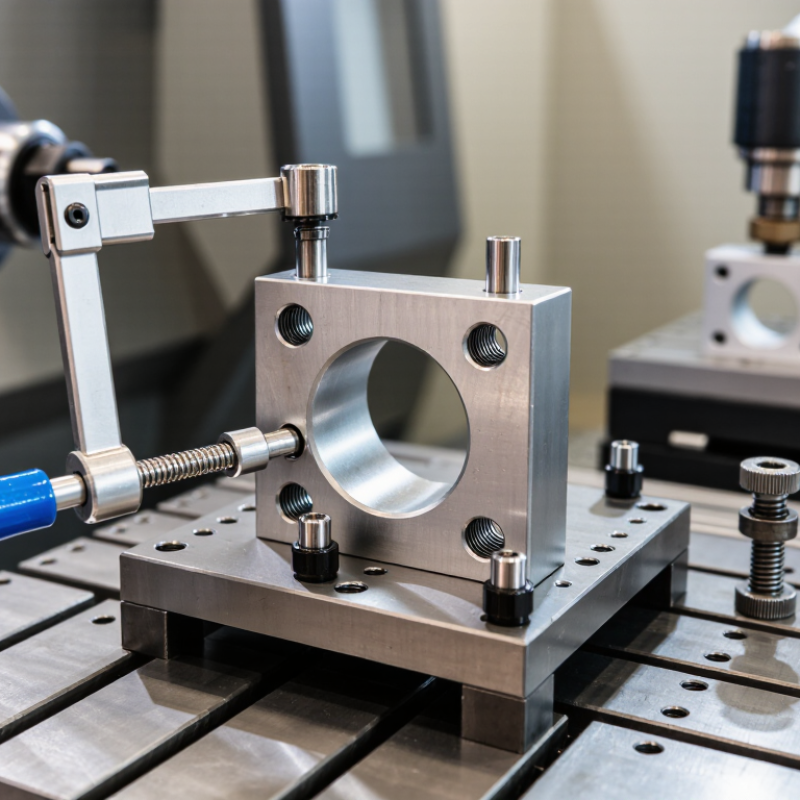
Fixtures Jigs are essential tools for controlling position, movement, and repeatability during manufacturing. A fixture holds a workpiece securely while an operation occurs. A jig also guides the cutting or drilling tool. Together, they help operators produce consistent parts with fewer alignment errors. Picture a steel bracket resting against hardened locating pins. Its holes remain aligned through hundreds of production cycles.
Industry research supports their continued importance. Deloitte’s 2024 Smart Manufacturing and Operations Survey identifies productivity, quality, and operational consistency as major manufacturing priorities. Fixtures Jigs directly support these goals by reducing setup variation and stabilizing manual or automated processes. The International Federation of Robotics also reports continuing growth in industrial robot installations worldwide. This growth increases demand for accurately designed workholding systems, especially where robots require repeatable loading positions.
Small details matter.
A well-designed fixture can shorten changeover time, protect delicate surfaces, and improve operator confidence. It may include clamps, locators, bushings, sensors, or quick-release mechanisms. Jigs are particularly valuable for repeated drilling, reaming, and assembly tasks. However, choosing them only by purchase price can create hidden costs. Poor access may slow loading. Excessive clamping force may deform thin material. That assumption deserves scrutiny.
Reports from the U.S. National Institute of Standards and Technology emphasize measurement reliability and process control in advanced manufacturing. These principles apply directly to fixture and jig design. Engineers should verify tolerance, ergonomics, maintenance access, and inspection requirements before production begins. The best solution is not always the most complex one. Sometimes, a simple adjustable fixture performs better, lasts longer, and teaches the team more about the process.
What Are Fixtures and Jigs?
What Are Fixtures and Jigs?
Fixtures and jigs are workshop tools that improve accuracy, repeatability, and operator safety during manufacturing. A fixture holds a workpiece in a fixed position while cutting, welding, drilling, or inspecting. A jig does more. It holds the part and guides the cutting tool, often through a bushing or shaped template.
For example, a drilling jig can position several holes on a metal plate. The operator places the plate against locating stops, clamps it, and drills through guide sleeves. This reduces measuring time and keeps hole spacing consistent. A milling fixture may use hardened supports to prevent vibration. In practical work, even a small shift can create poor alignment, surface damage, or rejected parts. Good design considers clamping force, tool access, chip removal, and part tolerances. A fixture can be strong but still inconvenient. That is an easy mistake to overlook.
Tips: Match the tool to the operation. Use jigs when tool guidance matters, and fixtures when stable positioning is the main need. Add clear reference surfaces and quick clamps for repeated work. Check the first finished part with suitable measuring equipment before continuing production. Keep contact points clean; one metal chip can change the height slightly. Do not assume a perfect drawing guarantees a perfect setup. Real operators need room for their hands, tools, and occasional adjustments. Feedback from the workshop often reveals weaknesses that calculations miss.
How Fixtures and Jigs Differ in Purpose and Design
In manufacturing, fixtures and jigs both make repetitive work more stable, but they solve different problems. A fixture primarily holds and locates a workpiece. It resists cutting forces, vibration, and movement during drilling, milling, welding, or inspection. Its design emphasizes rigid support, repeatable positioning, and quick loading. A machined nest, clamps, and locating pins may define the part’s exact relationship with the tool.
A jig also holds the workpiece, yet its main purpose is to guide the cutting tool. Drill bushings, guide plates, or hardened sleeves control where a hole begins and how it stays aligned. This reduces layout time and helps operators achieve consistent results. The distinction matters: a fixture supports the process, while a jig directs the tool. In practice, some devices perform both functions, so the boundary is not always clean.
Design choices should follow the operation, material, tolerance, and production volume. A fixture for thin sheet may need broad, gentle clamping surfaces. Excessive force can leave marks or cause distortion. A drilling jig may need replaceable guides because repeated tool contact causes wear. A common shop-floor problem appears when chips collect around the locator and slow loading. That detail is easy to miss. Effective equipment also needs access for cleaning, inspection, and safe adjustment. A clever design can still fail during real handling. Review the complete work sequence before approving it.
Key Components and Operating Principles
What Are Fixtures and Jigs Used For?
Key Components and Operating Principles
Fixtures and jigs improve accuracy, repeatability, and operator safety during manufacturing. A fixture holds a workpiece in a fixed position while a machine performs the operation. A jig does more. It also guides the cutting or drilling tool through a controlled path.
Their key components work as a locating system. A base supports the assembly, while locating pins establish the workpiece’s reference points. Stops control its edges and prevent unwanted movement. Clamps apply steady pressure without distorting the material. In drilling applications, guide bushings keep the tool aligned and reduce hole variation. Each component should be accessible for cleaning and inspection.
The operating principle is simple: locate, support, clamp, and process. The workpiece contacts fixed datums before clamping begins. This sequence prevents shifting and protects dimensional accuracy. Uneven clamping can still create errors. I have seen a thin plate bend because pressure was placed too close to one edge. The fixture looked strong, but its force path was poorly considered. Clearance also matters. Chips trapped under a locating pin can raise the part by a fraction of a millimeter, causing visible misalignment. Regular checks, test pieces, and measured tolerances reveal these small failures before they spread through production. Some designs become unnecessarily complex. A simpler fixture may load faster and remain more reliable.
What Are Fixtures and Jigs Used For?
Fixtures hold and position a workpiece during operations such as machining, welding, inspection, or assembly. Jigs perform the same positioning function while also guiding a cutting or drilling tool. This chart illustrates the standard 3-2-1 locating principle: three contact points on the primary plane constrain three degrees of freedom, two points on the secondary plane constrain two, and one point on the tertiary plane constrains the final degree of freedom.
Common Applications Across Manufacturing Processes
What Are Fixtures and Jigs Used For?
Fixtures and jigs support repeatable work across many manufacturing processes. A fixture holds the workpiece in a controlled position. A jig also guides the cutting tool, often through hardened bushings.
In drilling operations, a jig locates holes quickly and keeps spacing consistent. The operator loads the part, clamps it, and drills through guided openings. Milling fixtures secure irregular components against fixed datums, reducing movement under cutting forces. Turning fixtures can hold short, thin, or unusually shaped parts more safely than standard chucks. Small differences matter here.
Welding fixtures maintain joint locations while heat causes metal to expand and shift. They use stops, clamps, and relief areas for weld access. Assembly fixtures help workers position fasteners, seals, springs, or panels without repeated measurement. Inspection fixtures present parts at known reference points for gauges or coordinate measurement. This improves traceability, but it does not replace skilled inspection.
In real production, fixture performance depends on clean contact surfaces, correct clamping force, and regular checks. I have seen accurate designs fail because chips lifted a part by less than a millimeter. A fixture can also become too specialized after a product change. Engineers should review access, maintenance, operator safety, and tolerance requirements before approval. Some setups need adjustment. That is normal.
How to Select, Design, and Maintain Them
Fixtures and jigs hold workpieces in consistent positions during machining, drilling, welding, or inspection. A fixture usually supports and locates the part, while a jig also guides the cutting tool. Good selection starts with the process, material, tolerance, and production volume. For small batches, a simple adjustable fixture may reduce cost and setup time. High-volume work may need hardened locating points and quick clamping. Confirm the datum surfaces before choosing anything. A poor datum creates repeated errors.
Design should control movement without deforming the workpiece. Use three-point support where practical, then add locating pins and clamps based on the cutting forces. Keep chips away from contact areas. Provide clear access for tools, gauges, and cleaning brushes. A fixture that looked perfect on a drawing may block an operator’s hand in real use. Test it with an actual part, not only a model. That step can reveal awkward loading or excessive clamp pressure. Imperfections are useful when recorded and corrected.
Tips: Mark each locator and clamp. Check repeatability with several parts. Inspect wear points regularly, especially after heavy production. Remove chips before every setup. Lubricate moving components only when suitable for the process. Keep a maintenance log with dates, defects, adjustments, and replaced parts. If a part begins shifting, stop and investigate the locating system. Do not simply tighten the clamp. That can hide the real problem and damage the workpiece.