


Top 10 Single VSD Compressor Brands to Buy
Choosing a Single Vsd Compressor is not simply a matter of recognizing a famous logo. It requires practical judgment, verified performance data, and a clear understanding of plant demand. A compressor running beside a CNC line may face rapid load changes, while a food-processing facility may prioritize certified air quality and oil-free operation. These differences can change the best buying decision.
Compressed-air energy specialist Ron Marshall often emphasizes, “The cheapest energy is the energy you don’t use.” That principle guides this review of the Top 10 Single Vsd Compressor Brands to Buy. Variable speed drive technology can reduce unloaded running, stabilize pressure, and match output more closely with fluctuating demand. However, savings depend on correct sizing, control settings, leakage levels, and maintenance discipline. The machine alone cannot fix an inefficient system.
Each brand is considered through practical criteria. These include motor efficiency, specific power, pressure stability, controller usability, service coverage, warranty support, and total ownership cost. Real operating details matter. A clear display, accessible filters, and fast access to spare parts can save hours during a busy production shift.
No ranking is perfect. A respected brand may still be unsuitable for a dusty workshop or remote factory. Some published efficiency claims also depend on test conditions that differ from daily operation. Buyers should compare measured data, not marketing language alone. This guide offers a reliable starting point, but site measurements should shape the final choice.
What Is a Single VSD Compressor and How Does It Work?
Top 10 Single VSD Compressor Brands to Buy
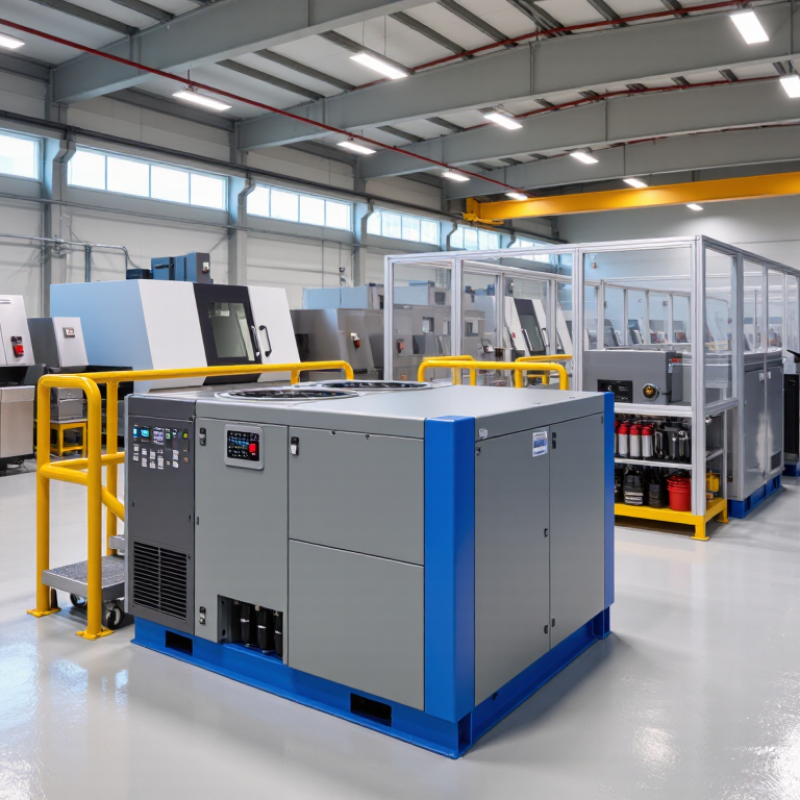
A single VSD compressor uses one variable-speed drive to control its motor. It does not run at one fixed speed all day. Instead, a pressure sensor measures system demand and sends feedback to the drive. The motor then speeds up or slows down. This response helps match air production with real consumption. At a workshop, you may hear the motor quietly rise during tool use, then soften when demand falls. The system also reduces unloaded running, where a fixed-speed compressor may consume energy without producing useful air.
The U.S. Department of Energy’s Improving Compressed Air System Performance sourcebook reports that compressed air can consume 10–30% of a plant’s electricity. The IEA estimates motor-driven systems use about 53% of global electricity. These figures explain why control strategy matters. However, a VSD is not automatically efficient. Poor piping, leaks, incorrect pressure settings, and low demand can weaken its benefits. Real performance depends on the entire air system. That point is easy to miss.
Tips: Check the compressor’s turndown range, minimum stable speed, motor efficiency, and service data. Measure pressure and flow before buying. A pressure logger can reveal demand swings more clearly than guesswork. VSD units may also create harmonics and heat, so electrical checks are worthwhile. Do not size the compressor only for the largest occasional load. That choice often leaves the machine operating inefficiently.
Top 10 Single VSD Compressor Brands to Buy - What Is a Single VSD Compressor and How Does It Work?
| Rank | Compressor Technology | Typical Working Pressure | Typical Motor Range | Approximate VSD Operating Range | How the VSD System Works | Main Advantages | Best-Fit Applications | Important Buying Considerations |
|---|---|---|---|---|---|---|---|---|
| 1 | Oil-Injected Rotary Screw | 7–13 bar(g) | 5.5–315 kW | Approximately 25–100% | Motor speed changes the screw-element speed, matching air output to system demand while an inlet valve manages low-load operation. | Continuous-duty capability, stable pressure, strong part-load efficiency, and broad industrial availability. | Factories, workshops, automotive plants, food packaging, and general manufacturing. | Check oil separation quality, cooling capacity, service access, minimum speed, and guaranteed specific power. |
| 2 | Oil-Free Rotary Screw | 7–10 bar(g) | 15–355 kW | Approximately 30–100% | The VSD varies the speed of the dry screw elements; specially designed coatings and clearances allow compression without lubricant in the compression chamber. | Oil-free air delivery, suitable for sensitive processes, and good control for changing demand. | Pharmaceutical, electronics, medical, food, beverage, and clean manufacturing processes. | Confirm the required air-quality class, cooling method, sound level, and life-cycle maintenance cost. |
| 3 | Variable-Speed Scroll | 7–10 bar(g) | 2.2–30 kW | Approximately 20–100% | The VSD changes scroll orbiting speed, allowing the compressor to follow relatively small and fluctuating air-demand changes. | Low vibration, compact size, quiet operation, and low routine maintenance. | Dental clinics, laboratories, small workshops, and point-of-use clean-air systems. | Verify duty cycle, ambient temperature limits, condensate management, and the cost of replacing scroll components. |
| 4 | Variable-Speed Reciprocating Piston | 7–30 bar(g) | 1.5–75 kW | Approximately 25–100% | The VSD changes crankshaft speed and piston cycling frequency; unloading or control valves may further reduce output at light demand. | High pressure capability, flexible sizing, and suitability for intermittent operation. | Small plants, service garages, workshops, and applications requiring higher-than-standard pressure. | Consider pulsation, noise, cooling, start-stop frequency, receiver capacity, and piston-ring maintenance. |
| 5 | Variable-Speed Rotary Vane | 4–10 bar(g) | 1.5–75 kW | Approximately 30–100% | The VSD changes rotor speed, while sliding vanes maintain compression as the air requirement changes. | Simple construction, compact footprint, smooth airflow, and good suitability for moderate-duty applications. | Small and medium workshops, packaging equipment, and decentralized compressed-air systems. | Review vane life, lubrication requirements, inlet filtration, operating temperature, and continuous-duty limits. |
| 6 | Variable-Speed Centrifugal | 4–13 bar(g) | 75–1,000 kW | Approximately 60–100% | The VSD adjusts impeller speed to change mass flow and pressure; inlet guide vanes or blow-off controls may support stable operation. | High flow capacity, oil-free compression, low vibration, and efficient operation near design load. | Large process plants, utilities, chemical facilities, and high-volume manufacturing. | Check surge-control requirements, turndown range, cooling-water or air requirements, and minimum stable flow. |
| 7 | Oil-Free Tooth Compressor | 4–10 bar(g) | 15–160 kW | Approximately 30–100% | The VSD varies the speed of intermeshing tooth-shaped rotors; timing gears keep the rotors synchronized without contact. | Oil-free compression chamber, relatively low operating temperature, and efficient operation for variable demand. | Clean production, packaging, textiles, printing, and general industrial air systems. | Confirm pressure capability, air-quality certification, cooling requirements, and inlet-filter service intervals. |
| 8 | Dry Claw Compressor | 4–8 bar(g) | 2.2–110 kW | Approximately 30–100% | The VSD changes the speed of non-contact claw rotors, adjusting delivered airflow without oil in the compression chamber. | Oil-free operation, durable design, low maintenance inside the compression chamber, and reliable intermittent service. | Material handling, pneumatic conveying, packaging, and clean industrial processes. | Evaluate pressure ratio, acoustic enclosure, cooling airflow, filtration, and performance at low load. |
| 9 | Variable-Speed High-Pressure Piston | 20–350 bar(g) | 5–500 kW | Approximately 50–100% | The VSD varies piston speed, while staged cylinders progressively raise pressure; control logic protects against excessive discharge temperature. | Very high pressure capability and suitability for gas compression or high-pressure air storage. | PET blowing, gas boosting, high-pressure testing, and specialized process equipment. | Check gas compatibility, pressure-vessel regulations, pulsation control, cooling, and safety instrumentation. |
| 10 | Variable-Speed Low-Pressure Screw Blower | 0.3–2.5 bar(g) | 7.5–250 kW | Approximately 40–100% | The VSD adjusts screw speed to regulate airflow and discharge pressure, typically using a pressure or flow feedback signal. | Efficient low-pressure air supply, stable airflow, and lower energy use than throttled fixed-speed operation in variable-demand systems. | Wastewater aeration, pneumatic conveying, aquaculture, and combustion-air systems. | Compare delivered airflow, pressure stability, sound level, cooling method, and efficiency at the actual operating point. |