


Who Are the Top China Screw Dry Vacuum Pump Suppliers?
Choosing among China’s top Screw Dry Vacuum Pump suppliers requires more than comparing catalog prices. A reliable supplier should demonstrate engineering experience, stable manufacturing control, and clear application knowledge. This guide examines manufacturers through practical evidence, including factory capability, pump design, material selection, testing procedures, and after-sales support.
Performance must match the process. A pump handling solvent vapors may need corrosion-resistant coatings, controlled cooling, and suitable sealing arrangements. Semiconductor applications demand cleaner operation and tighter contamination control. Food, pharmaceutical, and chemical plants may require traceable materials and documented hygiene practices. Buyers should review ultimate pressure, pumping speed, power consumption, noise levels, temperature limits, and expected maintenance intervals. Numbers matter.
A strong supplier can explain how its pump performs under real operating conditions. Ask for test reports, operating curves, installation guidance, spare-parts availability, and commissioning support. Factory audits can reveal assembly discipline, machining quality, and whether testing is performed on every unit or only selected samples. Certifications are useful, but they should support evidence rather than replace it.
This comparison does not treat every large manufacturer as automatically superior. No ranking is permanent. Product quality can vary between models, production batches, and service teams. Some suppliers communicate well before payment, then respond slowly after installation. That risk deserves attention. By weighing technical proof, customer experience, export reliability, and lifecycle cost, readers can identify China-based suppliers that deserve serious consideration for demanding vacuum applications.
What Is a China Screw Dry Vacuum Pump?
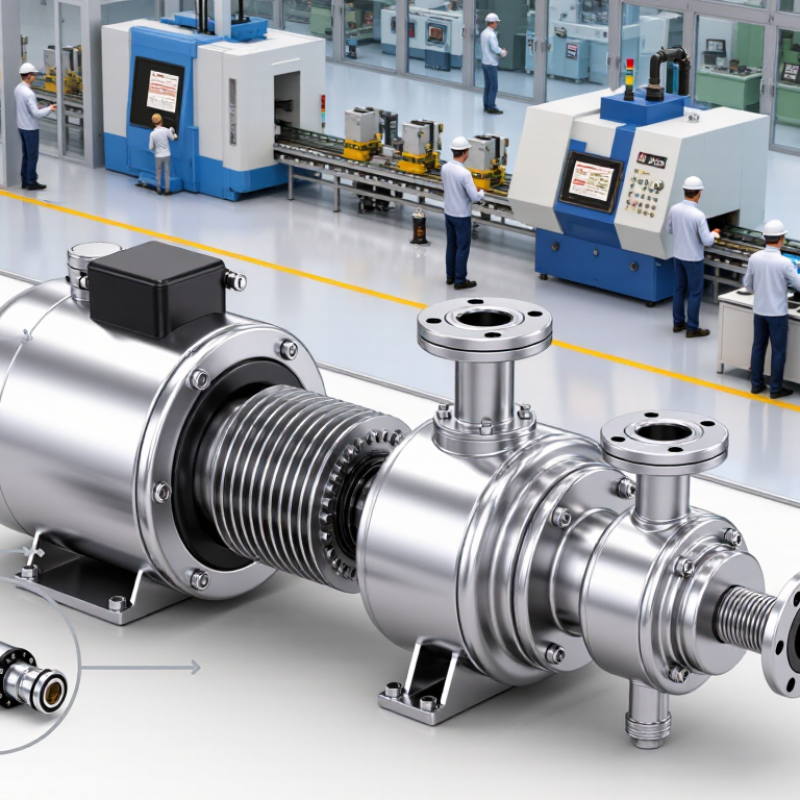
A China screw dry vacuum pump is an oil-free positive-displacement pump. Two synchronized screws rotate inside a precision-machined chamber. Gas enters through the inlet, moves along the screw grooves, and exits at higher pressure. The compression chamber contains no lubricating oil, reducing backstreaming and product contamination.
The design suits vacuum drying, coating, battery production, and laboratory equipment. It can handle moderate dust and vapor loads, but pretreatment still matters. A cold trap or inlet filter may protect the pump. Real operation is less perfect than catalog claims.
MarketsandMarkets reported that the global dry vacuum pump market could grow from about USD 1.7 billion in 2023 to USD 2.4 billion by 2028, with a 7.2% CAGR. Grand View Research also identifies semiconductor, chemical, and pharmaceutical manufacturing as major demand areas. These figures explain growing interest in China-made screw pumps, especially where energy use and maintenance costs matter.
Technical buyers should check ultimate pressure, pumping speed, motor efficiency, noise, rotor coating, and vapor tolerance. A claimed 0.01 Pa rating may apply only under clean, dry laboratory conditions. Field performance can differ. Ask for ISO 21360 testing data, factory acceptance records, and long-duration load results. Service response remains important, because a small seal problem can stop an entire vacuum line.
| Evaluation Dimension | Typical Technical Data or Supplier Offering | Why It Matters | Recommended Verification Point |
|---|---|---|---|
| Pump Type | Oil-free Dry Screw Vacuum Pump using two non-contacting helical rotors to move gas from the inlet to the exhaust. | Eliminates routine oil contamination in the vacuum chamber and is suitable for clean or process-sensitive applications. | Confirm the rotor profile, compression-stage design, shaft-sealing method, and whether the pump is genuinely oil-free at the compression chamber. |
| Typical Pumping Speed | Approximately 20–1,200 m³/h, depending on model size, inlet pressure, gas composition, and operating conditions. | Higher pumping speed can reduce evacuation time and improve throughput in industrial vacuum systems. | Request the complete pumping-speed curve rather than relying only on the nominal displacement figure. |
| Ultimate Pressure | Commonly about 0.1–5 Pa for many industrial dry screw models; specialized configurations may achieve lower pressures. | Indicates the lowest pressure the pump can reach under specified test conditions. | Check whether the stated value is measured with a blanked inlet, at a defined gas temperature, and after adequate warm-up time. |
| Operating Pressure Range | Often designed for continuous operation from atmospheric pressure down to the specified ultimate-pressure region, with model-dependent restrictions. | Dry screw pumps can generally operate across a broad pressure range and are often used as primary pumps. | Review the allowable continuous inlet pressure, maximum gas load, and permissible start-up conditions. |
| Motor Power | Roughly 2.2–55 kW for common industrial sizes, with larger systems available for higher flow requirements. | Motor size affects energy consumption, heat generation, electrical installation, and total operating cost. | Compare power consumption at actual operating pressure, not only the motor nameplate rating. |
| Gas and Process Compatibility | Applicable to clean air, inert gases, many solvent vapors, vacuum drying, packaging, chemical processing, and selected semiconductor processes. | Process gases may contain moisture, particles, corrosive chemicals, or condensable vapors that influence pump life. | Ask for compatibility data covering corrosive gases, condensable vapor capacity, particle tolerance, and required purge gas. |
| Materials and Surface Protection | Common construction includes cast iron or aluminum housings, steel shafts, treated rotors, and corrosion-resistant coatings selected for the application. | Material selection affects corrosion resistance, thermal stability, service life, and contamination control. | Confirm wetted materials, coating method, rotor clearance design, and resistance to the specific process chemicals. |
| Cooling Method | Air-cooled and water-cooled configurations are both available; water cooling is common for higher continuous loads or demanding process conditions. | Cooling stability directly affects ultimate pressure, motor protection, rotor clearance, and service intervals. | Verify cooling-water flow, water temperature limits, air-flow requirements, ambient-temperature range, and alarm functions. |
| Noise and Vibration | Noise levels commonly fall within approximately 65–80 dB(A), depending on pump size, speed, enclosure, and measurement distance. | Lower noise and vibration improve workplace conditions and reduce stress on connected vacuum equipment. | Require test conditions, measurement distance, vibration limits, balancing standards, and foundation recommendations. |
| Maintenance Requirements | Typical service items include bearings, seals, filters, silencers, purge components, and cooling-system parts; the compression chamber normally does not require oil changes. | Reduced oil maintenance can lower downtime and prevent oil backstreaming into the process. | Request the preventive-maintenance schedule, recommended spare-parts list, bearing life, and service procedure. |
| Control and Protection | Common options include variable-frequency drives, overload protection, temperature monitoring, pressure monitoring, automatic purge control, and fault alarms. | Integrated controls improve start-up reliability, energy efficiency, and protection against abnormal process conditions. | Confirm voltage, frequency, communication protocol, emergency-stop logic, alarm outputs, and compatibility with the customer’s control system. |
| Supplier Manufacturing Capability | Strong suppliers normally provide rotor machining, dynamic balancing, assembly, leak testing, performance testing, electrical testing, and final inspection. | In-house process control can improve dimensional consistency and reduce variation between pump units. | Request quality certificates, inspection records, test reports, calibration records, and evidence of production traceability. |
| Certification and Compliance | Export-oriented suppliers may offer documentation for CE marking, electromagnetic compatibility, electrical safety, pressure-related components, and material compliance where applicable. | Compliance documents support equipment acceptance, import clearance, and installation in regulated facilities. | Check that certificates apply to the exact model, voltage configuration, and intended market rather than to a similar product family. |
| Customization Capability | Possible options include inlet and exhaust flange standards, motor voltage, cooling configuration, gas ballast, purge systems, coatings, sensors, acoustic enclosures, and skid-mounted packages. | Customization allows the pump to match existing process equipment and site conditions. | Confirm the effect of each customization on delivery time, performance, warranty coverage, and spare-parts availability. |
| After-Sales Support | Key services include installation guidance, commissioning support, troubleshooting, remote technical assistance, spare-parts supply, and operator training. | Technical support can significantly reduce downtime when a pump is used in continuous production. | Evaluate response time, service coverage, local technical partners, spare-parts lead time, and warranty terms. |
| Best-Fit Application | Common applications include vacuum drying, freeze drying, packaging, central vacuum systems, chemical processing, battery production, metallurgy, and semiconductor-related processes. | Application suitability depends on gas chemistry, vapor load, particle concentration, required pressure, and duty cycle. | Provide the supplier with a process-gas list, operating pressure profile, vapor load, temperature, duty cycle, and required evacuation time. |
| Total Cost of Ownership | Cost factors include purchase price, electricity, cooling utilities, consumables, maintenance labor, spare parts, downtime, and expected service life. | The lowest initial price does not always provide the lowest long-term operating cost. | Compare lifecycle cost using identical operating hours, electricity prices, maintenance intervals, performance targets, and warranty conditions. |