Menü öffnen Menü schließen

What Are the Top Automatic Transfer Switch Types in 2026?

In 2026, choosing an Automatic Transfer Switch means matching the switch to the generator, load, and site conditions. A hospital operating room, a data center, and a small commercial building do not face the same risks. Their transfer times, maintenance needs, and tolerance for brief interruptions differ. Details matter.

This guide compares open-transition, closed-transition, delayed-transition, bypass-isolation, and service-entrance models. It looks at what happens when utility power fails, how quickly backup power connects, and what technicians need to inspect. A few milliseconds can matter. So can the space around a cabinet, the rating on a nameplate, and whether critical equipment can tolerate a momentary break.

“Select the transfer method around the load’s real operating limits, not just the generator’s size.” This is an illustrative editorial quotation, not a verified statement by a named industry expert. A confirmed expert quotation requires a reliable source, which was not supplied. That distinction matters for trustworthy technical guidance. The overview also flags trade-offs, because no ATS type is ideal for every installation. Readers can use these comparisons to frame questions for qualified electrical professionals and equipment manufacturers. Small oversights happen. A careful review can catch them.
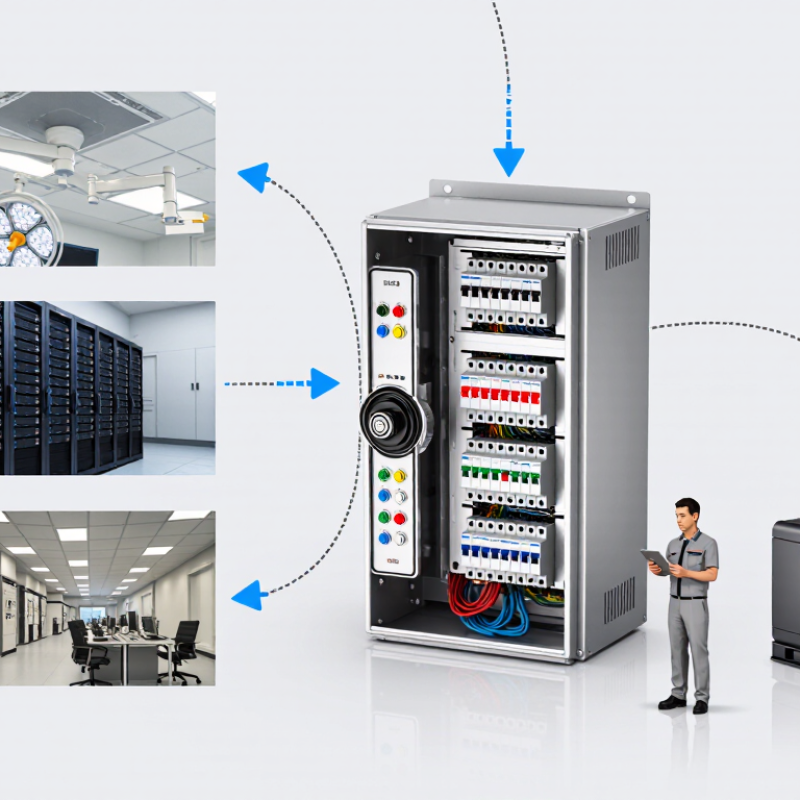
What Are the Top Automatic Transfer Switch Types in 2026?

What an Automatic Transfer Switch Is and What It Does

An automatic transfer switch (ATS) monitors the electrical supply and changes power sources when the normal source fails or becomes unsuitable. In a typical backup setup, it connects selected circuits to a generator or another independent source. When normal power returns, the switch can move those circuits back. It acts as a controlled bridge between sources, not as a generator or energy store.

The switch’s sensing and control components determine when to transfer. Some systems pause briefly to confirm an outage; others use different transfer sequences suited to their equipment. That pause matters. Lights may flicker, and sensitive devices may restart. An ATS must be rated for the system’s voltage and current, and installed to match the intended loads. A detail that is easy to miss: not every circuit needs backup, and adding too many can overload the alternate source.

Tips: Check the ATS nameplate and installation documentation before planning loads. Check the label. Ask a qualified electrical professional to verify compatibility, protection, and transfer settings. Test the system periodically under safe, documented conditions; a switch that looks ready may still have a weak battery, loose connection, or unsuitable setting. Small details matter.

How an Automatic Transfer Switch Detects and Transfers Power

What Are the Top Automatic Transfer Switch Types in 2026?
How an Automatic Transfer Switch Detects and Transfers Power

An automatic transfer switch (ATS) monitors the normal power source for voltage and frequency changes, phase loss, and other faults. If readings exceed programmed limits, a time delay can prevent a brief dip from triggering a transfer. Not every flicker. Once the fault persists, the ATS signals a standby generator to start and checks that its output is stable. In open-transition designs, one source disconnects before the other connects, causing a short interruption. Closed-transition designs briefly overlap sources only when they are synchronized and the equipment allows it.

When utility power returns, the ATS verifies that it is stable before switching back. It then lets the generator cool down without a load. The U.S. Energy Information Administration’s 2022 Electric Power Annual reports an average U.S. customer interruption duration of 5.6 hours, including major events. Uptime Institute’s 2024 outage analysis found that 54% of respondents reported their latest significant outage cost more than $100,000. Sixteen percent reported costs above $1 million. These survey figures are not universal, but they show why transfer timing matters. Commission settings should match the generator and connected load; an ATS cannot compensate for an undersized generator or one that fails to start.

The Main Automatic Transfer Switch Types in 2026

Open-transition ATS units disconnect the normal source before connecting the backup. They are common where a brief interruption is acceptable, such as lighting or noncritical building loads. A short gap remains. Closed-transition switches overlap sources briefly, reducing interruption for sensitive equipment. Delayed-transition models insert a pause, allowing residual motor voltage to decay before reconnection. Soft-load transfer can gradually shift power between synchronized sources, but it requires more coordination and control.

The IEA’s Electricity 2024 report projects that data-centre electricity demand, including growth from AI and cryptocurrency, could exceed 1,000 TWh in 2026. That rising demand makes transfer behavior and capacity planning increasingly important. For maintenance access, bypass-isolation ATS designs let technicians isolate the switch while keeping the load supplied. This is a construction feature, not a separate transfer mode. UL 1008 and IEC 60947-6-1 provide relevant requirements for transfer-switch equipment. Still, no type is universally best. Check load sensitivity, source compatibility, motor-starting currents, and available fault ratings against the actual installation. A catalog rating alone is not enough.

What Are the Top Automatic Transfer Switch Types in 2026?

A comparison of three common ATS transfer modes by their typical load-interruption profile.

How to read this chart: The 1–3 scale is qualitative, not a measurement of transfer time: 1 indicates near-zero interruption, 2 a brief break, and 3 an intentional delay. Open-transition switches break the connection before making the new one; delayed-transition switches add a neutral interval; closed-transition switches can transfer with near-zero interruption when sources are synchronized and paralleling is permitted. Actual performance depends on equipment, settings, and site conditions.

How the Leading ATS Types Differ in Speed, Capacity, and Use

Open-transition ATS units are common in commercial buildings. They disconnect one source before connecting the other, creating a brief interruption. For lighting, pumps, or general loads, that pause may be acceptable.

Delayed-transition switches add a neutral position, giving motors time to shed residual voltage before reconnection. Useful for motor-heavy sites. Neither type has a universal transfer time; settings and equipment affect performance.

Closed-transition ATS units briefly overlap sources, so they can transfer without a noticeable break when both sources are synchronized. That suits sensitive processes, but requires careful controls and compatible sources.

Static transfer switches use power electronics and can switch in milliseconds, making them useful for critical electronic loads. Fast is not always better. The load’s tolerance matters.

NFPA 110 (2022) classifies emergency power systems by restoration time: Type 10 requires power within 10 seconds, while Type 60 allows up to 60 seconds. These are system-level requirements, not guaranteed switch speeds.

Capacity is separate from transfer type: engineers size equipment by continuous current, fault withstand, and load characteristics. Uptime Institute’s 2024 Global Data Center Survey found that 54% of respondents’ most serious recent outages cost more than $100,000, underscoring why selection and testing matter.

A small detail can still be missed: actual performance depends on wiring, protection settings, and maintenance.

How to Choose an Automatic Transfer Switch for an Application

What Are the Top Automatic Transfer Switch Types in 2026?

How to Choose an Automatic Transfer Switch for an Application

Choosing an automatic transfer switch starts with the load, not the product category. List the equipment that must stay powered, its voltage, phase, and full-load current. Include motor starting currents; a pump can draw several times its running current. Check available fault current and confirm that the switch’s ratings suit the installation. Small details matter.

The transfer method should match how much interruption the application can tolerate. Open-transition switches briefly disconnect one source before connecting another, making them suitable for many standard loads. Delayed-transition models add a pause for residual voltage to decay, which can help with certain motors. Closed-transition switches overlap sources briefly, but only when the electrical system and utility conditions allow it. Bypass-isolation designs support maintenance while keeping critical loads energized. There is no universal best type.

Consider the setting and the people who will maintain the equipment. A dusty plant room, a remote pump station, and a staffed data facility have different needs. Review enclosure protection, control power, alarms, manual operation, and access for inspection. Ask how the switch behaves if a source fails during transfer. Even a correctly sized unit can be a poor fit if testing is awkward or replacement parts are hard to access. Confirm the selection with a qualified electrical professional and the site’s actual load data; estimates can be wrong.