


Top 10 Filter Materials Lamination Machines for Buyers
Demand for advanced filtration is reshaping equipment decisions. Grand View Research valued the global nonwoven fabric market at approximately USD 53.56 billion in 2022. Its 2023–2030 outlook projects continued expansion, supported by healthcare, automotive, and environmental applications. Smithers’ “The Future of Nonwovens to 2028” also highlights filtration as a major growth area.
That growth makes the Filter Materials Lamination Machine more than a production purchase. It becomes a quality-control decision. Buyers must compare coating uniformity, web tension, thermal stability, adhesive control, and cleaning access. A machine may run quickly, yet waste material through wrinkles, edge trim, or uneven bonding. Small defects can appear clearly under a bright inspection lamp.
Dr. Behnam Pourdeyhimi, a leading nonwovens researcher and former executive director of The Nonwovens Institute, has described nonwovens as “engineered materials designed for a purpose.” That principle matters here. A laminated filter must balance filtration efficiency, airflow resistance, strength, and durability. No single machine wins every application.
This Top 10 comparison considers real purchasing conditions, including polypropylene, polyester, meltblown, spunbond, and membrane-based structures. It also examines production scale, energy use, automation, maintenance, and technical support. These points reflect practical evaluation criteria, not marketing claims alone.
The ranking is not absolute. A compact machine may suit a specialist converter better than a faster line. Reported specifications can also change between models and regions. Buyers should verify trial results, warranty terms, and certification requirements before signing. That step is easy to skip. It should not be.
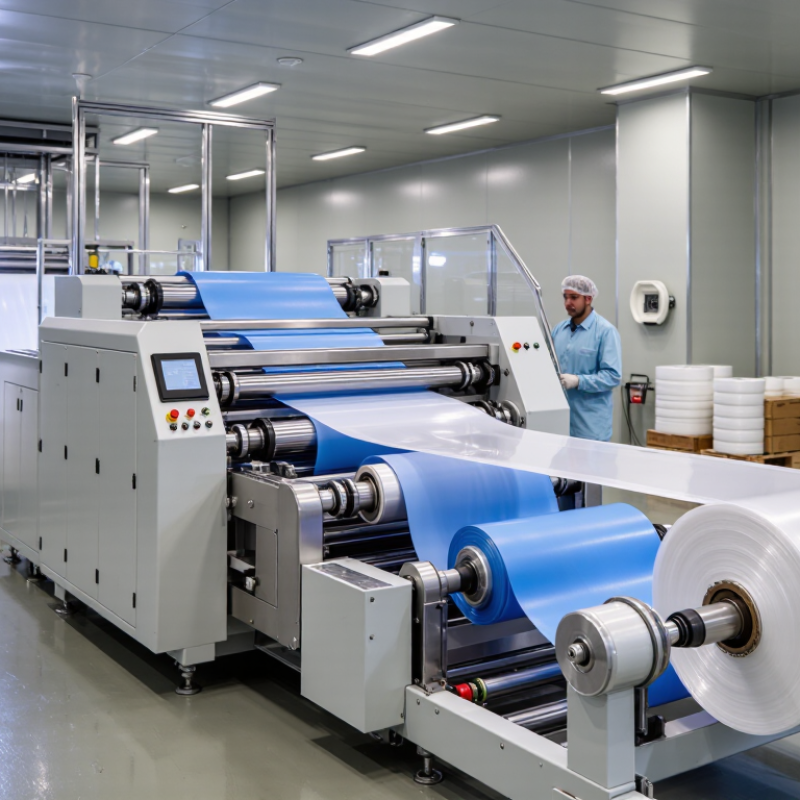
Define Filter-Lamination Materials: Media, Adhesives, and Bonding Targets
Filter-lamination buyers should define the material stack before comparing machines. Filter media may include meltblown polypropylene, spunbond polyester, fiberglass, cellulose, or expanded PTFE. Each material has different heat tolerance, porosity, stiffness, and surface energy. According to Grand View Research’s 2024 filtration market analysis, demand is growing across air, liquid, and industrial filtration applications. That growth increases pressure for stable, repeatable bonding.
Adhesives create another decision point. Hot-melt webs, powder adhesives, polyurethane, and acrylic systems behave differently under heat and pressure. A machine suitable for polypropylene may damage sensitive membrane media. Bonding targets can include media-to-media, media-to-support mesh, or media-to-frame assemblies. Buyers should check coating weight, activation temperature, line speed, nip pressure, and cooling time. Smithers’ 2024 nonwovens outlook highlights lightweight structures and functional surface treatments as continuing development areas. Still, reports often simplify factory conditions. Real production can be less predictable.
Tips: Request trials using the exact media, adhesive, and backing layer. Measure peel strength after conditioning, not only immediately after lamination. Inspect the web under backlight for blocked pores, wrinkles, and uneven adhesive distribution. A small pilot run may reveal more than a polished specification sheet. Do not ignore operator access, roll-change time, or cleaning requirements. These details quietly affect output.
| Rank | Machine Configuration | Typical Filter Media | Common Adhesives or Bonding Materials | Primary Bonding Target | Typical Process | Indicative Working Range | Typical Filter Applications | Key Buyer Considerations |
|---|---|---|---|---|---|---|---|---|
| 1 | Hot-Melt Web and Film Laminator | Nonwoven PP PET spunbond Glass fiber | EVA hot-melt film Polyamide hot-melt film Reactive polyurethane film | Filter media to support layer, scrim, foam, or protective facing | Heated nip lamination with pressure-controlled rollers | Web width: approximately 300–2,000 mm Line speed: approximately 5–60 m/min Bonding temperature: commonly 80–180°C, depending on adhesive | HVAC panels, cabin-air filters, prefilters, industrial dust filters | Check adhesive coat weight, open time, thermal damage risk, and release-liner handling. |
| 2 | Hot-Melt Spray Lamination Line | Meltblown PP Spunbond PP Synthetic fiber media | EVA hot-melt APAO hot-melt Pressure-sensitive hot-melt | Distributed adhesive layer between porous filter webs | Slot, spiral, or fiberized spray application followed by nip bonding | Web width: approximately 400–2,400 mm Line speed: approximately 10–120 m/min Adhesive add-on: often controlled in the low-to-medium g/m² range | Air-filtration rolls, surgical-mask media assemblies, disposable filter composites | Evaluate spray uniformity, overspray control, adhesive viscosity, and media pressure drop. |
| 3 | Ultrasonic Filter-Media Laminator | PP nonwoven PET nonwoven Composite laminates | No added adhesive in many designs Thermoplastic bonding layer when required | Thermoplastic media-to-media or media-to-frame contact points | High-frequency mechanical vibration creates localized melt bonds | Frequency: commonly around 20–35 kHz Bond width: generally localized rather than full-area Suitable for intermittent or continuous web bonding | Face masks, compact air filters, edge sealing, separator attachment | Best for thermoplastic components; control horn pressure, amplitude, energy, and dwell time. |
| 4 | Thermal Calender Laminator | Thermoplastic nonwoven Bicomponent fiber web Polyester media | No separate adhesive when fibers are thermally bondable Low-melt powder or web may be added if necessary | Fiber-to-fiber consolidation or media-to-carrier bonding | Heated engraved or smooth rollers apply heat and pressure | Web width: approximately 500–3,200 mm Line speed: approximately 10–150 m/min Temperature: commonly 90–220°C | Prefilters, automotive intake media, protective layers, dust-collection media | Consider basis weight, embossing pattern, porosity retention, nip pressure, and roller temperature. |
| 5 | Pleat-Creasing and Hot-Melt Bead Lamination Machine | Synthetic meltblown Glass-fiber paper Cellulose filter paper | EVA or polyolefin hot-melt beads Polyurethane hot-melt for selected applications | Pleat separators, support mesh, or adjacent pleat surfaces | Pleating followed by controlled adhesive-bead dispensing and setting | Pleat height: commonly 10–80 mm Adhesive bead diameter: often approximately 0.5–3 mm Output depends on pleat pitch and filter length | Panel filters, cartridge filters, automotive air filters, HEPA-style modules | Verify bead placement, separator spacing, pleat stability, and adhesive compatibility with the media. |
| 6 | Membrane-to-Support Lamination Machine | PTFE membrane PES membrane PVDF membrane Polypropylene support | Acrylic pressure-sensitive adhesive Polyurethane adhesive Thermoplastic adhesive film | Microporous membrane to nonwoven, mesh, or porous backing | Low-tension web handling with controlled nip pressure and optional heat | Web width: approximately 200–1,600 mm Line speed: approximately 1–40 m/min Low web tension is used to protect fragile membranes | Water-treatment cartridges, laboratory filtration, sterile vent filters, gas filtration | Prioritize pore protection, extractables, chemical resistance, dimensional stability, and cleanroom suitability. |
| 7 | Solvent-Based or Water-Based Adhesive Coating Laminator | Cellulose paper Glass fiber paper Polyester fabric | Water-based acrylic Solvent-based polyurethane Acrylic or rubber pressure-sensitive adhesive | Continuous adhesive film between filter media and carrier layers | Gravure, reverse-roll, knife-over-roll, or slot-die coating followed by drying | Coating width: approximately 300–2,000 mm Line speed: approximately 5–80 m/min Drying temperature depends on solvent or water removal requirements | Industrial liquid filters, composite air media, protective filter laminates | Assess drying capacity, VOC controls, residual moisture, adhesive migration, and coating-weight accuracy. |
| 8 | Impulse Heat-Sealing and Edge-Lamination Machine | PP nonwoven PE film Thermoplastic mesh | No added adhesive for compatible thermoplastics Heat-sealable coating or film where required | Perimeter seams, pockets, sleeves, and edge reinforcements | Heated sealing bars or impulse wires apply localized heat and pressure | Seal width: commonly 2–20 mm Cycle time: typically fractions of a second to several seconds Suitable for cut-sheet or assembled filter parts | Bag filters, dust bags, respirator components, disposable filter packs | Control seal temperature, pressure, dwell time, cooling, and seam peel strength. |
| 9 | Rotary Screen Adhesive Printing Laminator | Nonwoven media Filter paper Foam support Mesh | Hot-melt adhesive Water-based acrylic Reactive polyurethane adhesive | Patterned adhesive bonding between media and reinforcement layers | Rotary screen printing deposits dots, lines, or grid patterns before nip bonding | Pattern width: approximately 300–1,800 mm Line speed: approximately 5–60 m/min Pattern open area is adjusted to balance bond strength and airflow | Air filters, acoustic filter composites, separator-backed media | Compare pattern repeatability, adhesive penetration, open area, and pressure-drop impact. |
| 10 | Continuous RF or Dielectric Laminator | PVC-coated filter fabrics TPU films PU-coated textiles | Thermoplastic coating already present on the substrate TPU or PVC bonding film | Thermoplastic-coated fabric to film, seam, or reinforcement layer | Radio-frequency energy heats polar thermoplastic layers for localized bonding | Bonding frequency: commonly in the industrial RF range near 27 MHz Bond width: commonly 2–30 mm for seams or patterned areas Best suited to RF-responsive thermoplastics | Reusable industrial filter bags, coated technical textiles, liquid-filter housings and sleeves | Confirm dielectric compatibility, electrode design, field uniformity, safety shielding, and seam strength. |