Menü öffnen Menü schließen

Why Choose Stainless Steel Meat Hooks for Commercial Use?

Commercial meat rooms demand equipment that can handle repeated use, regular washing, and heavy loads. Stainless Steel Meat Hooks are valued for their strength, smooth surfaces, and resistance to rust when properly selected and maintained. They can help staff hang carcasses or cuts securely during processing, chilling, and storage. A hook that fits the rail and the product matters. So does its finish.

Stainless steel is not a single specification. Alloy grade, wire thickness, weld quality, and hook shape all affect performance. Buyers should check the maker’s stated load rating and confirm that the design suits their rail system and cleaning routine. Look closely at the bend, point, and welds. Small flaws matter. Smooth, intact surfaces are easier to inspect and clean, but no material replaces sound sanitation practices. After use, hooks should be cleaned, dried where appropriate, and checked for bending, cracks, or rough edges. This is easy to overlook during a rushed shift.

For commercial use, the best choice balances durability, handling, and upkeep. A heavier hook is not automatically safer or more practical; it may be awkward for staff or unsuitable for smaller cuts. Consider how often hooks are moved, how they are stored, and who inspects them. These details shape day-to-day performance more than a product label alone. Careful selection can reduce avoidable replacement and help keep workflows consistent, though actual results depend on use and maintenance.
Why Choose Stainless Steel Meat Hooks for Commercial Use?

What Stainless Steel Meat Hooks Are and How Commercial Operations Use Them

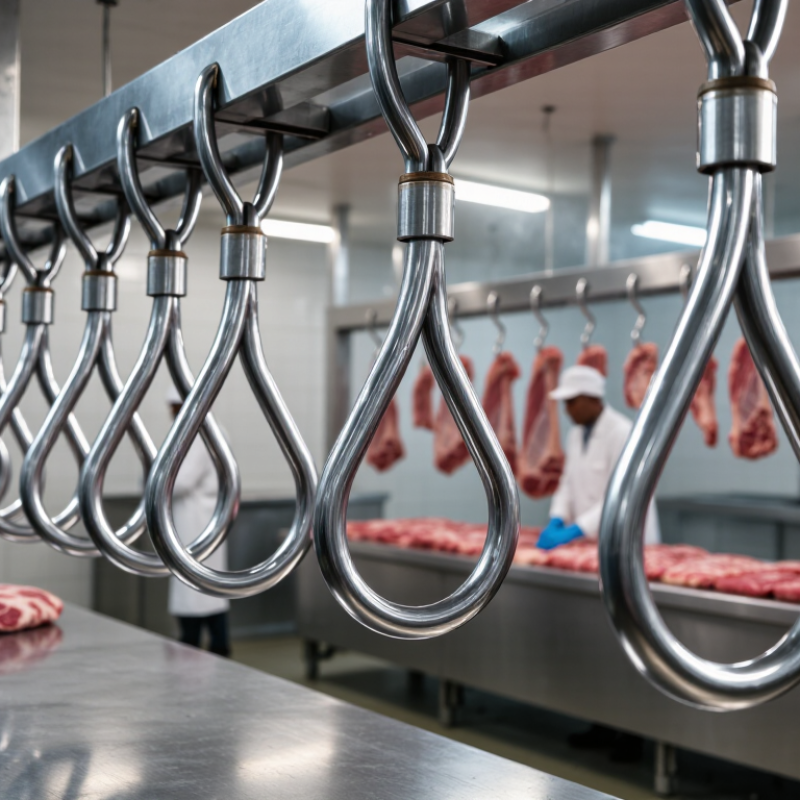
Stainless steel meat hooks are metal tools with a curved point or double-ended shape, designed to suspend meat securely. In commercial operations, workers use them to move cuts between processing stations, hang products in chilled rooms, and organize carcasses on overhead rails. The hook’s shape helps keep a cut in place, while its smooth surface is easier to clean than many rough or porous materials. Stainless steel also resists rust in wet work areas, though it is not immune to damage or poor maintenance.

Different jobs call for different hook sizes and shapes. A small hook may suit individual cuts, while heavier pieces need hooks rated for the expected load and compatible with the facility’s rail system. Check the manufacturer’s load guidance rather than judging strength by appearance.
Staff should inspect hooks for cracks, bent points, loose fittings, or rough spots that could trap residue or damage products. Even good hooks are not maintenance-free. That detail is easy to overlook during a busy shift.

Tips: Match each hook to the cut and rail, and avoid overloading it. Clean and sanitize hooks according to your facility’s procedures, then let them dry fully. Small details matter. Replace damaged hooks promptly; a quick visual check can prevent handling problems later.

How Stainless Steel Resists Corrosion and Repeated Washing

Why Choose Stainless Steel Meat Hooks for Commercial Use?

Stainless steel meat hooks face moisture, proteins, cleaning chemicals, and frequent handling throughout a busy shift. Their corrosion resistance comes largely from chromium, which forms a thin protective oxide layer on the surface. When the surface is clean and exposed to oxygen, this layer can reform after minor damage. That helps hooks withstand repeated washing without quickly developing rust. Small details matter. A smooth finish and well-made joints are easier to inspect and clean than rough areas where residue can collect.

Stainless steel is durable, but it is not a set-and-forget material. Salt, harsh chemicals, and prolonged contact with chlorine-based cleaners can damage some grades or cause pitting. Follow the cleaner’s instructions, rinse hooks thoroughly, and let them dry between uses when practical. Check bends, welds, and contact points for scratches or discoloration; wear can be easy to miss during a rushed cleanup. Grade selection also matters: different stainless steels offer different levels of corrosion resistance. Even good hooks need sensible care, and washing alone does not guarantee a clean surface.

Stainless Steel Chromium Content by Grade

Chromium content helps explain why stainless steel can resist corrosion during repeated washing.

Chromium helps form a protective passive oxide layer on stainless steel. These are standard composition ranges, not direct corrosion-resistance measurements; resistance also depends on the environment, fabrication, and cleaning practices. Avoid prolonged exposure to chloride-based cleaners and rinse and dry hooks after washing.

Composition ranges: ASTM A240/A240M specifications for common stainless steel plate, sheet, and strip grades.

How Hook Design Supports Safe, Hygienic Meat Handling

In commercial cutting rooms, hooks move carcasses and large cuts with fewer repeated hand contacts. A balanced curve helps keep meat stable, while an accessible opening lets staff inspect and clean contact points. Small gaps matter. The FDA’s 2022 Food Code says reusable food-contact surfaces should be smooth, durable, and easily cleanable, without open seams, cracks, or pits. Those criteria make smooth shanks and cleanly finished joints practical design priorities.

The stakes are significant. The CDC’s 2011 foodborne illness estimates put the annual U.S. burden at about 48 million illnesses, 128,000 hospitalizations, and 3,000 deaths. These figures cover foodborne illness broadly, not incidents linked to meat hooks. They do explain why everyday handling tools deserve attention. A narrow hook throat may hold a cut securely, yet make residue harder to spot.

Choose stainless hooks with corrosion-resistant surfaces, sturdy welds, and no rough burrs around the curve. Stainless steel is not automatically hygienic. Staff still need to clean and sanitize hooks according to the facility’s procedures, then inspect joints and surfaces under good light. In real kitchens, inspection can be rushed; that is worth admitting. Replace damaged hooks rather than trusting a worn surface to clean like a new one.

How Durability Affects Cost and Workflow in Commercial Use

In a commercial meat room, a hook may be lifted, loaded, washed, and rehung dozens of times each shift. Stainless steel can resist corrosion and repeated cleaning, helping hooks stay usable longer than materials that rust or degrade quickly. That matters. Fewer replacements mean less time spent ordering supplies, checking stock, and taking worn hooks out of service.

Durability also affects workflow in smaller ways. A smooth, properly finished hook is easier to wash and inspect between uses. A bent point or rough weld can snag gloves, tear packaging, or slow handling. Choose hooks with a suitable load rating and finish for the task; stainless steel alone does not guarantee safe performance. Small delays add up.

There is a trade-off. Stainless steel hooks may cost more upfront, and they still need routine inspection for cracks, deformation, or damaged surfaces. They are not maintenance-free. Cleaning methods and handling habits matter, too. In practice, a hook that lasts longer is only economical if staff can clean it consistently and store it without damage. It is worth checking wear patterns after a busy week, even when the hooks look fine at a glance.

Why Choose Stainless Steel Meat Hooks for Commercial Use? — How Durability Affects Cost and Workflow

Decision Factor Stainless Steel Meat Hooks Effect on Cost and Workflow
Corrosion resistance Grade 304 is commonly used in food-processing environments. Grade 316 contains molybdenum and generally offers better resistance to chloride-related corrosion than 304. Choosing a grade suited to the site’s moisture, cleaning chemicals, and salt exposure can reduce corrosion-related replacement. Stainless steel is not immune to corrosion; chloride exposure and poor cleaning practices can still cause damage.
Cleaning and sanitation Stainless steel has a non-porous surface when properly finished and maintained. Hooks should be cleaned, rinsed, and sanitized according to the facility’s food-safety procedures. Hooks that are easy to inspect and clean can support efficient sanitation routines. The material alone does not ensure food safety; design, surface condition, and validated procedures also matter.
Mechanical durability Resistance to bending and deformation depends on the hook’s grade, wire diameter, shape, fabrication, and rated load—not simply on the word “stainless.” Using hooks within their specified load limits helps reduce failures, product handling interruptions, and replacement needs. Confirm load capacity with the supplier for the intended application.
Initial purchase cost Stainless steel hooks may cost more initially than basic coated or uncoated carbon-steel alternatives. Price varies with grade, dimensions, finish, and construction. A higher purchase price can be worthwhile where corrosion resistance and repeated washdown are priorities. Compare total ownership costs, not purchase price alone.
Replacement and downtime Well-selected stainless hooks can resist rust-related deterioration in suitable operating conditions, but they still require inspection for wear, deformation, and surface damage. Fewer unplanned replacements can help maintain production flow. Establish routine checks and remove damaged hooks from service.
Workflow and handling Hook shape, point geometry, spacing, and size affect how easily products can be loaded, suspended, moved, and removed. Selecting the correct design for the product and rail or rack system can reduce handling friction and support consistent throughput. Test fit and workflow before ordering in volume.
Choosing the right grade 304 is a common choice for many general food-processing settings; 316 may be preferable where chloride exposure is higher. The appropriate grade depends on actual site conditions. Matching grade to the environment helps avoid over-specifying or under-specifying hooks. Check chemical compatibility and applicable food-contact requirements with a qualified supplier.

Practical note: Stainless steel grade alone does not determine hook capacity, sanitation suitability, or service life. Verify the rated load, finish, intended cleaning chemicals, and applicable local food-contact requirements before use.

What to Consider When Selecting and Maintaining Meat Hooks

Selecting stainless steel meat hooks starts with matching their design to the job. Check the documented steel grade, rated load, hook opening, and weld quality. A hook should hold the cut securely without sharp burrs or narrow crevices that trap residue. In damp chill rooms, inspect for pitting and rust, especially near joints. Stainless steel resists corrosion; it is not damage-proof. That distinction matters.

Maintenance is practical, but easy to rush. Clean hooks after use, then sanitize food-contact surfaces according to the site’s approved procedure.

The FDA Food Code 2022 requires food-contact surfaces to be cleaned and sanitized before use.

CDC’s 2011 foodborne-illness estimates report about 48 million U.S. illnesses, 128,000 hospitalizations, and 3,000 deaths annually; those figures cover foodborne illness broadly, not meat hooks specifically. They underline why small cleaning steps deserve attention.

Inspect each hook for bent tips, cracked welds, or rough surfaces, and remove damaged pieces from service. Keep hooks dry between uses where possible. A quick visual check helps, though it cannot replace proper cleaning records or hands-on inspection.