Top Natural Raffia Bags Manufacturers in China
Natural Raffia Bags bring a warm, tactile look to everyday accessories, resort collections, and gift packaging. Their appeal often lies in visible texture: braided strands, rounded handles, and small variations in color. For brands and buyers, however, appearance is only part of the decision. Material consistency, construction quality, and clear communication matter just as much.
This guide to Top Natural Raffia Bags Manufacturers in China introduces practical points for comparing potential suppliers. It considers product range, customization options, sampling processes, production capacity, and quality checks. A close look at stitching, handle attachment, lining, and finishing can reveal more than a catalog image. Ask how each manufacturer manages color differences and natural fiber variation. Request samples where possible. Details matter.
There is no single supplier that suits every project. Order volume, target price, design complexity, and delivery expectations can change the best choice. Some makers may excel at handwoven styles but offer fewer standardized options; others may provide broader production support. That distinction deserves careful review. Natural materials are not perfectly uniform, and that is worth remembering. The sections ahead offer a grounded starting point for assessing manufacturers, asking useful questions, and choosing a partner whose capabilities match your requirements.
Understanding Natural Raffia Bags and Their Uses
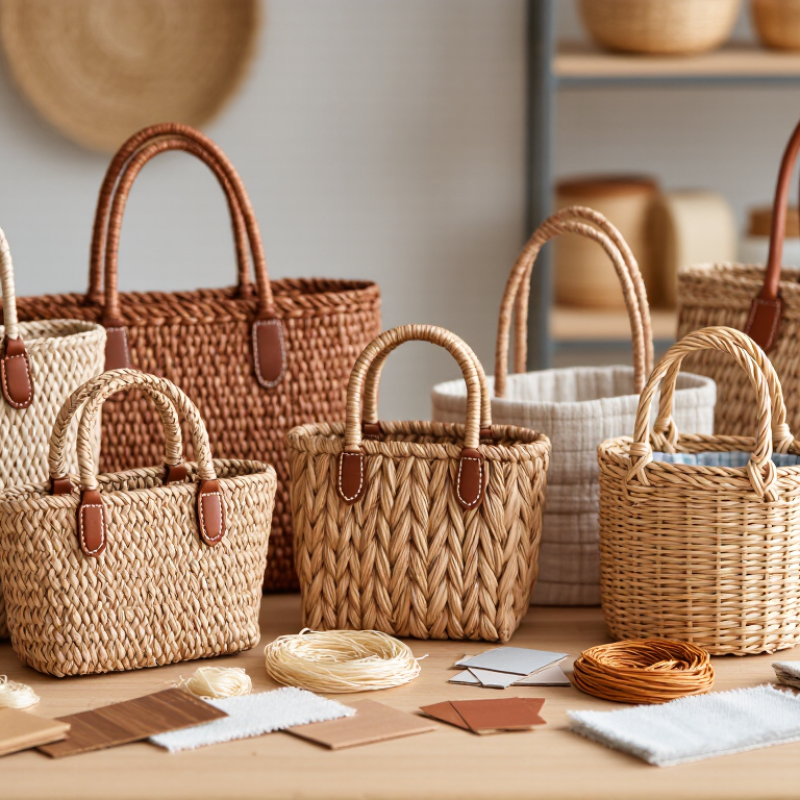
Natural raffia bags are woven from fibers taken from raffia palm leaves. After drying, the fibers are flexible enough to braid or weave into panels, handles, and decorative details. Their texture is usually visible: look closely and you may notice fine strands, small color shifts, or uneven edges. It is not uniform. That variation is part of the material, though it can make two bags look different even when they share a similar design.
These bags suit warm-weather errands, markets, and casual outings. A compact woven bag can hold a phone, wallet, and sunglasses; a roomier style may carry a light scarf or a few groceries. Raffia is lightweight, but it is not ideal for heavy loads or frequent exposure to rain. Moisture can soften the fibers, while rough handling may loosen the weave. Keep the bag dry, brush away dust gently, and store it in a ventilated place rather than pressing it under heavier items. Care labels matter, too, since some bags combine raffia with fabric linings or other materials. There is a trade-off: natural texture gives each piece character, but it also means the surface may age unevenly. That can be slightly inconvenient, and worth considering before choosing a bag for daily use.
Top Natural Raffia Bags Manufacturers in China - Understanding Natural Raffia Bags and Their Uses | Bag Type | Typical Construction | Common Approximate Size | Typical Uses | Manufacturing and Sourcing Considerations |
| Market Tote | Open-top woven raffia body with two handles; may include a fabric lining or inner pocket. | 30–45 cm wide × 25–35 cm high | Shopping, everyday errands, and carrying light personal items. | Check handle attachment, weave consistency, and the finished bag’s capacity. Natural-fiber color and texture can vary between pieces. |
| Beach Tote | Roomy woven body, often with reinforced handles and an optional lining or closure. | 35–50 cm wide × 30–40 cm high | Beach visits, holidays, and carrying towels or other lightweight items. | Ask whether the design includes a lining and how the handles are secured. Raffia is a plant fiber and should not be assumed to be waterproof. |
| Shoulder Bag | Woven raffia body with a longer shoulder strap; may use leather, cotton, or synthetic trims. | 25–35 cm wide × 20–30 cm high | Casual daily use, travel, and carrying small essentials. | Confirm strap length, attachment strength, and the materials used for any non-raffia components. |
| Clutch | Compact woven format, sometimes with a fabric lining, flap, zipper, or magnetic closure. | 20–30 cm wide × 12–20 cm high | Evening occasions and carrying a phone, cards, and other small items. | Inspect the closure, lining, and interior finish. The final usable space depends on the weave thickness and construction. |
| Bucket Bag | Rounded or tapered woven body with a drawstring, open top, or other simple closure. | 20–30 cm wide × 20–30 cm high | Casual outings and carrying everyday essentials. | Check that the opening and base hold their intended shape, and confirm whether a lining or base support is included. |
| Small Handbag | Structured or semi-structured woven body with short handles; may include a lining and decorative trim. | 20–32 cm wide × 15–25 cm high | Day trips, casual events, and light daily use. | Request clear specifications for dimensions, handle materials, lining, and hardware so samples can be compared consistently. |
Note: Raffia is a natural palm-leaf fiber. Sizes shown are representative product formats, not fixed industry standards; actual dimensions, color, texture, and construction vary by design and supplier. Confirm materials and specifications with the manufacturer before ordering.
How Natural Raffia Bags Are Made in China
Natural raffia bags made in China begin with dried palm-leaf fibers, often supplied as narrow strips. Workers sort them by width, color, and flexibility, then lightly dampen stiff strands before weaving. This helps reduce breakage and keeps the surface more even, though natural fibers still vary from piece to piece.
A typical workflow moves from hand weaving to shaping, stitching, and adding handles or a fabric lining. Makers may use paper patterns to keep bag dimensions consistent, then trim loose ends and inspect seams under bright light. Handwork matters. UNIDO’s International Yearbook of Industrial Statistics 2024 puts China’s share of global manufacturing value added at about 30% in 2022. This broad figure describes manufacturing capacity, not raffia-bag output specifically.
Quality checks should include handle-pull tests, seam inspection, and checks for sharp fiber ends. Moisture control also matters: damp storage can affect natural material, while overly dry raffia may become brittle. Factories can document fiber sources and batch details, but traceability standards differ. That gap deserves attention. A neat finish does not, by itself, prove consistent sourcing or durability.
Leading Natural Raffia Bag Manufacturers in China
Leading natural raffia bag manufacturers in China combine skilled handwork with repeatable production processes. Look for teams that can explain where their raffia comes from and how fibers are sorted, dyed, and woven. Ask to inspect handles, seams, lining, and edge finishing. Small flaws can appear in handmade work. Consistency still matters.
A useful supplier review goes beyond a polished sample. Request samples in the intended size, color, and construction, then check them under everyday conditions. Place a few items inside and test the handles for comfort and stability. Ask about production capacity, lead times, quality checks, and packaging. Clear answers are a good sign. Still, a sample cannot predict every batch, so agree on written specifications before production begins. I would also leave room for natural color variation; expecting every fiber to look identical may be unrealistic.
Tips: Compare several samples side by side. Check the weave, stitching, odor, and color transfer with a clean cloth. Confirm measurements and care instructions in writing, and keep an approved sample for reference.
Comparing Manufacturers by Craftsmanship, Capacity, and Customization
When comparing natural raffia bag manufacturers in China, look beyond polished sample photos. Check how evenly workers split and braid the fibers: loose edges, uneven tension, and stiff handles often reveal rushed finishing. Ask for close-up images of seams, handle joins, and the bag’s base. Small details matter.
Capacity needs evidence. Request monthly output by style, current lead times, and a sample production schedule, then compare those figures with the size of your order. Textile Exchange’s Materials Market Report 2024 estimates global fiber production reached 124 million tonnes in 2023. That broad figure is not a raffia benchmark; it underlines why buyers should request material-specific records rather than rely on industry-wide claims. Ask manufacturers how they track raffia origin, fiber grading, and seasonal changes. Records may be imperfect. That is worth discussing.
Customization can mean more than choosing a color. Confirm dimensions, weave density, lining, closures, labels, and handle length in a written specification. Approve a pre-production sample, then compare it with finished goods under natural light. One useful check: measure several bags from the same batch. Ask what happens when measurements vary. A detailed answer is more revealing than a quick promise. And not every workshop documents variation well, so leave room for a second sample before confirming a large run.
How to Choose a Reliable Raffia Bag Manufacturer in China
Top Natural Raffia Bags Manufacturers in China
Choosing a reliable raffia bag manufacturer starts with clear material definitions. Ask whether the bag uses natural raffia, paper raffia, or a blend, and request this in writing. Check a production sample for uneven weaving, loose ends, sharp edges, and handles that pull away under load. One polished sample is not proof of consistent production. Ask for photos or inspection records from a recent batch, plus written tolerances for size and color.
China ranked 19th among 139 economies in the World Bank’s 2023 Logistics Performance Index. This offers useful context for export logistics, but it does not verify an individual factory’s quality. Request the factory address, production capacity, quality-control steps, and references for comparable orders. Confirm who sources the raffia and how substitutions are approved. Small details matter. A slightly uneven natural weave may be acceptable; unexplained material changes are not.
Tips: Send a signed sample and a simple specification sheet before ordering. Include handle dimensions, lining, color references, packing details, and acceptable variation. Ask for a pre-shipment inspection with clear pass-or-fail checks. Allow time for corrections; rushing the first sample can leave costly questions unanswered.