Menü öffnen Menü schließen

What Is an Industrial Filling Machine?

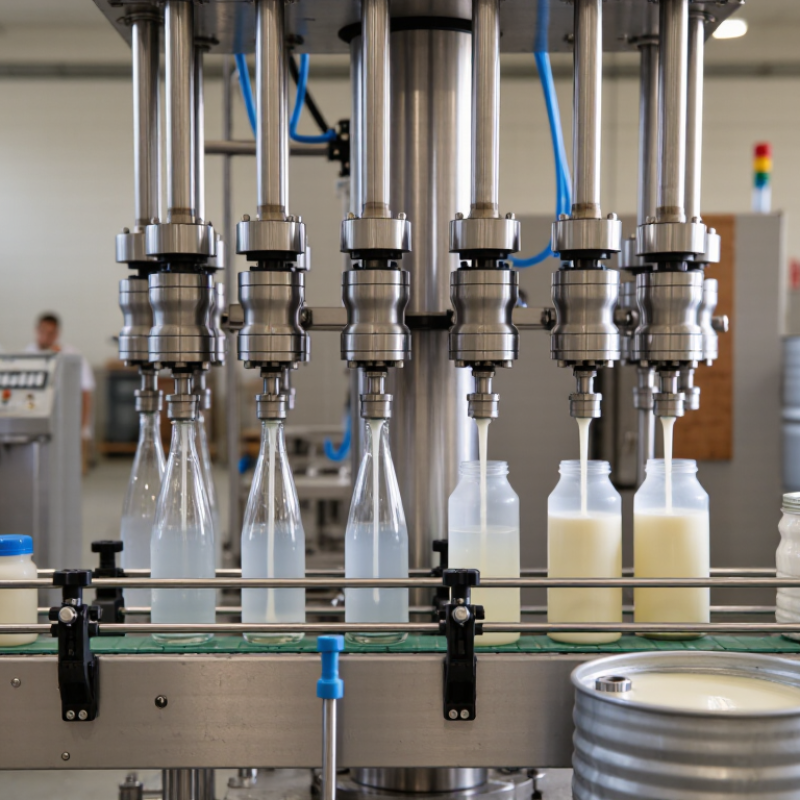
An Industrial Filling Machine transfers a measured quantity of product into containers such as bottles, jars, pouches, or drums. It may use gravity, a pump, a piston, or another dosing method, depending on the product’s thickness and the required fill accuracy. On a production floor, the difference is visible: a thin liquid may flow through narrow nozzles, while a thicker product needs a wider path and slower movement. The machine’s job is not simply to fill. It must also support repeatable volumes, manageable changeovers, and a clean, steady production rhythm.

Packaging specialists often stress that the right machine starts with the product, not the catalogue. For transparency, the quotation below is an original illustrative line from a fictional composite expert, not a verified quotation from a real person. Packaging engineer Alex Morgan puts the principle this way: “Choose the filling method around the product’s behavior, then prove it with real containers.” That means testing actual viscosity, container shape, target volume, and line speed before selecting equipment. Small details matter. A narrow neck can cause splashing; a product that foams may need slower filling. The definition is useful, but incomplete: no machine performs well without suitable setup, cleaning routines, and operator checks. This guide explains how industrial filling machines work, which types suit common applications, and what to assess before investing. Expect practical trade-offs, not a perfect answer for every factory.
What Is an Industrial Filling Machine?

What an Industrial Filling Machine Does in a Packaging Line

An industrial filling machine meters liquid, paste, powder, or granules into containers as part of a coordinated packaging line. It receives empty bottles, jars, cartons, or other packages, then dispenses a controlled amount into each one. The container moves onward for capping, sealing, labeling, and case packing. Small timing differences matter.

In operation, sensors detect each container and signal the filling heads to dispense. Nozzles may rise with a bottle, reducing splashes, while drip controls help keep the conveyor clean. Operators adjust settings for product flow, fill volume, and container shape. Changeovers still take time. A poorly matched nozzle can cause foam, uneven fills, or product waste, even when the machine runs quickly.

The wider market reflects this equipment’s role: Grand View Research valued the global packaging machinery market at USD 45.8 billion in 2023 and projected a 5.4% compound annual growth rate from 2024 to 2030. That figure covers more than filling machines, but it signals sustained investment in packaging lines. Speed is only one measure. Accurate dosing, clean transitions, and consistent container handling matter just as much, and real production conditions can expose weaknesses that a short test run misses.

How Fillers Meter Liquids, Powders, and Viscous Products

An industrial filling machine meters a measured amount of product into each container. The method depends on how the product flows. A thin liquid may move through a flow meter or timed valve, while a piston can deliver a set volume. The goal is consistent fills, not simply fast output. Small differences matter.

Powders often need an auger that turns a controlled number of rotations. Since powder density can change with settling or humidity, the same rotation count may not always produce the same weight. A checkweigher can reveal drift. Easy to miss. Operators may adjust the feed rate or refill routine when readings vary.

Thick products, such as sauces or creams, often need positive-displacement pistons or pumps. A slow, wide nozzle can reduce splashing and trapped air. Some products tolerate gentle heating to flow more easily; others may change texture, so that choice needs testing. Temperature, container shape, and nozzle height all affect the result. A setup that works at startup may behave differently after a long run, and that is worth checking rather than assuming away.

Typical Viscosity of Products Handled by Filling Machines

Viscosity affects how a product flows and how a filler meters it. Thin liquids are often handled with gravity or flow-meter fillers, while thicker products may need piston or pump fillers. Values are approximate reference points at about 20°C; actual viscosity varies with temperature, formulation, and measurement conditions.

Gravity, Piston, Pump, and Auger Fillers: Key Mechanisms

What Is an Industrial Filling Machine?

Gravity, Piston, Pump, and Auger Fillers: Key Mechanisms

An industrial filling machine doses liquid, paste, or powder into containers. The best mechanism depends on product flow, target volume, and cleaning needs. Grand View Research estimated the global filling-machine market at USD 6.06 billion in 2023, with projected annual growth of 4.8% through 2030. That scale reflects many different production needs, not one universal filler.

Gravity fillers let free-flowing liquids descend from a tank into bottles. They are straightforward, but temperature and viscosity changes can affect fill consistency.

Piston fillers draw product into a chamber, then dispense a measured volume. They suit thicker products, though seals and valves need careful cleaning.

Pump fillers move liquid through a controlled pumping system. They handle varied flow rates, but calibration matters.

Auger fillers rotate a screw to dispense powders. Changes in particle size or bulk density can shift the dose.

No mechanism is perfect.

Tips: Test with the actual product. Watch for drips, foam, powder dust, and slow container changes. A short trial may reveal a problem that a catalogue cannot. And record the settings. One small omission can mean repeat work.

How Filling Lines Specify Throughput, Changeovers, and Fill Accuracy

What Is an Industrial Filling Machine?
How Filling Lines Specify Throughput, Changeovers, and Fill Accuracy

An industrial filling machine dispenses measured product into containers at a controlled pace. Its rated bottles per minute is only one part of the picture. Product viscosity, container spacing, nozzle timing, and brief stoppages all affect real output. Water-like liquids may fill quickly, while foaming or thick products often need slower, gentler handling. That trade-off is easy to underestimate.

Specify throughput as sustained output under realistic conditions, not a best-case machine speed. Include the product, container size, and expected operating hours in the discussion. Changeovers matter, too. A line switching between bottle heights or fill volumes may need adjustable guides, saved settings, or tool-free parts. Ask how long a routine change takes, and clarify whether cleaning time is included. Fill accuracy depends on the dosing method, product behavior, and maintenance. Even a small nozzle drip can create mess and waste. A neat specification sheet does not guarantee a neat production run.

Tips: Test with your actual product and containers. Record output, changeover time, and fill variation across several runs. Leave room for adjustment; the first estimate may be optimistic.

What Is an Industrial Filling Machine? — How Filling Lines Specify Throughput, Changeovers, and Fill Accuracy

The figures below are indicative planning ranges, not guaranteed machine specifications. Throughput assumes a single product and container format at approximately 500 mL; actual results depend on product properties, container handling, number of filling heads, and line configuration. Fill accuracy should be confirmed through application-specific testing.

Filling Technology Typical Applications Indicative Throughput Typical Changeover Tasks Indicative Fill Accuracy Key Specification Consideration
Gravity or timed-flow filling Free-flowing, low-viscosity liquids such as water, juices, and some household liquids About 500–3,000 containers per hour on a small-to-medium automatic line Adjust container guides and fill height; clean product-contact parts; verify fill level Often around ±1–2% of target volume under stable conditions Foaming, liquid temperature, and changes in viscosity can affect fill consistency.
Piston filling Viscous products, pastes, creams, sauces, and products with small particulates About 300–2,000 containers per hour, depending on dose size and number of heads Change or adjust pistons, nozzles, and container guides; clean or replace product-contact components Often around ±0.5–1% of target volume when the product and setup are consistent Product viscosity, particle size, and suction or discharge behavior influence performance.
Flowmeter filling Conductive or otherwise meter-compatible liquids, including beverages and many chemicals About 1,000–6,000 containers per hour on multi-head systems Select the product recipe; adjust guides and nozzle position; flush or clean the product circuit as required Often around ±0.2–0.5% of target volume with suitable product and calibration Meter compatibility, flow profile, conductivity requirements, and calibration method matter.
Net-weight filling Liquids and products where the target is specified by mass, including variable-density products About 300–2,500 containers per hour, depending on target weight and filling sequence Load the product recipe; adjust container handling and tare settings; verify the scale and checkweigher Commonly specified by mass; achievable tolerance depends on target weight, product flow, and scale setup Settling time, vibration, container stability, and product drips can affect weighing results.
Rotary filling system High-volume production of compatible liquids in consistently handled containers About 6,000–30,000 or more containers per hour, depending on the number of stations and format Change format parts, star wheels, guides, and recipes; coordinate adjustments across the integrated line Depends on the filling principle used; confirm the tolerance for the specific product and format Line speed, container spacing, upstream supply, and downstream packaging capacity must be matched.

OIML R 87: A 15 g Tolerable Error for a 1 kg Prepackage

What Is an Industrial Filling Machine?
OIML R 87: A 15 g Tolerable Error for a 1 kg Prepackage

An industrial filling machine dispenses a measured amount of product into containers at production speed. For a 1 kg prepackage, the important question is not simply whether one container weighs 985 g. OIML R 87:2016 sets the tolerable negative error, T1, at 15 g for this quantity. That is the number. It is not a recommended fill target.

OIML R 87 also assesses prepackages through sampling rules and requires the lot’s average actual quantity to meet or exceed the nominal quantity. A package below 985 g exceeds the T1 limit, while packages between 985 g and 1,000 g still matter to the overall inspection. NIST Handbook 133 provides a separate, detailed framework for checking net contents in the United States. These procedures make scale accuracy and representative sampling essential.

On a filling line, operators may set a target slightly above 1 kg to account for normal variation. A checkweigher can flag drift caused by changing product temperature, viscosity, or nozzle buildup. Small details matter. A clean nozzle helps, but it does not replace calibration. And a tidy average can hide a few underfilled containers; real production is less tidy than a spreadsheet.