


Menü öffnen Menü schließen

How to Choose the Best Sprinkler Irrigation Controller

Choosing the best Sprinkler Irrigation Controller requires more than comparing prices and display screens. A suitable controller should match your landscape, water supply, climate, and daily maintenance habits. It must also operate reliably when temperatures change or Wi-Fi signals weaken.

Field experience shows that small details matter. Count your irrigation zones carefully before purchasing. Check whether each valve needs independent scheduling. Measure water pressure, observe drainage, and note shaded areas near buildings. These details can prevent uneven watering, flooded planting beds, and stressed turf. A controller with weather-based adjustment may reduce waste, but only when its sensors receive accurate local information.

Look for clear programming, durable construction, manual controls, and dependable support. Manufacturer instructions and recognized efficiency guidance can help verify performance claims. Some models offer rain sensors, flow monitoring, mobile access, and seasonal adjustments. Useful features should solve real problems, not simply make the product appear advanced. More technology is not always better.

Think about long-term use.

An experienced installer may recommend different settings for clay soil, sandy beds, or sloped lawns. Your landscape may also change after installation. New trees can create shade, while mature roots may alter water absorption. No controller is perfect. Even an excellent model can waste water when schedules are never reviewed. This guide examines practical selection criteria, common mistakes, and installation considerations, helping homeowners and professionals make a dependable, informed choice.
How to Choose the Best Sprinkler Irrigation Controller

Understanding Sprinkler Irrigation Controller Types and Functions

How to Choose the Best Sprinkler Irrigation Controller

Sprinkler irrigation controllers differ in design, control, and water-saving ability. A basic timer runs fixed schedules with simple mechanical or digital settings. It suits small gardens with stable watering needs. However, it cannot respond to rain, wind, or changing temperatures.

Multi-zone electronic controllers manage separate lawn, flower bed, and vegetable areas. Each zone can use different run times and watering days. Look for functions such as seasonal adjustment, rain delay, and cycle-and-soak programming. Cycle-and-soak divides long watering periods into shorter cycles. This helps reduce runoff on sloped or compacted soil. A controller with a soil moisture or rain sensor can pause irrigation when the ground is already wet.

Smart controllers use local weather data or connected sensors to adjust schedules. Their accuracy depends on correct installation and reliable sensor readings. I have found that even an advanced controller wastes water when sprinkler heads are blocked or poorly positioned. That detail is easy to miss. Check wiring, valve compatibility, and zone pressure before choosing a model. A flow-monitoring function can reveal leaks, while manual controls remain useful during setup or maintenance. Avoid selecting features you will not regularly use. Simple controls often perform better when household routines are busy. Test each zone with a container and compare collected water after several minutes. The result may challenge your original schedule.

Assessing Landscape Needs, Water Sources, and Irrigation Zones

How to Choose the Best Sprinkler Irrigation Controller

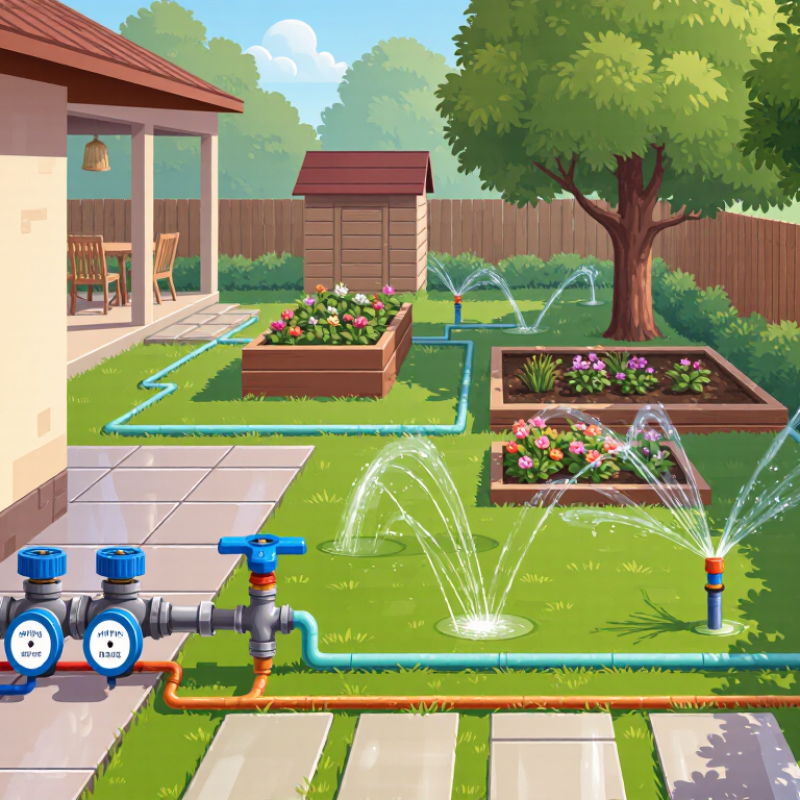
A reliable controller begins with the landscape, not the control panel. Walk through the property and note sunny turf, shaded beds, slopes, trees, and compacted soil. These areas lose or absorb water differently. Group plants with similar needs into separate irrigation zones. Turf may need frequent, shorter cycles, while mature shrubs often need deeper watering. I once combined a sunny lawn with a shaded flower bed. The lawn stayed dry, but the bed became saturated. That mistake changed how I plan zones.

Check the water source before selecting a controller. Measure available pressure and flow during normal use, especially if the system uses a well, tank, or pump. A controller cannot solve weak pressure or undersized pipes. Confirm whether the unit supports pump control, rain interruption, and enough independent zones. Local climate data can improve scheduling, but weather-based adjustments still need observation. Soil, wind, and plant growth can differ from the forecast.

Tips: Label every zone clearly. Test one zone at a time. Place a small container under sprinklers to compare water depth. Reduce run times if runoff appears on slopes. Review the schedule after two weeks, then adjust it. Perfect settings rarely exist on the first attempt. A thoughtful controller should make these adjustments simple, visible, and safe for the water source.

Comparing Essential Controller Features and Smart Capabilities

Choosing the best sprinkler irrigation controller requires comparing essential features with smart capabilities. A dependable controller should manage separate watering zones, flexible schedules, and seasonal adjustments. It should also offer a clear display and reliable manual controls.

Keep it simple.

Smart functions can reduce water waste when they respond to rainfall, temperature, soil moisture, and local forecasts. A weather-based controller may delay watering before a storm. A soil sensor can prevent irrigation when the root zone remains damp. These tools work best when sensors are installed correctly and calibrated for the site. An app should show active zones, watering history, alerts, and connection status. Remote access is useful, but local operation still matters during internet outages.

In practical evaluations, I check whether schedules are easy to edit at the controller and from a phone. I also test zone response, rain-sensor pauses, and manual shutoff. A controller that hides basic settings behind complex menus can frustrate homeowners and maintenance teams. Connectivity may fail occasionally. That possibility deserves attention. Choose a model with automatic recovery, secure account protection, and stored schedules that continue offline. Water-use reports can reveal unusual run times, clogged valves, or leaks. However, data is not always accurate without regular inspection. I would pair smart automation with monthly checks of emitters, valves, and soil conditions.

How to Choose the Best Sprinkler Irrigation Controller - Comparing Essential Controller Features and Smart Capabilities

Evaluation Criterion Basic Timer Sensor-Assisted Controller Weather-Based Smart Controller Flow-Aware Commercial Controller
Best suited for Small gardens and simple landscapes Residential landscapes needing local soil or rain feedback Water-conscious homes and changing climates Large properties, public landscapes, and managed sites
Typical zone capacity 4–8 zones 4–12 zones 4–16 zones 12 or more zones; expandable models are common
Scheduling method Fixed start times and run durations Fixed schedules modified by sensor readings Automatic adjustments based on weather and landscape settings Multiple programs, calendars, and site-specific schedules
Seasonal adjustment Manual percentage adjustment Manual or sensor-triggered adjustment Automatic evapotranspiration-based adjustment Automatic adjustment with configurable site rules
Rain skip or freeze protection Usually manual Available when compatible rain or freeze sensors are installed Commonly automated through weather data or connected sensors Automated and configurable for multiple zones or sites
Soil-moisture monitoring Not normally supported Supported through wired or wireless probes Optional on many systems; weather data may be used instead Supported with multiple sensors and zone-level monitoring
Weather data connection None Usually not required Wi-Fi or another internet connection is commonly required Internet, local weather station, or both may be supported
Flow monitoring and leak alerts Not normally available Limited; depends on compatible flow hardware Available on selected systems with a flow meter Core capability with zone-level alarms and reporting
Remote control Control panel only Panel control; remote access varies Mobile app and web access are commonly available Mobile, web, and centralized management options
Connectivity during internet outages Fully independent Local schedules usually continue Stored schedules generally continue; new weather updates may pause Local fallback operation is preferred for critical sites
Multiple start times Common Common Common and often automatically optimized Advanced sequencing and cycle-and-soak support
Cycle-and-soak operation Available on some models Frequently available Commonly available for reducing runoff on compacted or sloped soil Advanced zone and priority control
Power options AC power or battery, depending on installation Usually AC power; sensors may require batteries or wiring AC power is common; backup power varies AC power, backup power, or solar options may be available
Installation complexity Low Moderate when sensors are added Moderate; requires network setup and accurate site information High; planning, wiring, and commissioning may be needed
Ongoing maintenance Check settings and seasonal changes manually Clean and test sensors periodically Maintain connectivity, sensors, and app settings Inspect sensors, valves, flow meters, communications, and reports
Main advantage Simple operation and low setup requirements Uses on-site conditions to improve fixed schedules Convenient automatic scheduling with weather responsiveness Detailed monitoring, fault detection, and scalable control

Note: Features and zone capacities vary by model. Confirm valve compatibility, electrical requirements, sensor support, local water regulations, and internet availability before purchasing.

Checking Installation Requirements, Compatibility, and Ease of Use

How to Choose the Best Sprinkler Irrigation Controller

Checking Installation Requirements, Compatibility, and Ease of Use

Before choosing a sprinkler irrigation controller, inspect the installation area carefully. Measure the available wall space and check whether it stays dry during heavy rain. Confirm the power supply, wiring length, and number of valve stations. Some controllers need a nearby outlet, while others use low-voltage connections. A weatherproof enclosure may be necessary for outdoor installations.

Compatibility deserves close attention. Match the controller’s output voltage with the existing valve solenoids. Count every active zone, including drip lines, lawn areas, and future additions. Check whether the system supports rain sensors, soil-moisture sensors, or a master valve. I once trusted a station count without checking the wiring layout. That mistake created unnecessary rewiring. Small details matter.

Ease of use should be tested before installation. Look for clear buttons, readable labels, and a manual watering option. A schedule may look simple, but changing one zone should not require several confusing menus. If the controller connects through an application, confirm that setup works reliably near the installation site. Internet dependence can become inconvenient during a network failure. Test the controls manually. That reveals more than glossy specifications.

Choose a controller that suits the actual garden, not an idealized one. Leave room for seasonal adjustments and future zones. A slightly simpler model may be more dependable.

Selecting a Controller Based on Budget, Efficiency, and Future Needs

How to Choose the Best Sprinkler Irrigation Controller

Selecting a Controller Based on Budget, Efficiency, and Future Needs

A good controller should match your garden, budget, and willingness to adjust settings. I once chose a low-cost timer for a small lawn. It worked, but fixed schedules wasted water after several rainy days. My first estimate was wrong.

For a tight budget, choose a controller with reliable zone timing, seasonal adjustment, and a clear manual override. These features matter more than a decorative interface. Check the number of watering zones before buying. A controller with four zones may seem sufficient, until you add raised beds or new trees. Leave room for expansion. It costs less than replacing the unit later.

Efficiency improves when the controller responds to weather or soil moisture. A rain sensor can prevent watering after a storm. Weather-based adjustments can also reduce watering during cooler weeks. However, sensors need correct placement and occasional inspection. They are not magic. Poor setup can still waste water.

Look for simple controls and readable instructions. Complex systems often remain on factory settings. That defeats their purpose. Confirm compatibility with your valve wiring and power supply. A backup battery can preserve schedules during outages. I would also test each zone with a bucket and stopwatch. Actual flow may differ from the installation plan. A controller is only as effective as the information behind its schedule.