Why Choose a 5 Axis CNC Milling Machine for Precision Machining?
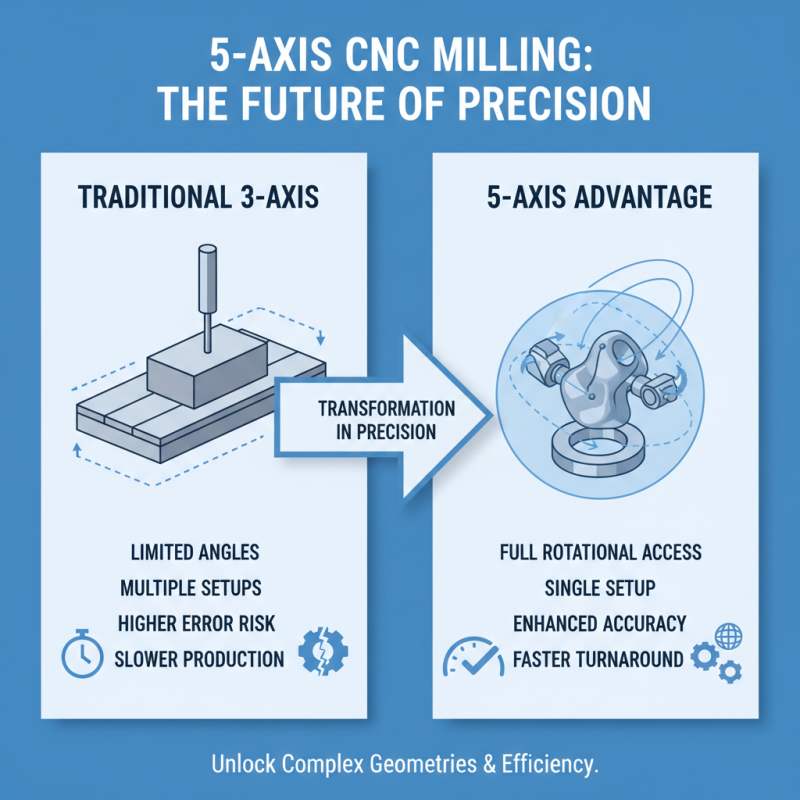
In today's competitive manufacturing landscape, precision is key. A 5 axis CNC milling machine stands out as a crucial asset. It allows for complex geometries and intricate designs that traditional machines struggle to achieve. These machines can operate on multiple sides of a workpiece simultaneously. This greatly reduces setup time.
Imagine creating a detailed component in a single setup, without the need for multiple re-alignments. This efficiency is invaluable. However, operating a 5 axis CNC milling machine requires skilled technicians. Not everyone can harness its full potential.
While the advantages are clear, challenges exist. Maintenance can be demanding, and costs may increase. Companies must weigh these factors carefully. Investing in such technology may yield exceptional results but also requires commitment. A deeper understanding of these machines is essential for success.
Understanding 5 Axis CNC Milling Machines and Their Functionality
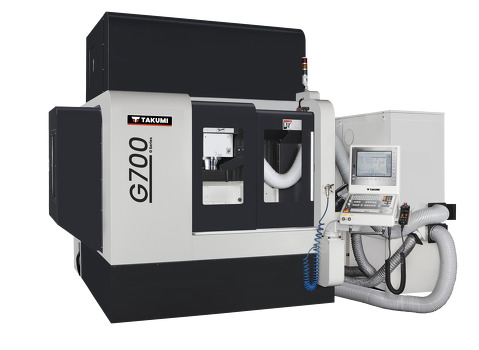
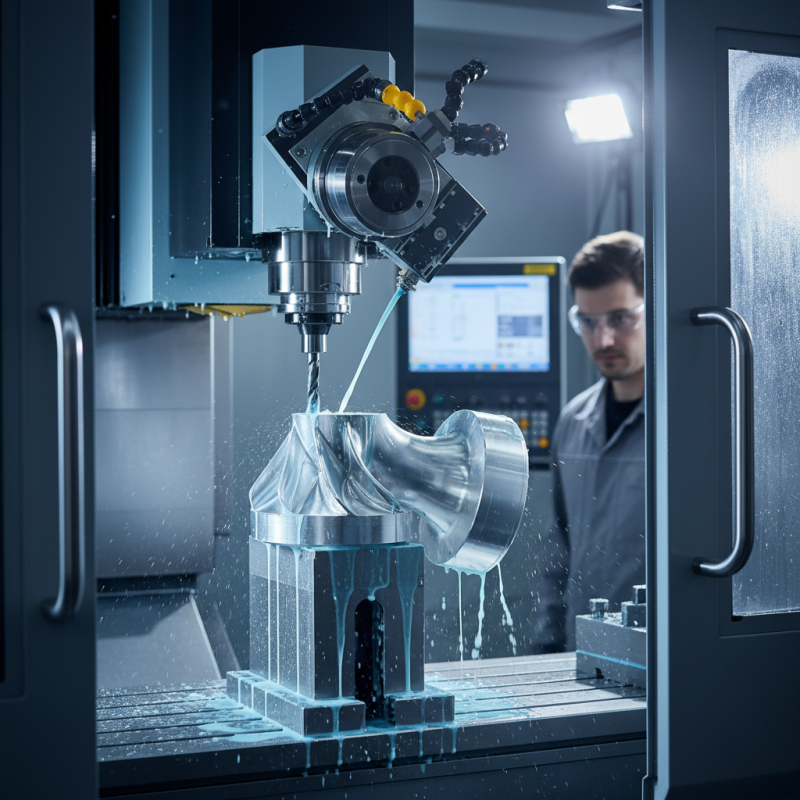
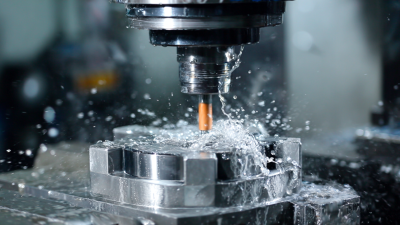
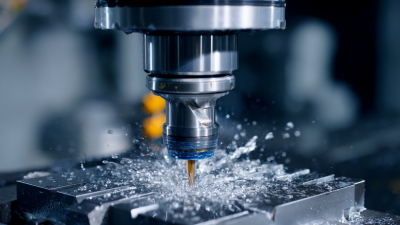
5 Axis CNC milling machines are advanced tools in precision machining. They are designed to move a cutting tool along five different axes simultaneously. This capability allows for complex shapes and intricate designs that traditional machines cannot achieve. Operators can create parts with high accuracy, which is essential in industries like aerospace and automotive.
These machines use advanced technology to ensure precise movements. The ability to tilt and rotate parts eliminates the need for multiple setups. This reduces production time and increases efficiency. However, using 5-axis machines comes with challenges. Operators must understand the setup and programming intricacies. Mistakes can lead to wasted materials and time. Continuous learning is crucial in mastering these machines.
The flexibility of 5-axis milling is remarkable. It opens doors to creativity and innovation. Yet, the initial cost can be daunting for some shops. It's a significant investment that requires careful consideration. Balancing cost with potential benefits is an ongoing struggle. Many find themselves reassessing their tools and processes often. Embracing this technology can be transformative but requires dedication and careful planning.
Why Choose a 5 Axis CNC Milling Machine for Precision Machining?
| Feature |
Description |
Benefits |
| Multi-Directional Machining |
Allows for machining on multiple sides of a workpiece in a single setup. |
Reduces setup time and increases accuracy. |
| Complex Geometries |
Easily create intricate shapes and contours that are difficult with 3-axis machines. |
Enhanced design flexibility and capability. |
| Higher Efficiency |
Machining operations can be completed in fewer operations. |
Saves time and reduces the cost of production. |
| Improved Surface Finish |
Capabilities to machine with better tooling angles. |
Provides superior part finishes that require less post-processing. |
| Advanced Technology |
Utilizes integrated software for better operation control. |
Increases machinist proficiency and reduces errors. |
Advantages of 5 Axis Machining Over Traditional Methods
5 Axis CNC milling machines have transformed precision machining. They outperform traditional methods by offering enhanced flexibility and accuracy. In traditional machining, the workpiece often needs to be repositioned multiple times. This can lead to errors and wasted time. With a 5 Axis machine, the cutter can approach the part from various angles. This results in more complex geometries being machined in one setup.
One tip when using 5 Axis machines is to invest time in proper training. Operators need to understand the complexities of these machines. Misunderstanding the software or the set-up can lead to mistakes, affecting the final product. Another point to consider is tooling. Choosing the right tools can maximize machining efficiency. Not all tools work well in every situation, and testing may be necessary.
Despite these advantages, 5 Axis machining is not without challenges. The initial cost is higher compared to traditional machines. Maintenance can also be more complex. Learning curves may frustrate new operators. It’s important to weigh these factors against the benefits. Efficient use of a 5 Axis machine can elevate production, but only with careful planning and execution.
Applications of 5 Axis CNC Milling in Precision Industries
Five-axis CNC milling machines have revolutionized precision machining across various industries. Their ability to operate in multiple directions allows for complex shapes and contours to be crafted with unparalleled accuracy. Industries such as aerospace and automotive benefit significantly from this technology. Components like turbine blades and intricate engine parts can be produced efficiently, reducing the time spent on assembly and enhancing overall performance.
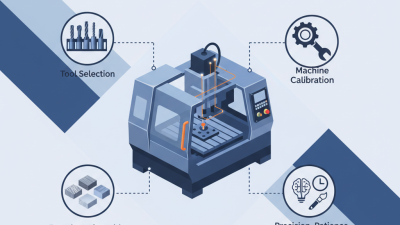
Precision in machining comes with its challenges. Even minor errors can lead to significant issues in the final product. Continuous monitoring of the tooling and the workpiece orientation is crucial. Operators must ensure that settings are correct and that tools are changed regularly.
Tip: Maintain a checklist for tool wear and machine calibration to prevent costly mistakes.
In the medical industry, 5-axis CNC milling machines create detailed components like surgical instruments and implants. These parts require extreme precision and consistency. Any deviation can pose risks to patient safety. Quality control becomes essential here, demanding regular inspection and tough protocols.
Tip: Establish a routine for inspections and use a calibration schedule to uphold standards. Employing these practices helps refine accuracy and ensures the quality of the final output.
Key Considerations When Choosing a 5 Axis CNC Milling Machine
When selecting a 5 Axis CNC milling machine, precision is paramount. Consider the machine's capabilities. Not all machines are created equal. Look for specific features that enhance accuracy. A robust spindle power can significantly improve the cutting process. Also, assess the machine's rigidity. A solid base reduces vibrations and ensures stability during operations.
Programming complexity is another crucial factor. Can the machine software handle intricate designs easily? Intuitive software can reduce training time. Conversely, complex systems can create confusion. User-friendliness matters, especially in fast-paced environments.
Make sure you can adapt quickly to changes in design or production needs.
Finally, reflect on maintenance requirements. How often will your machine need servicing? A highly precise machine may require diligent upkeep. A balance between precision and practicality is essential for long-term success. Evaluate every aspect carefully before making your choice.
Future Trends in 5 Axis CNC Technology and Precision Machining
The future of 5 axis CNC technology is bright. It brings enhanced precision and efficiency to machining processes. As industries demand complex designs, 5 axis machines become vital. They allow intricate shapes to be cut with minimal setup. Using advanced algorithms, future machines will optimize tool paths. This will reduce waste and improve cycle times.
Integrating intelligent software is key for the next generation of CNC machines. Automation will play a significant role. These machines may predict maintenance needs, minimizing downtime. Operators might be required to adapt to new software tools. It’s important to continually update skills in this fast-evolving environment.
**Tip**: Regularly educate your team on software advancements. Attend workshops or online courses.
5 axis technology also means reconsidering traditional production methods. Machinists might struggle with different programming requirements. It may take time to adjust and fully embrace this technology. Reflecting on past experiences can guide these adjustments.
**Tip**: Document challenges you face when transitioning to 5 axis machining. Use this data for future reference.
Why Choose a 5 Axis CNC Milling Machine for Precision Machining?
This bar chart compares the performance of 5 Axis CNC Milling Machines against traditional 3 Axis CNC Milling Machines across key metrics such as machining speed, surface finish quality, setup time, and complexity level. As indicated, 5 Axis milling offers superior speed and complexity handling, making it a preferred choice for precision machining in advanced manufacturing settings.