


How to Choose the Best Solar PV Hybrid Inverter?
Choosing a Solar Pv Hybrid Inverter is not just a matter of comparing labels or advertised efficiency. It determines how solar panels, batteries, the grid, and household loads work together. A unit that looks suitable online may struggle with a well pump, an evening cooking load, or a battery that cannot deliver enough power. Small details matter.
Photovoltaic researcher Dr. Martin Green is widely known for his work on solar technology. A practical paraphrase of the engineering principle behind his field is: “Match the system to real energy needs, not just its headline rating.” That distinction is useful when comparing hybrid inverters. Check continuous output, surge capacity, battery compatibility, conversion efficiency, monitoring tools, and the manufacturer’s warranty. Then consider where the inverter will be installed. A hot garage, limited wall space, or poor ventilation can affect performance and service access.
The best choice depends on your usage pattern and future plans. Review a recent electricity bill, note which appliances run together, and decide whether backup power is essential. Ask a qualified installer to confirm the design against your panels, battery, and local site conditions. Datasheets help, but they do not reveal every installation constraint. Even a careful shortlist may need revision after a load assessment. That is normal. A dependable Solar Pv Hybrid Inverter should fit the whole system, not force the rest of it to fit the product.
Understand the Role of a Solar PV Hybrid Inverter
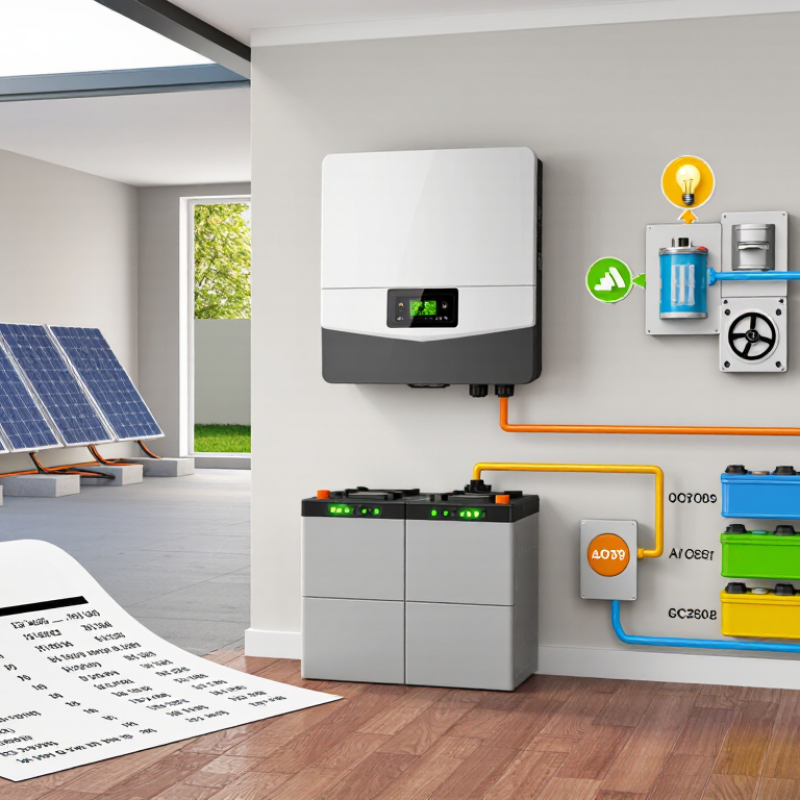
A solar PV hybrid inverter acts as the system’s power coordinator. Solar panels produce direct-current electricity, while household appliances generally use alternating current. The inverter converts that energy and directs it to active loads, a compatible battery, or the grid. When sunlight falls, it may draw stored energy or use grid power, depending on system settings. That matters.
Its role is clearest when conditions change. At noon, surplus solar energy can charge a battery; after sunset, the battery may support selected circuits. During an outage, backup works only if the inverter can operate independently and essential loads connect to its backup output. Not every hybrid system provides whole-home backup. A kettle and a water pump can quickly exceed a modest inverter’s capacity.
Choose an inverter by matching its functions to the home, not by chasing one efficiency figure. Check continuous and surge output, battery compatibility, MPPT input range, and backup transfer behavior. Ask how much power remains available when solar input is low. Installation details matter, too: cable sizing, ventilation, and protection devices affect reliable operation. Specifications help, but real household loads can be messy. It is easy to overlook a refrigerator’s brief startup surge, so list essential appliances before comparing options. Some details still need an installer’s verification.
How to Choose the Best Solar PV Hybrid Inverter? – Understand the Role of a Solar PV Hybrid Inverter
| Selection Dimension | What to Check | Practical Guidance | Why It Matters |
|---|---|---|---|
| Operating role | PV conversion, battery charging and discharging, grid interaction, and any generator support. | Confirm which functions the unit supports and whether they can operate together in your intended setup. | A hybrid inverter coordinates solar panels, a battery, household loads, and—where supported—the grid or a generator. |
| AC output power | Continuous output rating and short-duration surge rating, stated in watts or kilowatts and volt-amperes. | Compare the inverter rating with the expected simultaneous load, including motors, pumps, and other equipment with startup surges. | An inverter that is undersized may overload or shut down when demand exceeds its limits. |
| Backup capability | Whether the inverter provides an emergency or backup output, its power limit, supported circuits, and transfer behavior. | Check whether backup requires additional equipment, a separate essential-load panel, or specific battery conditions. | Grid-connected operation does not automatically mean that a system will provide power during a grid outage. |
| Battery compatibility | Supported battery chemistry, DC voltage range, charge and discharge limits, and battery communication protocol. | Verify compatibility with the battery manufacturer’s specifications and confirm that the required communication connection is supported. | Compatible voltage and controls help the inverter charge and discharge the battery within permitted operating limits. |
| Battery power and capacity | Maximum battery charge/discharge power and the usable battery capacity in kilowatt-hours. | Size battery capacity for the desired backup duration; check power rating separately to ensure it can run the intended loads. | Energy capacity determines how long a battery can supply energy, while power rating limits how much it can supply at once. |
| PV input and MPPTs | Maximum PV input power, number of maximum power point trackers (MPPTs), and each tracker’s voltage and current limits. | Match panel string design to the inverter’s operating and maximum voltage and current limits across expected temperatures. | MPPTs help track the solar array’s operating point; multiple trackers can accommodate arrays with different orientations or conditions. |
| Conversion efficiency | PV-to-AC and battery-to-AC efficiency, along with any weighted or peak efficiency figures. | Compare like-for-like efficiency figures and review the product’s operating conditions and test definitions. | Conversion losses affect how much of the available solar or stored energy reaches AC loads. |
| Grid and phase requirements | Single-phase or three-phase output, nominal voltage and frequency, grid connection requirements, and export controls. | Check local electrical rules and utility requirements before selecting an inverter or planning grid export. | The inverter must suit the property’s electrical supply and comply with the applicable interconnection requirements. |
| Operating modes and controls | Available self-consumption, time-of-use, export-limiting, and backup settings; scheduling and monitoring options. | Confirm that the controls support your tariff, export rules, and preferred battery reserve level. | Control settings determine how solar and stored energy are allocated among household use, charging, export, and backup reserve. |
| Protection and installation | Environmental rating, permitted operating temperature, cooling method, electrical protection, and installation clearances. | Use the installation manual and have a qualified installer assess the site, ventilation, wiring, and protective devices. | Correct installation and suitable environmental conditions support safe, reliable operation. |
| Monitoring and service | Local or remote monitoring, data visibility, firmware update process, warranty terms, and service support. | Review warranty coverage and support arrangements, including any registration or installer requirements. | Monitoring helps identify energy flows and faults, while clear service terms matter throughout the system’s operating life. |
Note: Specifications, backup behavior, compatibility, and grid functions vary by inverter model and jurisdiction. Confirm the current technical documentation and local requirements with a qualified installer before purchase.