How to Choose the Best 5 Axis CNC Milling Machine for Your Needs?
Choosing the right 5 axis CNC milling machine requires careful consideration of your specific needs. Renowned industry expert, John Smith, once said, “The right machine can elevate your production while minimizing waste.” His insight emphasizes the importance of selecting a machine that aligns with your operational goals.
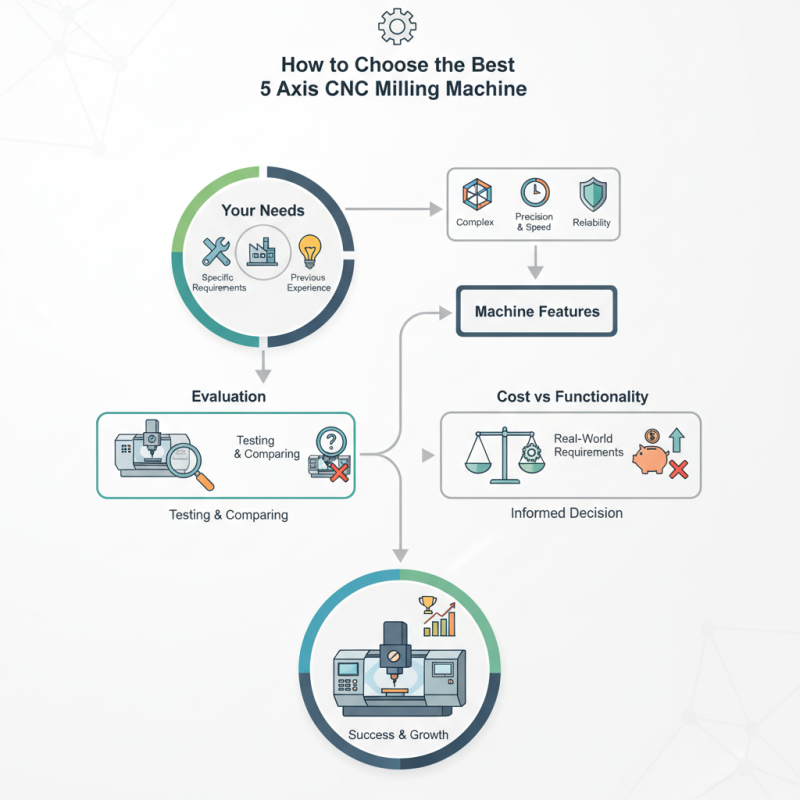
The landscape of CNC milling is vast. Understanding the various features and capabilities of different models becomes crucial. Look for machines that offer flexibility in complex geometries. Precision and speed are essential, but they should not come at the cost of reliability. You may encounter challenges during this decision-making process, reflecting on your previous experiences in machining can provide valuable insights.
Testing and comparing machines can lead to unexpected revelations. A seemingly perfect machine might not meet your real-world requirements. Balancing cost against functionality is often tricky. Aim to make an informed decision that enhances your production efficiency without overspending. The right 5 axis CNC milling machine is fundamental to your business's success and growth.
Understanding the Basics of 5 Axis CNC Milling Machines
When diving into the world of 5 axis CNC milling machines, it's essential to grasp the fundamental principles. These machines operate on five different axes, allowing for intricate designs and complex shapes. They improve precision and efficiency significantly compared to traditional milling methods. Understanding how these axes work can enhance your project outcomes.
Tips: Consider the materials you will work with. Not all machines are suited for every material. Be aware of the machine's capabilities regarding metal, wood, or plastics. The features you need will depend on your specific applications.
Another crucial aspect is the machine's control system. An intuitive interface can make a significant difference in your workflow. A steep learning curve may hinder productivity. Invest time in training to maximize machine use. Remember, mastering a 5 axis CNC milling machine requires experience and diligence.
Also, think about the level of support you might require. Not all manufacturers offer equal customer service. Research on forums and review sites can provide insight into user experiences. A machine may have impressive specs but could be challenging to operate without adequate support.
Key Features to Consider When Selecting a 5 Axis CNC Machine
When selecting a 5 axis CNC milling machine, key features should be your primary focus. The machine's rigidity is crucial. A more rigid frame reduces vibrations, ensuring precise cuts. Look for machines made from solid materials like cast iron. They tend to provide greater stability and longevity.
Another important aspect is the control system. A user-friendly interface can significantly impact your workflow. Consider a machine with advanced software that offers intuitive programming options. The ability to perform complex tasks smoothly is essential. Pay attention to compatibility with CAM software too.
Don’t forget about the tooling options. Machines with a wide range of compatible tools allow for versatility in projects. Additionally, check the axis travel limits. Insufficient travel can restrict the size of the parts you can manufacture. Finally, always consider the machine's maintenance requirements. Complex machinery may require specialized knowledge for repairs. A machine that is easy to maintain increases efficiency in the long run.
Identifying Your Specific Manufacturing Needs for CNC Milling
When considering a 5-axis CNC milling machine, understanding your specific manufacturing needs is crucial. Different projects demand unique capabilities. For example, a complex part with intricate geometries may require advanced machine features. Evaluate the types of materials you will often work with. Metals, plastics, and composites each have distinct milling requirements.
Assess the expected production volume as well. High-volume jobs may benefit from faster machining speeds and improved automation features. This ensures efficiency and precise outcomes. On the other hand, low-volume projects could focus more on versatility and ease of setup. Collaboration with your machine operators is vital. Their input can uncover practical needs that might not be immediately obvious to decision-makers.
Reflect on the future of your operations too. Are you planning to expand your capabilities? Think about how the machine can grow with you. Investing in a top-tier machine now may save costs later. Remember, pinpointing your exact needs involves both analytical thinking and feedback from skilled workers. This process may not be flawless, but it can lead to informed decisions and better investments.
How to Choose the Best 5 Axis CNC Milling Machine for Your Needs?
| Feature |
Importance |
Recommended Range |
Considerations |
| Work Envelope Size |
High |
800 x 600 x 600 mm |
Ensure it fits your largest parts |
| Spindle Speed |
Medium |
10,000 - 30,000 RPM |
High speed for fine materials |
| Accuracy |
High |
0.005 mm |
Critical for precision parts |
| Controller Type |
Medium |
Fanuc, Siemens |
User-friendly interface |
| Material Compatibility |
High |
Aluminum, Titanium, Plastics |
Ensure machine can handle your materials |
| Price Range |
High |
$50,000 - $200,000 |
Balance budget with needs |
Comparing Different Brands and Models of 5 Axis CNC Machines
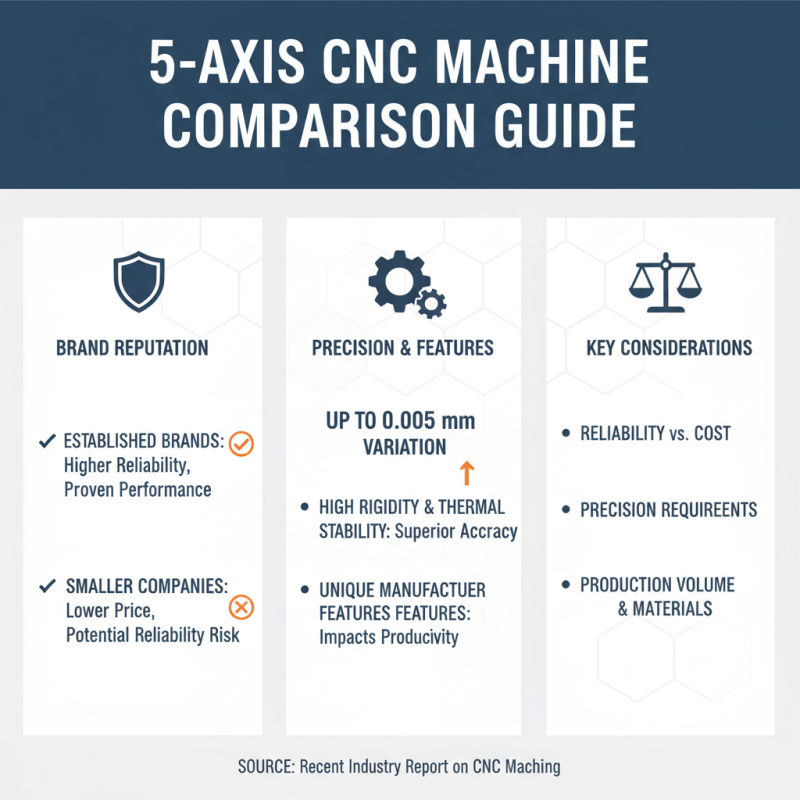
When selecting a 5 axis CNC milling machine, brand reputation matters. Each manufacturer offers unique features, impacting precision and productivity. According to a recent industry report, precision can vary up to 0.005 mm across different models. Machines with higher rigidity and better thermal stability often yield superior results. Smaller companies may offer lower prices, but they might not match the reliability of established brands.
In comparison, the software that accompanies CNC machines is crucial. Comprehensive programming capabilities enhance efficiency. Some machines include features like adaptive feed rates, which can optimize material removal rates by adjusting based on cutting conditions. In fact, studies indicate that using advanced software can improve machining time by up to 30%.
Buyer reviews often reflect mixed experiences with service and support after purchase. Some users report difficulty accessing technical assistance, which can lead to production delays. Meanwhile, machine durability and ease of maintenance are critical factors. Investing time in understanding each model's service history might prevent future headaches. Manufacturers that prioritize customer feedback can lead to more reliable long-term performance.
Evaluating Cost vs. Performance in CNC Milling Machine Selection
When selecting a CNC milling machine, evaluating cost versus performance is crucial. Research shows that the average 5-axis CNC machine costs between $50,000 and $150,000. However, initial pricing is just one factor. Machines that cost less may compromise on features and longevity.
Performance metrics are also critical. A report from the International Manufacturing Technology Show indicates that machines with advanced features can enhance efficiency by up to 30%. This efficiency often translates into faster production times. For small to medium-sized enterprises, balancing these metrics is vital. A lower-cost machine may lead to higher operational costs in terms of maintenance and energy.
Consider the complexity of parts you intend to produce. If high precision is required, investing in a machine with superior performance makes sense. However, not every project demands the latest technology. Assessing the return on investment is essential. The right choice will depend not only on your budget but also on your specific production needs. Reflect on your operation's goals to ensure the best decision.