Menü öffnen Menü schließen

China Top 10 Steel Pipe Machinery Accessories Suppliers

Steel pipe production depends on more than forming lines and welding systems. Rollers, sizing tools, cutting blades, bearings, seals, and drive components affect accuracy, uptime, and maintenance costs. These parts may look small. Their impact is not.

The scale of the steel sector gives this supply chain context. World Steel Association’s World Steel in Figures 2024 reports that global crude steel production reached 1,892.2 million tonnes in 2023. China produced about 1,019 million tonnes, making its manufacturing ecosystem especially relevant to buyers comparing Steel Pipe Machinery Accessories suppliers. However, steel output alone does not prove that a supplier makes reliable accessories. Product specifications, material traceability, machining capability, and after-sales support matter too.

This guide introduces ten China-based suppliers and the factors buyers can check before requesting quotations. It considers product range, customization, quality documentation, delivery capacity, and experience with different pipe-making processes. A polished catalogue is not enough. Ask for drawings, tolerances, material grades, inspection records, and clear replacement-part details. Where possible, compare samples under your actual operating conditions.

Supplier information changes, and public profiles rarely reveal every production detail. That is a limitation worth stating. The list should therefore serve as a starting point, not a final endorsement. Careful verification can help manufacturers find compatible accessories, reduce avoidable downtime, and make more informed purchasing decisions.
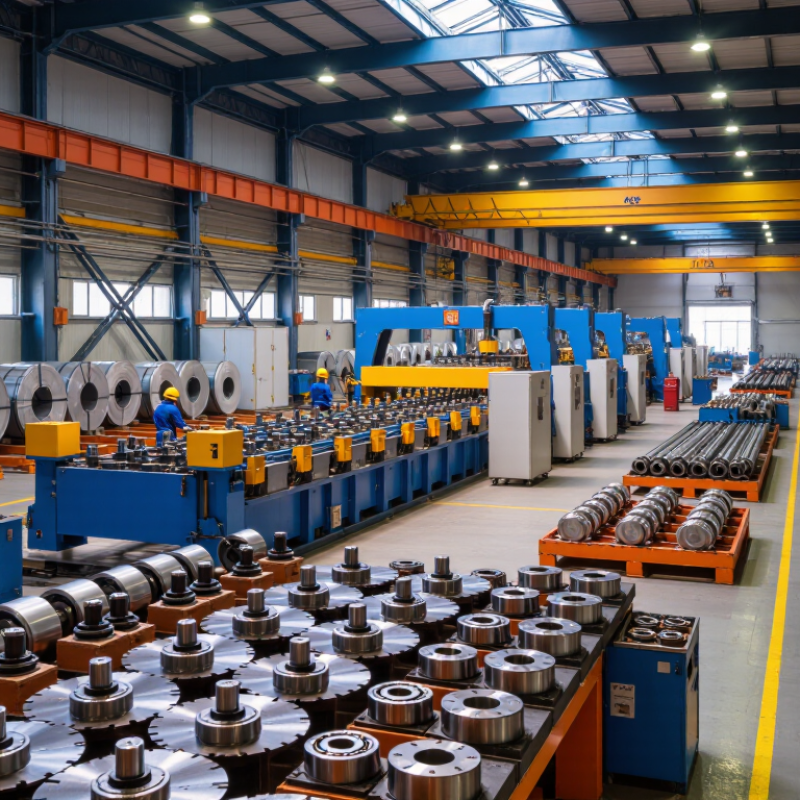
China Top 10 Steel Pipe Machinery Accessories Suppliers

Steel Pipe Machinery Accessories: Scope and Industrial Role

Steel Pipe Machinery Accessories: Scope and Industrial Role

Steel pipe accessories are the working interfaces between a production line and the pipe itself. They include forming rolls, sizing tools, mandrels, guide shoes, bearings, seals, couplings, and cutting components. Each part handles a specific task: guiding a hot tube, controlling its diameter, or keeping rotating equipment aligned. Small parts matter. A worn guide can leave surface marks; an imprecise sizing roll can push a pipe outside its tolerance.

The scale of steelmaking makes these components industrially significant. World Steel Association data show global crude steel production reached about 1.89 billion tonnes in 2024. That figure covers all steel, not pipe alone, but it illustrates the volume of material moving through steel processing. In pipe mills, accessory condition affects changeover time, dimensional consistency, and unplanned stoppages. Operators often inspect roll surfaces, check bearing temperatures, and replace seals before leakage spreads.

Selection depends on pipe diameter, wall thickness, material, line speed, and operating temperature. There is no universal setup. A tool suited to low-carbon steel may not perform equally well with higher-strength grades. Supplier specifications help, but actual mill trials and maintenance records matter more. And judgment can be imperfect: extending a component’s service life may save cost, yet increase scrap or downtime. A careful evaluation should track both.

Key Accessory Types Used in Steel Pipe Manufacturing

China Top 10 Steel Pipe Machinery Accessories Suppliers
Key Accessory Types Used in Steel Pipe Manufacturing

Steel pipe lines depend on accessories that guide, shape, weld, and cut the tube. Forming rolls gradually bend strip into a round profile, while sizing rolls correct diameter and roundness. Guide rollers keep the strip aligned; even slight misalignment can leave uneven seams or surface marks. Small parts matter. On high-frequency welded lines, induction coils and impeders help concentrate heat near the strip edges. Cut-off blades then separate pipes to the required length. Seamless mills use different components, such as mandrels and piercing tools, so one accessory list cannot suit every process.

Tips: Match roll profiles to the pipe range and material thickness. Check blade edges and roller wear during scheduled inspections. A checklist helps, but it will not catch every problem; operators should also watch for vibration, unusual noise, or changing cut quality.

Accessory selection should consider line speed, pipe dimensions, material, and replacement intervals. A component that works well on one production line may perform poorly on another. Keep spare parts properly identified and compare measurements before installation. Small differences in fit can affect alignment. Supplier specifications are useful, but actual operating conditions deserve careful review.

China Top 10 Steel Pipe Machinery Accessories Suppliers - Key Accessory Types Used in Steel Pipe Manufacturing

Overview of ten commonly used accessory types. This is a product-category reference, not a supplier ranking.

No. Accessory Type Typical Application Common Materials or Construction Key Selection Considerations
1 Forming Rolls Gradually shape strip steel into a tubular profile on an ERW or other roll-forming line. Alloy tool steels are commonly used; surface treatment depends on the roll design and service conditions. Match the roll profile to the strip thickness, pipe diameter, forming sequence, and mill configuration.
2 Sizing Rolls Calibrate the formed pipe to its target outside diameter and improve dimensional consistency. Hardened alloy steel is common for roll bodies; some designs use replaceable wear components. Check target diameter, pass design, roll alignment, surface finish, and wear limits.
3 Weld-Seam Guide Rolls Guide and stabilize strip edges near the welding station in longitudinally welded pipe production. Hardened steel rolls; contact surfaces may be finished to reduce marking and wear. Confirm edge guidance, adjustment range, contact geometry, and compatibility with the forming mill.
4 Straightening Rolls Correct pipe straightness or residual deformation in a multi-roll straightening machine. Heat-treated alloy steel is commonly selected for load-bearing roll surfaces. Consider pipe size range, wall thickness, roll arrangement, adjustment method, and allowable straightness tolerance.
5 Cutoff Saw Blades Cut continuously produced pipe to specified lengths in a flying-saw or fixed-cutoff system. High-speed steel or carbide-tipped blades are used, depending on the cutting method and production conditions. Match blade diameter, tooth geometry, machine speed, pipe material, and cutting method.
6 Welding Contact Tips Conduct welding current to the wire in applicable arc-welding processes used for pipe or tube manufacture. Copper alloys are commonly used because of their electrical and thermal conductivity. Verify wire diameter, torch or welding-head compatibility, current range, and wear rate.
7 High-Frequency Induction Coils Provide localized electromagnetic heating at the strip edges in high-frequency ERW welding. Typically fabricated from conductive copper tubing or other copper conductors, often with water cooling. Check coil geometry, pipe diameter range, power and frequency requirements, cooling connections, and clearance.
8 Welding Impeders Concentrate high-frequency current near the strip edges during induction welding of pipe. Usually constructed with a magnetic core and protective casing; designs vary with line and pipe size. Confirm compatibility with the welding frequency, pipe dimensions, cooling arrangement, and installation position.
9 Bearings and Bearing Housings Support rotating shafts and rolls in forming, sizing, straightening, and auxiliary equipment. Bearing steel is widely used for rolling elements; housings are commonly made from cast iron or steel. Specify shaft and housing dimensions, load and speed ratings, lubrication, sealing, and operating temperature.
10 Seals and Gaskets Help prevent lubricant leakage or coolant and contaminant ingress at machine joints and rotating assemblies. Elastomers such as NBR or FKM are selected according to temperature and fluid exposure; gasket materials vary by joint. Check dimensions, pressure, temperature, fluid compatibility, shaft speed where applicable, and installation conditions.

China’s Steel Pipe Machinery Accessories Supplier Landscape

China’s steel-pipe machinery accessories market sits within a vast steel ecosystem. The World Steel Association’s World Steel in Figures 2024 reports China produced 1,019.1 million tonnes of crude steel in 2023. That scale supports extensive machining, casting, and component networks, but it does not guarantee consistent accessory performance. Details matter.

The OECD’s 2024 Steel Outlook projects global steelmaking capacity will approach 2.5 billion tonnes by 2026. Capacity pressure can sharpen price competition. Buyers should compare heat-treatment records, dimensional tolerances, and wear-test results, not quotations alone. A guide shoe drifting by fractions of a millimeter can mark tubes or slow a production line. Cheap parts are not always economical.

Chinese suppliers range from integrated machinery workshops to specialist makers of rolls, mandrels, bearings, and cutting tools. Request inspection data, material traceability, and delivery records, then check them against the mill’s operating conditions. Catalog claims can look tidy. Service response and replacement-part consistency, however, are difficult to judge before a trial order.

Profiles of 10 Chinese Steel Pipe Machinery Accessories Suppliers

China’s steel-pipe machinery accessory suppliers serve mills producing welded and seamless tubes. World Steel Association data reports 2024 crude-steel output at 1,882.6 million tonnes worldwide, including 1,005.1 million tonnes in China. That scale supports a broad supplier base, but capacity alone does not prove consistency. Small tolerances matter.

These ten anonymous profiles represent distinct supplier strengths. One focuses on forming rolls; another makes sizing and straightening rollers. A third supplies welding-line components, while a fourth specializes in cutting blades. The fifth profile covers mandrels and internal tooling. The sixth centers on bearings and transmission parts. A seventh offers quick-change clamps; an eighth produces precision shafts. The ninth develops lubrication and cooling assemblies. The tenth integrates sensors and line-side fittings. Buyers should compare material certificates, machining tolerances, and documented service life, not just catalogue dimensions.

World Steel Association’s figures describe steel output, not accessory quality; that distinction is easy to overlook. Request sample inspection records and confirm whether critical parts are made in-house. Ask for runout measurements on rollers and wear data from comparable production lines. A polished brochure proves little. Some suppliers may also lack long-term field data, so verify claims with operating references before purchase.

How to Evaluate and Compare Suppliers

China Top 10 Steel Pipe Machinery Accessories Suppliers

How to Evaluate and Compare Suppliers

When comparing steel pipe machinery accessories suppliers, assess the part and the process behind it. Start with material certificates, dimensional inspection records, heat-treatment details, and stated tolerances. Ask how defects are traced to a production batch, and whether replacement parts match the original fit. Check the details. A supplier’s sample may look precise, yet repeated measurements can reveal variation. Request inspection data from multiple production runs, not just a polished sample.

The World Steel Association reported global crude steel production of 1,882.6 million tonnes in 2024, down 0.9% from 2023. This scale makes dependable quality and supply planning worth close attention.

Compare suppliers using the same checklist. Record lead times, minimum order quantities, packaging, technical support, and spare-part availability. For rollers, cutting tools, or guides, ask about wear life under your operating conditions; generic estimates may not transfer to your line. Request a small trial order, then track dimensions, installation time, and downtime. Compare total cost, not just the unit price. A low quote can hide slow delivery or inconsistent fit. It is easy to overvalue certificates, too. They help, but they do not prove every part will perform well. Keep notes from your own inspections, and revisit the score after several months of use.