Menü öffnen Menü schließen

China Top 10 Electric Motor Project Manufacturers

China’s electric motor sector brings together established factories, specialist engineering teams, and suppliers serving demanding industrial applications. This guide introduces ten manufacturers for buyers evaluating an Electric Motor Project. The right partner is not always the largest. It is the one that can match motor design, production capacity, and after-sales support to the actual duty cycle.

Look beyond a catalogue. Ask how a manufacturer handles winding specifications, insulation classes, bearing selection, and thermal testing. A motor running beside a dusty conveyor has different needs from one driving a quiet pump indoors. Request test records and clear answers about lead times, customization, and service coverage. Details matter.

Nikola Tesla’s induction-motor work helped shape modern electric machinery. He once wrote, “The present is theirs; the future, for which I really worked, is mine.” That line suits motor projects, where today’s efficiency choices influence years of operating costs. Yet no single specification tells the whole story. Site conditions, load changes, and maintenance routines can expose gaps that looked minor on paper. We should be candid about that.

The manufacturers below are assessed through practical considerations: product range, engineering capability, quality processes, export experience, and project communication. These are useful starting points, not guarantees of performance. Confirm certifications, technical documents, and reference projects directly with each supplier. A careful comparison can prevent costly surprises. A little skepticism helps.
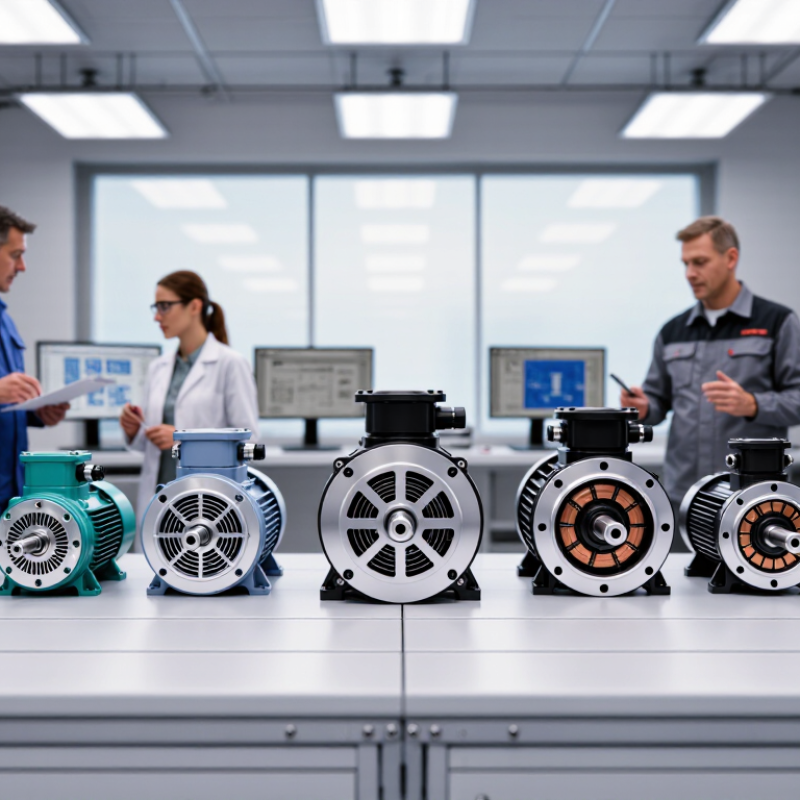
China Top 10 Electric Motor Project Manufacturers

Understanding Electric Motor Project Manufacturing in China

China Top 10 Electric Motor Project Manufacturers

Understanding Electric Motor Project Manufacturing in China

Electric motor project manufacturing in China involves more than producing a motor to match a specification. Teams coordinate design, materials, machining, winding, testing, and site commissioning. A 5.5 kW pump motor, for example, must suit its load, mounting space, cooling conditions, and operating schedule. Small mismatches can cause vibration, heat, or costly rework.

The International Energy Agency’s 2011 report, Energy-Efficient Motor Systems, estimates that motor-driven systems use about 46% of global electricity. That figure makes efficiency a project concern, not merely a purchasing detail. China’s Ministry of Industry and Information Technology set a 2023 target of 170 million kW in annual high-efficiency motor output under its motor-efficiency improvement plan. A target is not proof of delivery, so buyers should request dated test records and clear performance criteria.

Useful project reviews check insulation, temperature rise, vibration, noise, and efficiency under specified conditions. They also confirm whether factory tests reflect the actual drive and load at the installation site. Documents matter. So does the handoff. One weak point is that commissioning data may be incomplete; teams should agree beforehand who records operating readings and resolves deviations. Even a well-made motor can disappoint when alignment or ventilation is overlooked.

How the Top 10 Manufacturers Are Selected

Selecting the top ten electric motor project manufacturers requires more than comparing catalog prices. A credible review examines engineering capability, production controls, testing methods, and support after installation. We check whether a supplier can explain motor ratings, insulation choices, duty cycles, and expected operating conditions in clear terms. Small details matter. A test report should identify the model, measured values, and test conditions, not just show a passing mark.

The assessment also considers project delivery. Reviewers compare stated lead times with production capacity, component sourcing plans, and quality inspection records. A factory visit can reveal practical clues: organized winding areas, calibrated instruments, and traceable work orders. These observations are useful, but one visit cannot prove consistent performance across every order. That limitation deserves attention. We also assess how manufacturers handle custom specifications, installation questions, spare parts, and service requests. Vague answers reduce confidence, even when the technical proposal looks polished.

Project references help show experience, especially when they describe similar power ranges or operating environments. However, references should be checked carefully, and confidential customer details should remain protected. We weigh documented evidence more heavily than broad claims about market leadership. A scoring model can still miss context; a smaller manufacturer may offer strong project coordination but limited output capacity. The final selection therefore balances technical fit, verified quality practices, delivery reliability, and realistic support commitments.

Profiles of China’s Top 10 Electric Motor Project Manufacturers

Profiles of China’s top ten electric motor project manufacturers are best judged by what they can deliver, not by factory size alone. Some focus on standard induction motors for pumps and fans. Others handle custom designs for production lines, lifting equipment, or harsh operating environments. Their project records can reveal experience with motor selection, electrical integration, testing, and on-site commissioning. Details matter.

A strong profile should explain how a manufacturer manages design changes, lead times, and quality checks. Ask about insulation systems, enclosure protection, temperature rise, and test documentation. These details help buyers compare proposals against real operating conditions, such as dust near a cement line or frequent starts in a water plant.

Not always. A polished catalogue may still leave gaps in service support or spare-part planning. Reviewing sample inspection records and discussing a previous project can provide a more grounded picture.

Rankings are useful starting points, but they cannot replace a technical review of the actual application.

Key Products, Engineering Capabilities, and Industries Served

China’s top ten electric motor project manufacturers are best compared by application fit, not catalogue size. Their key products commonly include low- and high-voltage induction motors, permanent-magnet motors, synchronous units, and integrated gear motors. The International Energy Agency’s 2011 report, Energy-Efficiency Policy Opportunities for Electric Motor-Driven Systems, estimates that motor-driven systems use about 45% of global electricity. That makes efficiency, load matching, and reliable controls central project criteria.

Engineering capability matters beyond the nameplate. Strong project teams can adapt electromagnetic design, insulation, cooling, shaft dimensions, and variable-speed controls to site conditions. Look for documented efficiency testing, vibration and temperature checks, and clear commissioning support. A motor running beside a cement kiln faces different heat, dust, and starting loads than one serving a water-pumping station. Details matter.

Manufacturers may serve HVAC, water treatment, mining, steel, cement, and general manufacturing. Compare delivery scope too: some supply the motor alone, while others coordinate drives, baseplates, testing, and installation guidance. Ask for duty-cycle data and service response times. Not the whole story. A high efficiency rating can still disappoint when the motor is oversized or poorly matched; project specifications deserve a careful second look.

China Top 10 Electric Motor Project Manufacturers — Technical Benchmark

IEC efficiency-class benchmarks provide a useful reference when comparing motor specifications for industrial projects. The figures below show minimum efficiency levels for 7.5 kW, four-pole motors operating at 50 Hz; they are not manufacturer ratings.

Reference: IEC 60034-30-1 efficiency classes. Actual project performance depends on motor design, operating conditions, and applicable standards.

How to Compare Manufacturers for an Electric Motor Project

China Top 10 Electric Motor Project Manufacturers
How to Compare Manufacturers for an Electric Motor Project

For a China electric motor project, compare manufacturers against actual operating conditions, not just the quoted power rating. Share the required torque, speed range, starting frequency, daily running hours, mounting position, and ambient temperature. A pump running steadily needs different checks from a conveyor starting under load. Small details matter. Ask suppliers to state their assumptions and note any limits in their proposed design.

Review technical evidence, not polished claims alone. Request motor curves, efficiency figures at expected load points, insulation and protection details, and a sample test report. Confirm how dimensions, shaft tolerances, wiring, and noise are checked before shipment. Compare production capacity and lead times with your project schedule, then ask how changes or defects are handled. A low quotation may fit the budget, but it deserves careful questions about materials, testing, and service support. I would not treat a single sample as proof of consistent production.

Tips: Send every candidate the same specification sheet. Keep replies and drawings together. Ask for one clear example of a past project with similar load conditions. If an answer feels vague, request a measurable detail.

China Top 10 Electric Motor Project Manufacturers - How to Compare Manufacturers for an Electric Motor Project
Compare suppliers using project-specific evidence. The criteria below are a checklist, not a ranking of named manufacturers.
Comparison Dimension What to Compare Useful Evidence to Request Why It Matters
1. Application and duty Motor type, rated output, duty cycle, load profile, starting method, and operating environment. A project-specific datasheet and written confirmation that the proposed motor suits the application. A motor selected only by power rating may not suit the actual load or operating conditions.
2. Efficiency and losses Declared efficiency class and efficiency at the specified rating, frequency, and pole count. IEC 60034-30-1 defines IE efficiency classes for covered line-operated motors. Efficiency test report, nameplate data, and the applicable test method and standard edition. Efficiency affects energy consumption over the motor’s operating life; compare like-for-like ratings and test conditions.
3. Electrical design Rated voltage, frequency, phase, current, power factor, connection, and allowable supply variation. Electrical datasheet, winding diagram, and confirmation of compatibility with the project supply or drive. Matching the motor to the available supply helps avoid electrical, starting, and integration issues.
4. Variable-speed operation Permitted speed range, cooling at low speed, insulation suitability, and any required bearing-current protection when used with a drive. Drive-operation instructions, speed/torque curves, and confirmation of any required options. A motor designed for fixed-speed operation may need additional provisions for inverter duty.
5. Enclosure and protection Enclosure type and IP rating for the installation environment. IEC 60034-5 specifies degrees of protection provided by integral design of rotating electrical machines. Declared IP rating, construction drawings, and any test or inspection documentation relevant to the specification. The required protection depends on exposure to dust, water, and other site conditions.
6. Thermal and insulation design Insulation thermal class, temperature-rise limits, ambient-temperature assumptions, and cooling method. IEC 60085 designates thermal classes including 155 (F) and 180 (H). Insulation-class declaration, temperature-rise test data, and stated ambient and altitude limits. Thermal suitability influences reliability under the project’s actual load and environmental conditions.
7. Mechanical fit and interfaces Frame and mounting dimensions, shaft size, flange, terminal-box position, rotation, and coupling requirements. Dimensioned outline drawing, shaft drawing, and interface confirmation against the driven equipment. Early verification reduces the risk of installation delays and costly interface changes.
8. Testing and quality control Routine tests, agreed optional tests, inspection points, traceability, and acceptance criteria. Sample test report, inspection and test plan, calibration information, and a clearly defined acceptance procedure. Documented testing makes it easier to verify that delivered equipment matches the approved specification.
9. Delivery and project support Quoted manufacturing lead time, drawing approval schedule, packaging, shipping terms, and technical support responsibilities. Project schedule, delivery terms, document list, escalation contacts, and support scope in writing. Clear commitments help coordinate procurement, installation, and commissioning.
10. Commercial terms and lifecycle cost Quoted scope, exclusions, payment terms, warranty conditions, spare-parts availability, and energy-cost assumptions. Itemized quotation, warranty text, recommended spares list, and lifecycle-cost assumptions using the project’s operating profile. Purchase price alone may not reflect operating, maintenance, and replacement costs.
Recommended comparison method: confirm that each quotation uses the same technical specification, test requirements, delivery basis, and commercial scope before comparing offers.