Menü öffnen Menü schließen

China Top Pneumatic Punching Machine Manufacturers Guide

Choosing a reliable Pneumatic Punching Machine manufacturer in China requires more than comparing catalog prices. Buyers must examine engineering capability, production consistency, safety controls, and after-sales support. A machine may look impressive in photographs, yet its real value appears during repeated punching cycles, material changes, and routine maintenance.

This guide introduces China’s leading pneumatic punching machine manufacturers through practical evaluation points. These include frame construction, cylinder performance, control systems, tooling accuracy, noise levels, and emergency protection. Factory audits can reveal useful details, such as organized assembly areas, calibrated testing equipment, and technicians checking air pressure before shipment. Requesting sample production is also valuable. It shows whether the machine handles your actual sheet thickness, hole pattern, and operating speed.

Specifications can be misleading.

A trustworthy supplier should provide clear technical documents, inspection records, warranty terms, and installation guidance. Buyers should also confirm whether replacement seals, valves, and punches are readily available. Experience matters here, because small delays can stop an entire production line. However, no manufacturer comparison is perfect. Product models change, factory capabilities vary, and online information may become outdated. This guide therefore encourages direct verification through factory videos, third-party inspections, reference customers, and written performance tests. The best choice is not always the cheapest machine. It is the supplier that communicates honestly, supports stable operation, and accepts responsibility after delivery. Some evaluations may still require further checking. That is worth acknowledging.
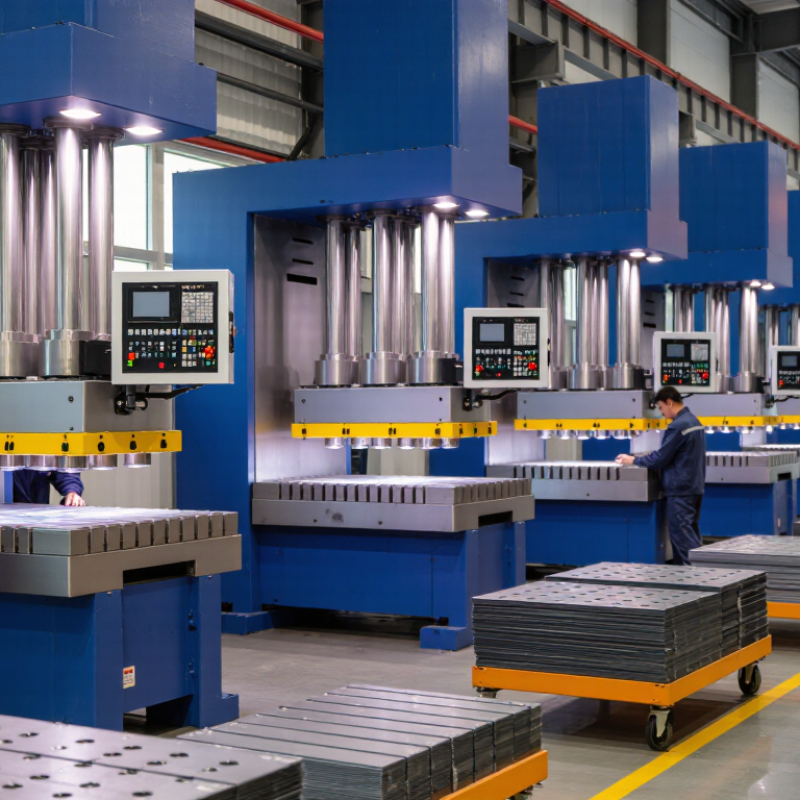
China Top Pneumatic Punching Machine Manufacturers Guide

What Is a Pneumatic Punching Machine?

A pneumatic punching machine uses compressed air to drive a punch through sheet material. The punch enters a matching die and creates a clean hole or shaped opening. Unlike a manually operated tool, it repeats the same motion with controlled speed and force.

Its main components include an air cylinder, punch, die, frame, regulator, and foot pedal or control system. The air cylinder converts pressure into linear movement. Operators can adjust working pressure for different materials, including thin steel, aluminum, plastic, and certain composite sheets. Material thickness must remain within the machine’s rated capacity.

Small details matter. A sharp punch reduces burrs and lowers the required force. Correct die clearance improves hole quality and extends tooling life. Moisture in the air line can damage internal parts, so filtration and regular drainage are practical requirements.

Not every pneumatic model delivers identical results. Earlier, I assumed higher pressure always meant better performance. That was too simple. Stroke length, throat depth, tooling alignment, and cycle rate also affect production quality. A machine may punch quickly but still create distorted edges when the die is poorly matched.

During selection, manufacturers should provide clear force ratings, operating pressure ranges, compatible tooling information, and maintenance instructions. Buyers should also check guarding, emergency stopping features, noise levels, and operator access. These points are easy to overlook during a factory demonstration. Performance should be verified with the actual material, thickness, and hole pattern required in daily production.

Key Features and Applications of Pneumatic Punching Machines

Pneumatic punching machines use compressed air to drive a punch through sheet material. Their main advantages are fast cycling, simple operation, and relatively low maintenance. A practical machine should offer adjustable pressure, stable stroke control, and a rigid frame. These features help reduce burrs and prevent uneven holes. The working table also matters. A flat, well-supported table improves positioning accuracy during repeated production.

Operators commonly use these machines for holes, slots, embossing, and light forming. Typical materials include mild steel, aluminum, plastic sheets, leather, and gasket materials. Applications range from electrical enclosures and ventilation parts to furniture fittings and packaging components. Die compatibility is essential. The punch and die must match the material thickness and required shape. Otherwise, tool wear increases quickly, and finished edges may look rough.

When comparing manufacturers in China, buyers should review load-test records, guarding design, pneumatic component quality, and spare-parts availability. Ask for sample results using your actual material. Specifications can look impressive on paper. A machine rated for high force may still perform poorly with weak alignment or unstable air pressure. In daily use, clean air filtration and regular lubrication make a noticeable difference. I have found that setup time is often underestimated. Training, die changes, and inspection routines deserve equal attention. No single configuration suits every workshop.

China Top Pneumatic Punching Machine Manufacturers Guide - Key Features and Applications of Pneumatic Punching Machines

Data Dimension Typical Industry Data Key Features and Considerations Common Applications
Operating Principle Compressed air drives a pneumatic cylinder, which converts linear piston motion into punching force through a ram and die set. Clean, fast, and suitable for repetitive light- to medium-duty punching. The machine requires a properly sized air compressor and filtration system. Sheet-metal punching, perforation, blanking, embossing, notching, and assembly operations.
Rated Nominal Force Approximately 0.5–80 tonnes for common pneumatic press configurations; higher capacities may require specialized designs. Actual punching capacity depends on air pressure, cylinder area, stroke position, tooling geometry, and material strength. Low-force models for labels and thin sheet; medium-force models for brackets, panels, terminals, and small formed parts.
Typical Operating Pressure Commonly 0.5–0.8 MPa, equivalent to approximately 5–8 bar or 73–116 psi. Stable pressure is essential for consistent force and cycle performance. The specified pressure must not exceed the machine manufacturer's rated limit. Factory production lines with centralized compressed-air systems.
Working Stroke Typically about 20–150 mm, depending on cylinder size, die height, and the intended process. Short strokes support high-speed punching; longer strokes provide greater clearance for deeper forming and larger workpieces. Hole punching, shallow forming, riveting, crimping, and component insertion.
Cycle Rate Approximately 15–120 cycles per minute for many standard applications; the rate varies with stroke, load, tooling, and air supply. A higher cycle rate can reduce cost per part, but excessive speed may increase vibration, tool wear, noise, and positioning errors. High-volume repetitive punching and automated or semi-automated assembly.
Material Thickness Often used for thin sheet, foil, plastic, rubber, paperboard, and non-ferrous materials; steel thickness must be calculated for each tool and force rating. Required force is affected by shear strength, perimeter length, clearance, material hardness, and the number of holes punched simultaneously. Electrical enclosures, ventilation panels, appliance parts, packaging components, and plastic fittings.
Accuracy and Repeatability Typical repeatability is approximately ±0.05–0.20 mm when the machine uses rigid tooling, controlled feeding, and stable operating conditions. Accuracy depends more on the frame, die clearance, guides, sensors, material handling, and maintenance than on pneumatic actuation alone. Terminal production, small brackets, connector parts, and components requiring repeatable hole locations.
Control Options Manual foot pedal, two-hand control, pneumatic logic, programmable controller, photoelectric sensing, and automatic feed integration. Control selection should match the required production rate, operator access, guarding arrangement, and automation level. Standalone workstations, progressive operations, indexing systems, and production cells.
Tooling and Die Compatibility Common tooling includes round, square, rectangular, slotted, custom-profile, embossing, and forming dies. Die clearance, mounting dimensions, alignment, hardness, and replaceability directly affect edge quality and tool life. Custom hole patterns, louvers, slots, tabs, shallow forms, and repeated component features.
Air Consumption Common machines may consume roughly 50–500 Nl/min, depending on cylinder bore, stroke, pressure, cycle rate, and control-valve design. Compressor capacity should include operating demand plus reserve capacity for pressure drops, leakage, and other equipment connected to the same line. Workshops and factories with compressed-air infrastructure and multiple pneumatic devices.
Safety Features Typical provisions include fixed or interlocked guards, two-hand controls, emergency stop devices, pressure regulation, and die-area protection. Safety equipment must be selected and validated according to the applicable local machinery-safety requirements and risk assessment. Manual loading stations, semi-automatic lines, and applications with frequent operator interaction.
Advantages Fast actuation, compact construction, relatively simple maintenance, overload tolerance when correctly configured, and no hydraulic oil circuit. Pneumatic presses are generally best for repetitive light- and medium-duty work rather than high-force deep drawing or precision servo forming. General fabrication, electronics, appliance components, packaging, and light automotive subcomponents.
Limitations Force and speed can vary with air pressure, leakage, temperature, and compressor performance; compressed air can also generate operating noise. Applications requiring very high force, precise force monitoring, or tightly controlled slow forming may be better suited to mechanical, hydraulic, or servo presses. Use-case evaluation, process testing, and tooling trials before high-volume production.
Selection Checklist Confirm required force, material and thickness, hole geometry, stroke, die height, cycle rate, accuracy, air pressure, air consumption, worktable size, and automation requirements. Request force calculations, tooling drawings, cycle-test results, safety documentation, maintenance requirements, and applicable conformity information before purchase. Suitable for comparing equipment specifications without relying on company or brand information.

Note: The numerical values are representative industry ranges for general comparison. Exact performance must be verified against the selected machine configuration, tooling design, material properties, local safety requirements, and manufacturer's technical documentation.

How to Evaluate Chinese Pneumatic Punching Machine Manufacturers

Evaluating a Chinese pneumatic punching machine manufacturer requires more than comparing quoted prices. Start with the machine’s working range: rated force, stroke length, shut height, throat depth, and cycle speed. Ask for test records using material similar to yours. A clean sample is useful. It is not enough. Watch the first and fiftieth cycle. Listen for pressure drops, uneven noise, or delayed return. Request drawings, component specifications, and a clear list of included tooling.

A factory visit can reveal details brochures omit. Check assembly benches, calibration tools, storage conditions, and traceability labels. Speak with the production engineer, not only a sales representative. Ask how they control frame deflection, die alignment, air consumption, and emergency-stop response. Review quality records and export references from comparable applications. Independent inspection before shipment adds confidence, especially when tolerances are tight. Still, inspection cannot replace a meaningful acceptance test.

Service capability deserves equal attention. Confirm spare-part availability, remote troubleshooting hours, installation support, and training materials. Put response times in writing. Request a sample maintenance schedule with lubrication points and wear limits. I once treated a low price as evidence of efficiency; later, missing documentation created avoidable delays. That assumption was wrong. Manufacturers should explain weaknesses openly, including noise variation or delivery risks. A reliable supplier welcomes technical questions, records corrective actions, and allows reasonable time for verification. Do not rush the decision.

Leading Manufacturer Profiles and Product Strengths in China

China Top Pneumatic Punching Machine Manufacturers Guide

Leading pneumatic punching machine manufacturers in China generally fall into three profiles: press specialists, automation integrators, and custom engineering workshops. Press specialists often provide rigid frames, adjustable stroke control, and stable cycle performance. Automation integrators add decoilers, feeders, sensors, and PLC systems for continuous production. Custom workshops focus on die compatibility and unusual sheet sizes. This matters because one machine rarely fits every factory. UNIDO reported that China produced about 31.6% of global manufacturing value added in 2023, showing the depth of its industrial supply base. Grand View Research also projects steady growth in the global metal stamping market through 2030.

A strong supplier should share measured data, not only polished catalog images. Ask for punching force, strokes per minute, throat depth, noise level, and tested material thickness. Request a video using your actual part geometry. During factory reviews, inspect guide columns, lubrication points, electrical cabinets, and emergency-stop testing. A machine running smoothly for ten minutes proves little. I would also compare tolerance records from repeated production batches. Some manufacturers are excellent at mechanical construction but weaker in software support. That gap is easy to underestimate.

Tips: Check the press under real load. Confirm spare-part availability, operator training, and remote troubleshooting terms. Ask whether quoted speed changes after installing your die. The lowest price can hide slower commissioning, and this is where many purchasing plans become unrealistic.

Buying Considerations for Selecting the Right Manufacturer

Choosing a China-based pneumatic punching machine manufacturer requires more than comparing quoted prices. Grand View Research estimated the global metal stamping market at about US$211 billion in 2023, with continued growth expected through 2030. That demand can attract capable suppliers and inexperienced traders. Verify whether the company owns its workshop, controls assembly, and provides traceable component records. Ask for ISO 9001 certification, risk assessments aligned with ISO 12100, and electrical documentation based on IEC 60204-1.

Certificates matter. Evidence matters more.

Request a sample test using your actual material, thickness, and tooling. A practical trial should record punching force, stroke rate, air consumption, noise, and burr size. Test at the stated working pressure, often around 0.6 MPa, not at an ideal laboratory setting. Ask for at least 500 repeated cycles and inspect dimensional stability afterward.

Numbers matter.

Review maintenance access, seal availability, response time, and operator training. A supplier should explain its preventive-maintenance schedule in clear language.

Use third-party inspection before shipment, especially when the machine has customized controls or safety guarding. Confirm acceptance criteria in writing, including repeatability, delivery terms, spare parts, and warranty limits. A low price may hide weak testing or expensive downtime.

I would not trust a polished factory video alone. My own selection process would include a live call with technicians, though this can still miss hidden production risks. That uncertainty deserves attention.