Best Wire Shielding Sleeve Manufacturer in China?
Choosing the best Wire Shielding Sleeve manufacturer in China requires more than comparing prices or polished factory photographs. Performance depends on shielding effectiveness, braid coverage, material stability, flexibility, and termination quality. A sleeve that looks dense may still leak noise around connectors or bend points.
MarketsandMarkets reported that the global electromagnetic interference shielding market is expanding with demand from electric vehicles, telecommunications, aerospace, and industrial electronics. Grand View Research also identifies rising vehicle electrification as a major driver for advanced cable protection. These reports describe broad markets, not Wire Shielding Sleeve products alone. Their figures can differ. That limitation matters.
Henry W. Ott, a leading EMC engineer, wrote, “The purpose of shielding is to prevent unwanted electromagnetic energy from entering or leaving a circuit or system.” His principle remains practical on a production floor. The right manufacturer should provide measurable shielding data, not vague claims. Look for test methods, frequency ranges, attenuation results, and material traceability. Check whether copper, tinned copper, stainless steel, or conductive fabric matches the application. Ask about abrasion testing, temperature cycling, flame performance, and repeated bending.
Small details decide reliability.
An experienced supplier should explain how the sleeve performs after cutting, routing, and installation. It should also show consistent samples from different production batches. Certifications help, but they do not replace independent verification. A weakness remains: many supplier comparisons rely on brochures rather than audited performance. This article therefore examines Chinese manufacturers through technical evidence, manufacturing experience, quality controls, customization capability, and communication reliability. The best choice may not be the cheapest. It should be the supplier that can prove protection under real operating conditions.
What Is a Wire Shielding Sleeve and How Does It Work?
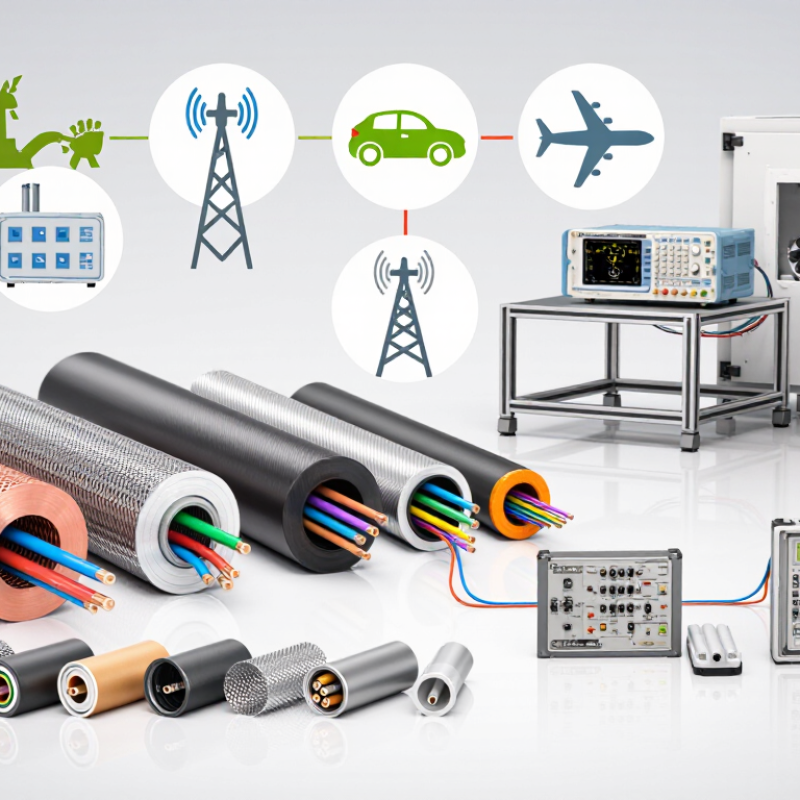
A wire shielding sleeve is a conductive cover placed around cables to reduce electromagnetic interference (EMI). It works like a flexible Faraday cage. The sleeve intercepts unwanted electrical fields and directs interference toward the grounding path.
Common constructions include tinned copper braid, aluminum foil, and metal-coated textile fibers. Braided sleeves flex well around tight bends. Foil sleeves usually provide stronger continuous coverage.
The 2024 EMI Shielding Market report by Grand View Research valued the global market at about USD 6.1 billion in 2023. It also projected growth of approximately 5.8% annually through 2030.
This growth reflects rising shielding needs in vehicles, industrial controls, medical equipment, and data systems. However, sleeve material alone does not guarantee performance. Shielding effectiveness depends on braid coverage, cable geometry, connector contact, and grounding quality. A loose drain wire can weaken the result.
In practical testing, engineers should check transfer impedance, surface resistance, and shielding effectiveness across the intended frequency range. ASTM and IEC test methods can support repeatable comparisons.
A reliable Chinese manufacturer should provide batch traceability, material certificates, dimensional records, and laboratory test data.
Ask for samples with a 10-millimeter cable and inspect the termination under movement. Small gaps matter. I have seen excellent braid designs fail at the connector. That detail is easy to overlook. Cost, lead time, flame resistance, and repeated-bend durability also deserve equal attention.
Key Materials and Designs Used in Shielding Sleeves
Best Wire Shielding Sleeve Manufacturer in China?
Material choice determines how a shielding sleeve performs under heat, movement, and electrical noise. Tinned copper offers strong conductivity and flexible braiding. Stainless steel resists corrosion and repeated abrasion. Aluminum foil gives high coverage, but it can crack during tight bending. A 2024 Grand View Research report valued the global electromagnetic interference shielding market at about USD 7.2 billion in 2023. It also projected steady growth through 2030. That demand reflects wider use in vehicles, medical equipment, and industrial controls.
Design details matter just as much. Braided sleeves usually balance flexibility and shielding effectiveness. Knitted constructions stretch further around connectors and irregular shapes. Foil-braid combinations can improve coverage across a broad frequency range. In practical cable audits, poor termination often causes more failure than weak sleeve material. The shield needs a clean, low-resistance connection at both ends. Extra length helps installation, but excessive slack may rub against sharp housings.
A 2023 MarketsandMarkets analysis identified automotive electronics and telecommunications as major applications for EMI shielding materials. Manufacturers should therefore test more than attenuation claims. Check abrasion cycles, temperature exposure, bend radius, and flame performance. IEC 62153-4-3 provides a recognized method for measuring transfer impedance in screened cables. Real assemblies remain less predictable than laboratory samples. That assumption is convenient, but incomplete. A sleeve may pass testing and still fail after repeated movement. Source review and production traceability matter when selecting a Chinese manufacturer.
Performance Standards for Comparing Chinese Manufacturers
Comparing Chinese manufacturers requires more than checking catalog prices. A reliable wire shielding sleeve supplier should show test records for shielding effectiveness, abrasion, heat, moisture, and flame behavior. ASTM D4935 measures shielding effectiveness in decibels, while IEC 62153-4 methods evaluate cable screening performance and transfer impedance. Ask for raw test curves, not only a passing statement.
Material consistency matters. A sleeve made from tinned copper, stainless steel, or aluminum-coated fiber can perform differently after bending. For automotive applications, ISO 6722-1 testing commonly assesses cables at 105°C, 125°C, or higher temperature classes. The supplier should provide temperature-cycle results, dimensional recovery, and electrical resistance before and after aging. Small details matter here. A loose braid can expose gaps near connectors.
Factory capability is another performance standard. ISO 9001 certification supports process control, but it does not guarantee excellent shielding. Request batch traceability, incoming material records, and inspection limits for braid density and inner diameter. IEC 60332-1-2 testing can help compare flame behavior, although it does not replace application-specific validation. Industry research from Grand View Research continues to identify electronics, vehicles, and telecommunications as major growth areas for EMI shielding demand. That suggests stronger competition, but not automatic quality. I would still test three production batches. Samples can look perfect; production sometimes disagrees.
How to Evaluate a Wire Shielding Sleeve Manufacturer
Best Wire Shielding Sleeve Manufacturer in China?
Evaluating a wire shielding sleeve manufacturer requires more than comparing prices. Start with material evidence. Ask whether the sleeve uses tinned copper, aluminum foil, stainless steel, or a hybrid structure. Check shielding effectiveness across your actual frequency range, not only one attractive test figure. MarketsandMarkets reported that the global EMI shielding market could grow at roughly 8% annually through 2029, increasing pressure on suppliers to prove performance rather than repeat marketing language.
Request test reports based on recognized methods, including transfer impedance, attenuation, tensile strength, abrasion, and temperature resistance. The IPC/WHMA-A-620 standard is useful for cable assembly workmanship, while IEC 60512 supports connector and electrical testing. A reliable factory should provide controlled sample identification, test dates, equipment details, and acceptance limits. Vague certificates are a warning sign.
Production consistency matters just as much.
Review copper strand diameter, braid coverage, sleeve expansion, cutting accuracy, and batch records. Ask for a pre-production sample and inspect it after repeated bending around a 10-millimeter radius. I have seen attractive sleeves loosen after only a few cycles. That failure is easy to miss. Supplier audits should also examine incoming-material controls, operator training, and corrective-action records. A factory may pass one sample and still lack stable process control. That uncomfortable gap deserves attention.
Common Applications and Selection Considerations
Best Wire Shielding Sleeve Manufacturer in China?
Wire shielding sleeves serve different duties in vehicles, factory robots, medical equipment, and data-center cabinets. They reduce electromagnetic interference around cable bundles. Grand View Research valued the global electromagnetic shielding market at about USD 6.03 billion in 2023. Its 2024 report forecasts a 5.8% compound annual growth rate through 2030. This growth reflects denser electronics, especially in electric vehicles and industrial automation.
Application determines the sleeve design. Automotive harnesses often need abrasion resistance, high-temperature stability, and resistance to oil or coolant. Robot cables require flexibility after thousands of bending cycles. Sensitive signal cables may need copper, tinned copper, or nickel-plated shielding. Conductive fabric can suit lightweight assemblies. It may perform poorly near sharp edges. A sleeve that looks excellent on a sample board can fail after repeated movement.
Selection should begin with frequency range, required shielding effectiveness, and cable diameter. Check braid coverage, transfer impedance, bend radius, and termination quality. The IEC 62153-4-3 method helps evaluate transfer impedance in screened cables. Temperature ratings must match the entire installation, not only the sleeve material. Also review flame behavior, moisture exposure, and connector compatibility. In practice, installers often choose an oversized sleeve for convenience. That choice can reduce coverage and create loose sections. It deserves reconsideration. A capable China-based manufacturer should provide test records, batch traceability, dimensional tolerances, and samples from actual production, not only laboratory prototypes.