Menü öffnen Menü schließen

Who Is the Best Stainless Steel Pipe Supplier in China?

Choosing the best Stainless Steel Pipe supplier in China takes more than comparing prices. A low quotation may look attractive, but it means little if dimensions vary or delivery dates keep shifting. Start by checking whether the supplier handles the grades, sizes, and finishes your project actually requires. Ask for material test certificates, inspection records, and clear details about product traceability. Ask for proof. These documents help you verify what is being supplied, rather than relying on polished claims.

A dependable supplier should answer technical questions clearly and explain how it manages quality checks, packaging, and shipping. For example, confirm pipe diameter, wall thickness, length tolerance, and surface condition before placing an order. Small differences can cause real problems during installation. This guide looks at these practical points, along with production capability, communication, and after-sales support. It also considers how to compare quotations fairly, including specifications and delivery terms. A factory visit or independent inspection may provide useful context, though neither guarantees every shipment will be perfect. Even a careful comparison has limits. The right choice depends on your application, order volume, and risk tolerance—not on a single ranking or impressive website. We will outline questions buyers can ask and warning signs worth checking, so you can assess suppliers with better evidence and fewer assumptions.
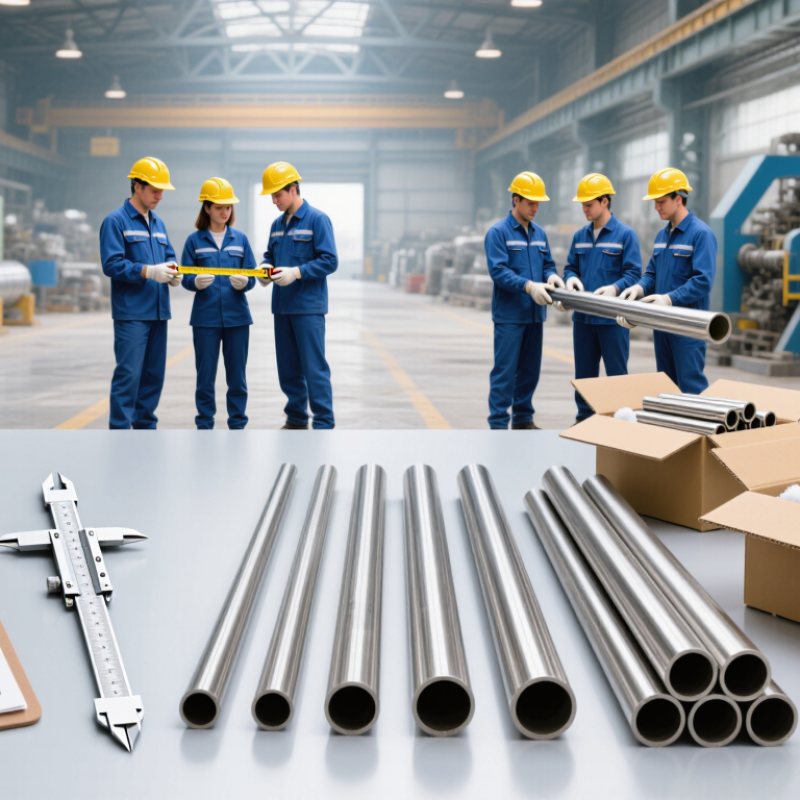
Who Is the Best Stainless Steel Pipe Supplier in China?

What Defines a Stainless Steel Pipe Supplier in China?

What Defines a Stainless Steel Pipe Supplier in China?

A dependable supplier is defined by traceability, process control, and clear communication—not a polished catalogue. World Stainless reported global stainless-steel crude production of about 58.4 million tonnes in 2023, with China contributing roughly 36.7 million tonnes. That scale makes supplier verification important: large output alone does not prove consistent pipe quality. Ask whether the supplier manufactures or resells the pipe, and request heat numbers that link each bundle to its test records.

Check material certificates against the order, including grade, dimensions, and heat-treatment details. For welded pipe, review weld inspection records; for seamless pipe, check the specified inspection and testing requirements. Standards such as ASTM A312 or EN 10217-7 can help define the product, but the purchase specification must state which applies. Small details matter. Even a tidy certificate can miss a batch-level problem, so confirm that markings on the pipes match the documents. A practical supplier also explains tolerances, packing, and delivery terms before production. Some buyers focus too much on price; that can be a costly blind spot. Ask for a sample inspection plan, and clarify who handles nonconforming material before placing a large order.

How China's Stainless Steel Pipe Supply Market Is Structured

China’s stainless steel pipe market is a layered supply network, not a single list of factories. Integrated mills produce or source steel, while pipe manufacturers form, weld, heat-treat, and finish it. Some specialize in welded pipe; others handle seamless products or narrower grade ranges. Service centers and trading companies may provide stock, cutting, documents, and export coordination. They can be useful, but each additional hand can make responsibility less clear. Details matter.

To assess a supplier, trace where the material comes from and who controls each production step. Ask for evidence: material test certificates, dimensional inspection records, and clear descriptions of the applicable grade and manufacturing process. Confirm whether the supplier can meet your required outside diameter, wall thickness, finish, and delivery schedule. A polished catalogue is not the same as verified production capacity. For urgent orders, check actual stock and packing arrangements, not only estimated lead times. China’s supply market is broad, and capability varies considerably between companies. Even careful checks cannot remove every risk; specifications can be interpreted differently, so record acceptance criteria in plain, measurable terms.

Who Is the Best Stainless Steel Pipe Supplier in China? — How China’s Stainless Steel Pipe Supply Market Is Structured

Supply-Market Segment Typical Role Common Products or Services Quality and Sourcing Checks Best Fit For
Pipe manufacturers Produce pipe from stainless steel feedstock through processes such as seamless production or forming and welding. Common austenitic grades and, where offered, duplex grades; production may include different sizes, schedules, and finishes. Confirm the manufacturing route, grade, dimensions, applicable product standard, traceability, and whether inspection documents are available for the specific order. Buyers seeking direct production sourcing, custom specifications, or repeat orders with defined technical requirements.
Fabricators and processors Further process pipe or tube, or manufacture components and assemblies to a buyer’s drawings. Cut-to-length material, formed sections, prefabricated spools, fittings, and other fabricated items, depending on capability. Review drawings, material traceability, dimensional tolerances, welding procedures, inspection scope, and acceptance criteria. Projects requiring made-to-order dimensions, prefabrication, or coordinated pipe assemblies.
Stockists and service centers Hold inventory from one or more sources and supply standard or commonly requested items. Available-size pipe, cut lengths, material processing, and consolidated orders; stock varies by grade and location. Check actual stock, origin, batch identification, document availability, storage condition, and whether substitutions need approval. Urgent requirements, smaller quantities, mixed-size orders, or buyers prioritizing availability.
Trading and export intermediaries Coordinate purchasing, documentation, communication, and shipment between buyers and producers or stockholders. Product sourcing, order consolidation, export paperwork, and logistics coordination. Clarify the actual producer and shipment origin, verify documents against the goods, and define responsibility for inspection and nonconformities. Overseas buyers needing sourcing support, consolidated shipments, or export coordination.
Standards and product specification Define the requirements against which a particular pipe order should be manufactured and inspected. Examples include ASTM A312 for austenitic stainless steel pipe, ASTM A790 for duplex stainless steel pipe, GB/T 14976 for seamless stainless steel pipes for fluid transport, and GB/T 12771 for welded stainless steel pipes for fluid transport. Confirm the exact standard edition, grade, manufacturing route, dimensions, testing, and any project-specific or regulatory requirements. Standards are not interchangeable by default. All buyers; the required standard should be agreed before quotation and purchase.
Inspection and testing Provide evidence that delivered material conforms to the agreed order requirements. Document review, dimensional checks, material identification, and tests required by the specification or purchase order. Agree inspection scope in advance. Request applicable material test certificates and confirm heat or batch traceability; third-party inspection may be specified when needed. Safety-critical, regulated, export, or project-based procurement.
Logistics and delivery Move and protect pipe from the production or storage site to the buyer’s delivery point. Domestic transport, export packing, container loading, shipping documentation, and delivery coordination. Specify packing, marking, corrosion and surface protection, loading method, delivery terms, and responsibility for freight and insurance. Buyers balancing delivery schedule, transport risk, and total landed cost.
How to assess the “best” supplier Match the supplier’s capabilities to the project rather than relying on a single market-wide ranking. Compare technical fit, product availability, production or processing capability, documentation, service, lead time, and total cost. Request a specification-based quotation, verify relevant records, review a sample document package, and define acceptance and remedy terms in writing. Any buyer comparing suppliers for a specific grade, size, standard, quantity, and delivery destination.

Which Standards and Certifications Should Buyers Check?

For a stainless steel pipe supplier, check whether the paperwork matches the pipe’s grade, dimensions, and intended service. ASTM A312 covers seamless, welded, and heavily cold-worked austenitic stainless steel pipe. For each delivery, request a material test certificate with the heat number, chemical composition, and mechanical results. The heat number should match the pipe marking and packing list. Small mismatch, big problem.

EN 10204 type 3.1 is an inspection document, not a product certification. Ask who authorized it and whether the test results are specific to your batch. Also review the supplier’s ISO 9001 certificate, its scope, and expiry date; quality-management certification does not prove every pipe meets your specification. Depending on the application, require documented hydrostatic testing, dimensional inspection, and positive material identification. Verify records, not just logos.

Market scale makes traceability worth checking. World Stainless reported global stainless steel melt-shop production of 58.4 million tonnes in 2023, up 4.6% from 2022. That figure describes production, not quality, but it shows why buyers should insist on batch-level evidence.

I would compare the certificate against the purchase order line by line. It is easy to overlook. Independent inspection can help when the order is large or the service conditions are demanding. Still, no certificate replaces a clear specification and careful review.

How to Compare Suppliers on Quality, Capacity, and Service

Comparing stainless steel pipe suppliers starts with evidence, not polished brochures. Ask for material certificates that match the quoted grade, dimensions, and heat numbers. Check sample pipes for consistent wall thickness, clean weld seams, and smooth ends. A caliper and a close visual inspection can reveal obvious variation, but they cannot replace documented testing. Request inspection records and clarify how defects are handled. Details matter.

Production capacity needs more than a large factory floor. Ask how many tons can be made per month, what is already booked, and whether the quoted delivery date includes inspection and packing. Review equipment, inventory, and recent order schedules when possible. A sample may look excellent, yet one sample is not a production run. I would be cautious about treating any single visit as proof of consistent output.

Service shows up in small moments. Does the sales team answer technical questions clearly, or simply promise everything? Ask who will confirm specifications, share progress updates, and manage a rejected batch. A useful supplier will explain limits, offer workable alternatives, and put agreed details in writing. Communication can still falter under pressure; test it with a specific question before placing a large order.

How to Identify the Right Supplier for a Specific Project

Who Is the Best Stainless Steel Pipe Supplier in China?
How to Identify the Right Supplier for a Specific Project

The right supplier is the one whose pipe specifications match your operating conditions, not simply the lowest quotation. Define the required grade, outside diameter, wall thickness, length, and surface finish before requesting prices. Include the working temperature, pressure, fluid, and installation environment. These details affect material selection and service life. Ask how the pipes are manufactured and what dimensional tolerances can be maintained. Small details matter.

Tips: Request a sample and review its dimensions and finish. Check material test certificates against the quoted grade and heat numbers. Ask whether inspections are documented, and clarify how defects or delays are handled. Keep the answers in writing.

A capable supplier should explain its production capacity, inspection process, and realistic lead time in clear terms. Compare the same specifications across quotations; otherwise, a lower price may reflect thinner walls or different tolerances. If project quality requirements call for independent inspection, confirm access before placing an order. One point is easy to overlook: a technically correct pipe can still create problems if packaging, marking, or delivery length does not suit the site. Ask for these details early, and assess how precisely the supplier responds.

Who Is the Best Stainless Steel Pipe Supplier in China? How to Identify the Right Supplier for a Specific Project

Compare the material grade required by your project before evaluating suppliers. This chart shows typical minimum specified yield strengths for common grades to ASTM A312/A312M: TP304 and TP321, 205 MPa; TP316L, 172 MPa; and duplex S32205, 450 MPa. Values are rounded conversions from the standard’s ksi requirements. Strength alone does not determine suitability—also verify corrosion resistance, operating conditions, product dimensions, certifications, inspection records, and traceability.