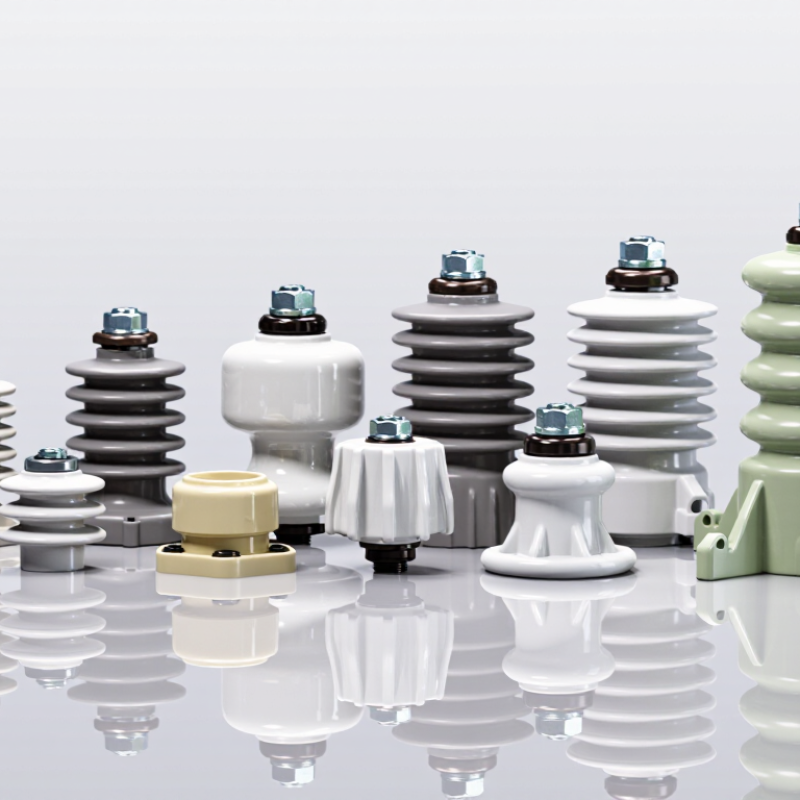
| 1 | Porcelain third-rail support insulator | Supporting and electrically isolating an exposed conductor rail in urban rail and metro systems. | Electrical porcelain offers a rigid insulating body and established use in outdoor electrical equipment. It is brittle and can be damaged by impact or mishandling. | System voltage, creepage distance, mechanical load, mounting geometry, contamination, moisture, and temperature range. | Project railway requirements; EN 50122-1 for railway electrical safety and earthing considerations; applicable insulator and material specifications. | Confirm drawings, mounting interface, test reports, glaze and surface condition, packing protection, and replacement compatibility. |
| 2 | Glass-reinforced polymer support insulator | Conductor-rail supports where a relatively lightweight insulating component is preferred. | Reinforced polymer constructions can offer lower mass than porcelain. Performance depends on resin system, reinforcement, weathering protection, and manufacturing quality. | UV and moisture exposure, mechanical strength, tracking and erosion resistance, fire requirements, and design life. | Project-specific railway standards; EN 50124-1 for insulation coordination in railway applications, where applicable. | Request material identification, mechanical and electrical test evidence, weathering data, dimensional tolerances, and traceability information. |
| 3 | Silicone-rubber composite support insulator | Outdoor rail-power installations exposed to rain, dust, or pollution, subject to design suitability. | Composite designs commonly use a load-bearing core with a polymeric housing. Silicone rubber may provide hydrophobic surface behavior, but performance depends on formulation and service conditions. | Pollution severity, creepage distance, housing integrity, interface sealing, mechanical loading, and aging under UV and weather exposure. | IEC 60815 series for selection and dimensioning of high-voltage insulators in polluted conditions, where within scope; project railway specifications. | Review design qualification, interface sealing, aging and tracking tests, installation instructions, and supplier quality controls. |
| 4 | Epoxy-resin indoor support insulator | Indoor switchgear, busbar supports, and enclosed power-rail equipment. | Cast resin can provide compact insulation and defined mounting interfaces. Suitability depends on voltage class, resin formulation, and thermal and mechanical design. | Operating voltage, impulse withstand, temperature rise, creepage and clearance, condensation risk, and short-circuit forces. | IEC 60660 for indoor post insulators of organic material, where applicable; IEC 62271-1 for high-voltage switchgear and controlgear assemblies. | Verify rated values against the assembly design, resin quality documentation, dimensions, test records, and environmental limits. |
| 5 | Porcelain station post insulator | Substations and outdoor switchgear supporting conductors or equipment at elevated voltage levels. | Porcelain post insulators are rigid and widely used in electrical installations. Their electrical and mechanical suitability must be established for the specific design. | Rated voltage, withstand levels, cantilever load, creepage distance, seismic requirements, and site pollution and altitude. | IEC 60168 for tests on indoor and outdoor post insulators; IEC 60273 for characteristics of indoor and outdoor post insulators, where applicable. | Confirm design drawings, routine and type-test evidence, mechanical ratings, mounting dimensions, and applicable national deviations. |
| 6 | Composite station post insulator | Outdoor substations and switchgear where composite construction is suitable for the project environment. | Typically combines a load-bearing core with a polymeric housing. Lower mass than comparable porcelain designs may simplify handling, depending on dimensions and rating. | Mechanical load, pollution, UV exposure, housing-core interface, hydrophobicity requirements, and service environment. | IEC 62231 for composite station post insulators, within its scope; IEC 60815 series for pollution-related selection, where applicable. | Check qualification to the specified standard edition, interface design, aging evidence, test certificates, and product traceability. |
| 7 | Side-contact conductor-rail insulator | Rail systems using a conductor rail contacted from the side by the current-collection shoe. | Support geometry is designed around the conductor-rail profile and clearance envelope. Material may be ceramic or polymeric according to the approved system design. | Contact arrangement, rail profile, electrical clearance, mechanical restraint, vibration, contamination, and maintenance access. | Applicable railway-system specifications; EN 50122-1 and EN 50124-1, as relevant to the installation and insulation coordination. | Confirm the exact rail profile and interface, approved drawings, installation orientation, interchangeability, and inspection criteria. |
| 8 | Under-running conductor-rail insulator | Conductor-rail systems in which the current collector engages the rail from below. | Designed to support the rail while maintaining electrical separation and the required collector clearance. The complete assembly geometry is system-specific. | Collector clearance, rail support spacing, water and debris exposure, mechanical loads, and safe access for inspection. | Applicable railway-system specifications; EN 50122-1 for electrical safety and EN 50124-1 for insulation coordination, where applicable. | Require interface drawings, tolerance information, environmental limits, installation instructions, and evidence of compatibility with the rail system. |
| 9 | Pollution-resistant extended-creepage insulator | Sites with elevated pollution or salt exposure, when a longer creepage path is required by the insulation design. | May use extended sheds or other geometry to increase surface creepage distance. Longer creepage alone does not guarantee performance under every contamination or wetting condition. | Site pollution assessment, wetting patterns, creepage distance, shed profile, voltage stress, and cleaning or maintenance strategy. | IEC 60815 series for high-voltage insulator selection and dimensioning in polluted conditions; relevant product standard for the insulator type. | Ask for the creepage-distance calculation basis, pollution assumptions, test evidence, maintenance guidance, and exact dimensional drawings. |
| 10 | Switchgear busbar support insulator | Supporting busbars and conductors inside metal-enclosed or air-insulated switchgear associated with rail-power systems. | Available in ceramic or organic insulating materials. The support must withstand the electrical and mechanical stresses of the complete assembly. | Assembly voltage, lightning impulse withstand, short-circuit forces, clearances, temperature, enclosure conditions, and mounting arrangement. | IEC 62271-1 for common requirements; IEC 62271-200 for AC metal-enclosed switchgear above 1 kV and up to 52 kV, when applicable. | Evaluate as part of the switchgear assembly, confirm interface and test evidence, and verify compliance with the project specification and local rules. |