
Menü öffnen Menü schließen

10 Best M8 Pico Connectors for Industrial Sensors

Industrial sensors rarely fail in isolation. A loose connection, tight bend, or poorly matched cable can interrupt an entire measurement point. The M8 Pico Connector offers a compact connection option for sensors in crowded machinery, robotic cells, and production lines. Its small size helps where larger connectors compete for space. But compact does not mean universally suitable.

This guide reviews ten M8 connector options for industrial sensor applications, focusing on details that affect real installations. Pin count, coding, cable length, shielding, and connector orientation can change compatibility. Check these against the sensor and controller documentation before ordering. Also consider vibration, temperature, washdown exposure, and the available space for tightening or replacement. A high ingress-protection rating may help in wet areas, but it does not replace correct installation or a compatible mating connector.

Some differences look minor on a product page. They may matter on the machine. We compare specifications and practical selection points, while noting that performance depends on the full connection system and operating conditions. Not every listing provides equally complete test data, so verify critical ratings with the manufacturer. One overlooked detail can still cause trouble. Use the shortlist as a starting point, then confirm dimensions, wiring, and environmental requirements for your specific sensor setup.
10 Best M8 Pico Connectors for Industrial Sensors

M8 Pico Connector Basics: IEC 61076-2-104 Interfaces and Coding

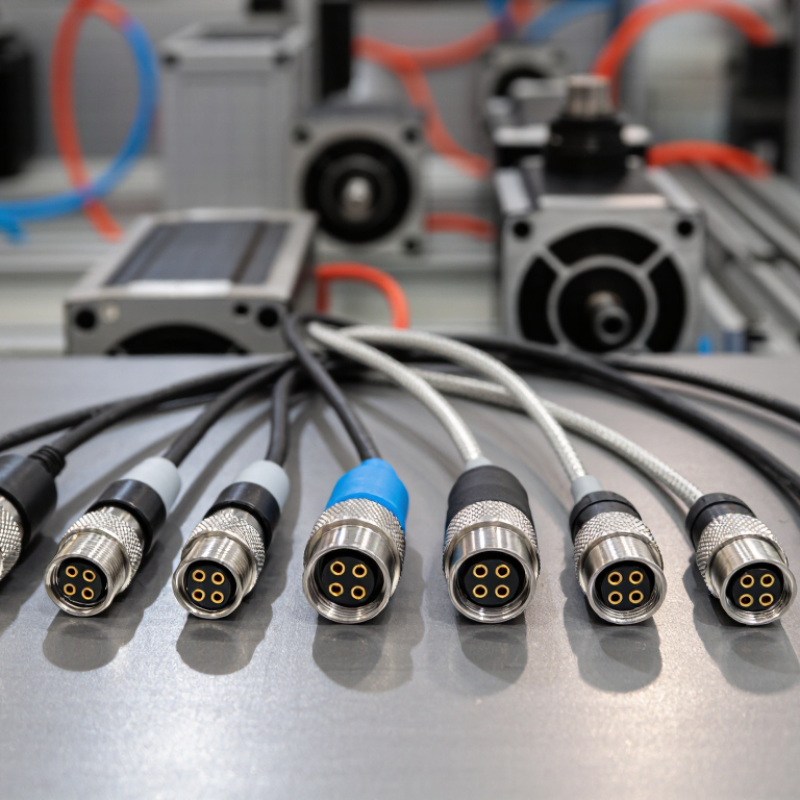
M8 Pico connectors are compact circular interfaces used where sensors meet control cables in tight spaces. The “M8” refers to the threaded coupling size, while “Pico” commonly describes the small connector format. IEC 61076-2-104 sets out key dimensions and mating-interface requirements for M8 connectors. This helps engineers compare parts, but it does not make every connector interchangeable. Contact count, pin assignment, cable termination, and sealing details still matter.

Coding identifies the connector’s mechanical keying and contact arrangement. A-coded M8 types are commonly used for sensor and actuator connections, but the code alone does not confirm electrical compatibility. Check the wiring diagram and rated voltage before mating connectors. A plug may fit the thread yet carry a different pinout. That detail is easy to miss during a quick replacement. In field work, I would verify the connector drawing against the sensor manual, even when both parts appear identical.

Tips: Inspect the keyway and pin layout under good light. Confirm the code, number of contacts, and pin assignments before installation. Keep mating faces clean, and avoid forcing a coupling that resists turning. A small mismatch can cause downtime. My own checklist would also include the cable’s bend radius; it is often overlooked in crowded enclosures.

Key Selection Data: Pin Count, Current Rating, Voltage, and IP67

Pin count determines more than how many wires fit inside an M8 connector. A three-pin version may suit a simple switching sensor, while four or more pins can carry extra signals or power. Match the connector layout to the sensor’s wiring diagram, not just its housing. Small details matter. Check the pin assignment and keying before ordering; similar-looking connectors can have different internal arrangements.

Current and voltage ratings must meet the sensor’s requirements with a sensible margin. Ratings vary by connector design, contact size, and cable, so avoid assuming every M8 connector handles the same load. I double-check the datasheet against the actual cable length and operating conditions. That step is easy to skip. For washdown or dusty installations, confirm the IP67 rating applies when the connector is fully mated and correctly tightened. A damaged seal, loose coupling nut, or open connection can undermine protection. IP67 describes a defined test condition, not a guarantee against every exposure. For a sensor near a vibrating conveyor, also check strain relief and cable flexibility; I have seen those details receive less attention than pin count.

Compare 10 M8 Connectors by Wiring, Shielding, and Sensor Compatibility

A useful M8 comparison starts with wiring, not price. Ten common choices include straight and right-angle three-pin versions, plus four-pin and five-pin A-coded versions. Three-pin connectors suit many discrete sensors using power and one switching signal. Four-pin versions can add a second signal or support different sensor wiring. Five-pin options provide more conductors, but only help when the sensor uses them.

Check the pinout.

The remaining choices change shielding and installation: shielded three- and four-pin versions, molded-cable assemblies, field-wireable plugs, and PVC- or PUR-jacketed cables. Shielding can reduce interference near drives, but poor bonding may undermine it. Molded cables resist handling at the connection; field-wireable plugs ease replacement, though assembly quality matters. PVC often fits dry, general-purpose runs, while PUR is useful where abrasion or repeated flexing is expected.

Not always.

Compatibility depends on the sensor’s output, pin assignment, and cable environment. The IEC 61076-2-104 standard specifies dimensions and mating requirements for M8 connectors; it does not guarantee identical pinouts across sensors. The IO-Link Community reported more than 51 million installed IO-Link nodes in 2023, underscoring the need to verify digital-sensor wiring rather than assume a familiar three-wire layout. For each candidate, match the device datasheet to the connector diagram, then confirm shielding termination and cable length. I would recheck the pinout at the cabinet, too.

Small detail.

Installation Checks: IEC 60529 IP Ratings, Torque, and Cable Routing

10 Best M8 Pico Connectors for Industrial Sensors

An M8 pico connector’s IP rating is meaningful only when the complete connection meets its specified conditions. IEC 60529 classifications describe protection against dust and water ingress, not every exposure on a factory floor. Check whether the rating applies when mated, unmated, or both. A connector can look seated while its seal is pinched. Inspect the gasket, threads, and contact face for grit before assembly. Cap unused ports where the installation requires it.

Use the manufacturer’s specified tightening torque; there is no safe universal value for every M8 connector. A calibrated torque tool helps prevent loose joints and crushed seals. Keep the connector straight as you tighten it. Do not use the cable to turn the coupling nut. That shortcut is tempting. It can twist conductors or damage the seal, even when the outside looks fine. Recheck the connection after vibration or maintenance if the equipment instructions call for it.

Route cables with a smooth bend and enough slack for sensor movement. Avoid sharp panel edges, hot surfaces, and points where a guard can pinch the jacket. Secure the cable near the connector, but do not pull it tight; strain relief should carry the load. Separate sensor wiring from noisy power cables when practical. A tidy route can still hide a tight bend behind a bracket, so inspect from the side, not just from above.

Application Match: Connector Choices for Industrial Sensor Environments

Choosing an M8 pico connector starts with the sensor’s actual surroundings, not a catalog photo. A dry photoelectric sensor beside a conveyor has different needs from a probe near coolant spray. Check the required protection rating for the complete mated connection; the connector alone does not guarantee a sealed installation. Fit matters. Cable jackets also need to tolerate nearby oils, cleaners, and repeated flexing.

Match the contact count and coding to the sensor’s power and signal requirements. A simple switching sensor may need fewer contacts than a device carrying multiple outputs or an analog signal. Straight plugs suit open access, while right-angle versions can reduce cable protrusion in tight housings.

On vibrating equipment, secure the cable so its weight does not pull against the coupling. Do not guess. Confirm the mating thread and pin layout before ordering; similar-looking parts can differ.

Temperature range, electromagnetic noise, and maintenance access deserve equal attention. Shielding may help near drives or motors, but grounding must suit the system design. In washdown areas, inspect seals and cable entries after installation, not just on paper. I would not pretend one connector fits every machine. Specifications can also miss a messy real-world detail, such as a cable rubbing against a bracket, so check the route during commissioning.