Menü öffnen Menü schließen

China Best Energy Storage Connector Manufacturers?

As battery projects expand across utility, commercial, and industrial settings, the connector becomes a small component with a major job. It must carry current reliably while handling heat, vibration, dust, and repeated maintenance. An Energy Storage Connector is not selected by appearance alone. Its design affects installation time, system safety, and long-term service needs.

China has a broad supplier base, but “best” depends on the project. Buyers should compare rated voltage and current, contact resistance, temperature-rise data, ingress protection, and mating-cycle performance. Ask for test reports that match the exact product model, not a similar-looking series. Check whether the manufacturer can explain materials, production controls, traceability, and sample testing in clear terms. Useful details matter: cable size, terminal fit, locking feel, and access for service technicians.

This guide will examine how to assess Chinese manufacturers, verify product claims, and match connector designs to different storage applications. It will also consider communication, customization, lead times, and after-sales support. A low quotation can be attractive. It is not enough. Published specifications may not answer every field question, and supplier comparisons are rarely perfect. That uncertainty deserves attention, not a confident guess. Readers can use the criteria ahead to build a practical shortlist and ask more precise questions before requesting samples or placing an order.
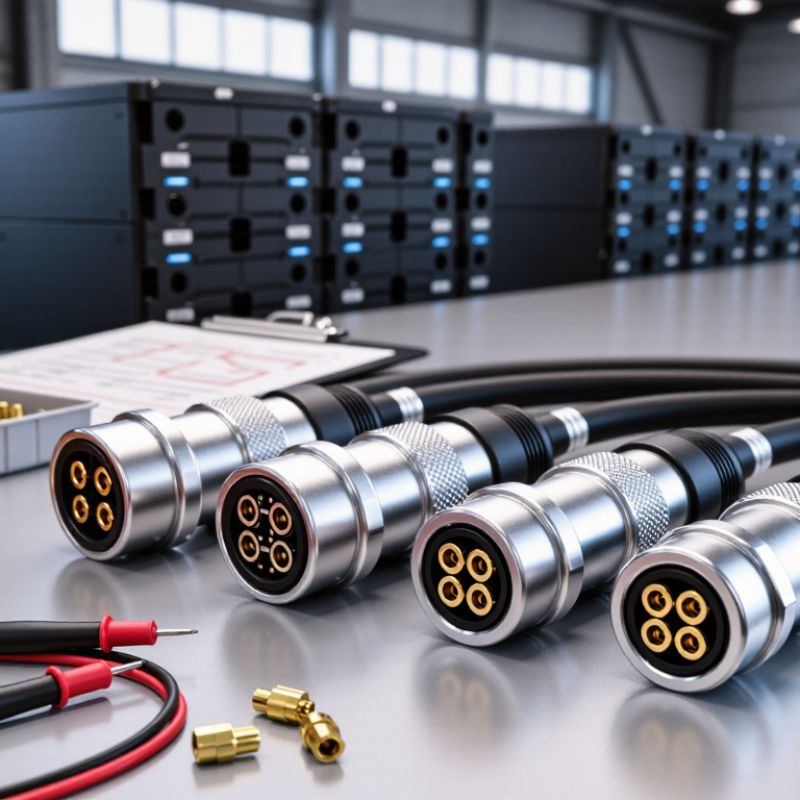
China Best Energy Storage Connector Manufacturers?

Energy Storage Connectors: Definition, Components, and Types

Energy storage connectors carry power between battery modules, racks, inverters, and service equipment. They also help maintain reliable electrical contact as systems charge and discharge. Unlike ordinary low-voltage plugs, many are designed for substantial current, repeated mating, and demanding installation conditions. Ratings vary, so the connector must match the system rather than merely fit the cable.

A typical assembly includes conductive contacts, an insulating housing, cable termination points, and a locking mechanism. Copper-alloy contacts provide the current path, while plating can help limit corrosion and contact resistance. The housing separates live contacts and may include features that guide insertion or prevent accidental release. Seals, touch-safe barriers, and temperature sensors appear in some designs. Details matter. Yet extra features do not replace correct installation or inspection.

Common types include cable-to-cable connectors, module interconnects, and rack-level power connectors. Some use bolted terminals for fixed, high-current connections; others use quick-connect formats for modular equipment and maintenance. Selection depends on rated voltage and current, conductor size, temperature, vibration, and the number of expected connection cycles. A connector may feel secure but still be poorly matched to its cable or operating environment. Check manufacturer specifications and applicable equipment requirements, then verify the completed connection under the intended conditions.

How Connectors Function in Battery Energy Storage Systems

China Best Energy Storage Connector Manufacturers?
How Connectors Function in Battery Energy Storage Systems

In a battery energy storage system, connectors join battery modules, racks, inverters, and other equipment. Their main job is to provide a stable path for electrical current. Some connector designs also support sensing or interlock functions. A secure connection helps limit resistance and unwanted heat. Even a small contact problem can matter when current is high. Details count.

Connector performance depends on more than its rated current. Contact material, insulation, locking design, and cable fit all affect reliable operation. Vibration or repeated connection cycles can loosen a poor fit over time. During system checks, technicians can look for discoloration, cracked housings, or signs of overheating. Follow the equipment maker’s specifications; guessing torque is not a good shortcut.

Tips: Match connectors to the system’s voltage, current, cable size, and environment. Inspect them only under approved isolation procedures. Keep records of unusual heat or wear. Field conditions can be messy, and inspection alone may not reveal every hidden contact issue.

China Best Energy Storage Connector Manufacturers? - How Connectors Function in Battery Energy Storage Systems

Connector or interface Where it is used How it functions Selection considerations Useful checks
Battery-module power connection Between cells, modules, or racks, depending on the system design. Carries DC current between battery sections while maintaining electrical contact and mechanical retention. Match the system voltage, continuous and peak current, conductor size, temperature limits, and connection method. Ratings depend on the specific design. Check contact resistance, temperature rise under load, vibration resistance, polarity protection, and installation access.
Rack-to-busbar connection At the interface between battery racks and a DC busbar or combiner. Combines or distributes DC power through a bolted, lug-based, or plug-in connection designed for the installation. Consider conductor material, terminal geometry, fault-current withstand, insulation, creepage and clearance, and the specified tightening method. Verify the assembly’s current and short-circuit ratings, joint temperature, fastening instructions, and compatibility with the busbar.
High-voltage DC plug-in connector Removable connections in battery cabinets, racks, or power-conversion equipment. Provides a separable power interface; some designs include touch-protection features or mechanical coding. Confirm rated DC voltage and current, mating-cycle life, locking method, cable range, and whether connection or disconnection under load is explicitly permitted. Do not assume a connector is load-break capable. Check its stated operating instructions and ratings before switching or disconnecting.
Control and communications connector Between battery-management electronics, rack controllers, and system-level controls. Carries monitoring, command, interlock, or communications signals rather than the main battery power current. Check pin assignment, signal type, shielding needs, isolation requirements, connector keying, and resistance to electrical noise. Confirm wiring diagrams, continuity, insulation where specified, communication integrity, and separation from power wiring.
Protective-earth and bonding connection Between conductive equipment enclosures, rack frames, and the installation grounding system. Provides a protective bonding path as required by the equipment and installation design. Follow the applicable electrical code and equipment instructions; account for conductor size, corrosion, surface preparation, and mechanical security. Inspect bonding points and verify continuity using the method required by the project or applicable standard.
Sealed enclosure cable-entry interface At cabinet or container penetrations exposed to dust, moisture, or outdoor conditions. Routes a cable through an enclosure while helping maintain the enclosure’s specified ingress protection when correctly selected and installed. Select to suit cable diameter, enclosure material, environmental exposure, and the required IP rating of the complete assembly. IEC 60529 defines IP-code classifications. The rating depends on the assembled enclosure and installation, not just an individual component.
Manufacturer and product evaluation Used when comparing connector suppliers for a battery energy storage project. Assesses whether the proposed connector and its documentation suit the electrical, mechanical, environmental, and service requirements. Compare datasheet ratings, test evidence, traceability, material specifications, production controls, customization capability, and technical support. Review applicable standards for the product and market, such as IEC 61984 where relevant to connector safety, and verify any claimed approvals with the issuing body.

Note: Connector ratings and compliance requirements vary by product, system architecture, installation environment, and target market. Confirm final selection against the project specifications, manufacturer documentation, and applicable local codes.

China’s Energy Storage Connector Manufacturing Landscape

China’s Energy Storage Connector Manufacturing Landscape

China’s energy storage connector sector draws on a wide base of metalworking, polymer molding, plating, and cable-processing suppliers. Manufacturers may produce high-current terminals, insulated housings, and locking parts within one facility, or coordinate several specialist workshops. The difference is visible on the factory floor. Copper contacts need controlled forming and clean surfaces; molded housings need consistent dimensions and firm latch engagement.

Production capacity alone tells little. Buyers should ask how a supplier checks contact resistance, temperature rise, insertion force, and insulation performance. Ask for test records tied to specific production lots, not only a general certificate. Details matter. A connector can look sound yet loosen after repeated handling or heating. Still, test methods and operating conditions vary, so results need context.

The landscape also includes smaller firms with focused processes and larger operations serving multiple applications. That variety can support flexible designs, but it makes comparison difficult. A practical review should examine drawings, material declarations, sample fit, and traceability from incoming metal to finished part. Visit the assembly area if possible. Watch how operators seat contacts and inspect latches. Some suppliers may have strong equipment but limited documentation; others may document well while offering less process depth. Neither point settles the decision. A careful technical review helps reveal the gaps.

China’s Energy Storage Connector Manufacturing Landscape

Common DC system voltage classes that shape connector design requirements

These are representative nominal system voltage classes, not connector ratings or market-share figures. Connector selection depends on the system’s rated voltage and current, as well as safety, thermal, and environmental requirements.

Criteria for Evaluating Chinese Connector Manufacturers

China Best Energy Storage Connector Manufacturers?
Criteria for Evaluating Chinese Connector Manufacturers

Choosing a connector supplier takes more than comparing unit prices. Start with the electrical specification: rated voltage, continuous current, and allowable temperature rise. Ask for test data under conditions close to your battery system. A connector rated for high current may still run hot when cable size, crimp quality, or airflow differs. Request samples and inspect contact surfaces, housing fit, and locking force. Small details matter.

Review material and production controls. Confirm the stated plating, insulation, and flame-resistance properties against documented test reports. Ask how batches are identified and how defects are traced. Check whether the manufacturer can explain its inspection steps, from incoming materials to final continuity testing. A polished brochure is not proof. One awkward question can reveal more than a long presentation.

Tips: Share your cable gauge, operating temperature range, and installation environment before requesting a quotation. Compare test methods, not just headline ratings. Keep one sample for repeat checks; supplier claims may be sound, but verification is still worth the time.

Applications, Safety Standards, and Selection Considerations

Energy storage connectors link battery modules, busbars, inverters, and monitoring equipment. Their needs differ between a ventilated cabinet and a compact outdoor enclosure. Applications vary. A technician may handle connectors during routine module replacement, often in cramped spaces with gloves on. Clear polarity marking and a secure, deliberate mating action can reduce connection errors.

For high-current paths, check rated current, voltage, conductor size, contact resistance, and temperature rise under the expected load. I would leave operating margin; actual installations are rarely as tidy as drawings suggest.

Safety review should include applicable connector, battery, and system standards, plus local installation requirements. UL 1973 or UL 9540 may be relevant to batteries or complete energy storage systems, but they do not automatically certify an individual connector. Verify the exact certification scope, test conditions, and current documentation.

Check touch protection, insulation spacing, ingress protection, locking strength, and resistance to vibration or corrosion. Match the connector to cable gauge and temperature range, then confirm assembly torque and mating-cycle limits.

One trade-off deserves another look: larger contacts may lower resistance, yet add bulk and cost. Test a sample connection under realistic load before final selection.