7 Best Decorative Paper Sheets for Crafts and Packaging?
Decorative Paper Sheets can make a simple gift box, journal cover, or handmade card feel carefully finished. But a beautiful pattern is only part of the decision. Paper weight, texture, flexibility, and print quality all affect how a sheet cuts, folds, and holds adhesive. A glossy finish may suit a bright package, while an uncoated surface can be easier to write on or layer with other materials.
Small details matter. This guide looks at seven options for crafts and packaging, with attention to practical uses rather than appearance alone. Consider whether a sheet creases cleanly, resists tearing during assembly, and fits the size of your project. For wrapping, check how the design looks across a folded edge; for scrapbooking, consider whether the paper feels too bulky beside photos. Not every sheet works. A delicate paper may look lovely but wrinkle under wet glue, and colors can appear different under indoor light. Test a sample first.
The best choice depends on your tools, budget, and intended finish. Product descriptions can help, but they rarely show exactly how a paper behaves in your hands. Use the comparisons as a starting point, then check dimensions, finish, and care notes before buying. A small amount of trial and error is normal—and sometimes a paper that seems imperfect becomes the most interesting part of the project.
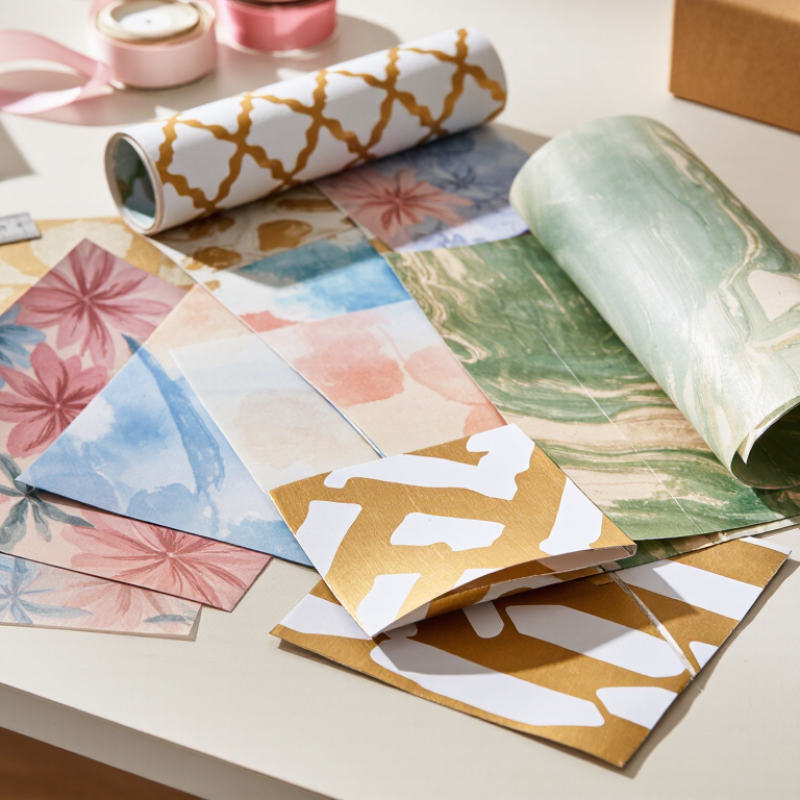
Decorative Paper Sheets: Materials, Finishes, and Key Features
Decorative paper sheets differ in fiber, weight, surface, and finish. Wood-pulp sheets are versatile; cotton or recycled fibers can add a softer feel and visible texture. Feel the grain. A lightly textured sheet suits gift tags, while smooth stock keeps printed labels crisp. Paper weight matters too: thin sheets fold easily, but heavier stock holds a box sleeve’s shape better.
Uncoated paper absorbs ink readily and feels natural. Coated sheets produce sharper colors, though they may feel slippery. Embossing adds raised patterns that catch light; metallic or laminated finishes create shine but can complicate recycling. Check the product’s material details before choosing. A glossy finish can look refined, yet fingerprints and fold marks show quickly. Test a small sample first.
Recycling figures offer useful context, not a guarantee for every decorative sheet. Eurostat reported that 83.2% of paper and cardboard packaging waste was recycled in the EU in 2022. The American Forest & Paper Association estimated a 65–69% U.S. paper recycling rate for 2023. These figures cover broader paper categories, not every coated craft paper. For packaging, favor unlaminated sheets when practical, and confirm local collection guidance; coatings and mixed materials can affect acceptance.
7 Best Decorative Paper Sheets for Crafts and Packaging
Decorative Paper Sheets: Materials, Finishes, and Key Features
The chart compares indicative paper weights in grams per square meter (gsm). The values are representative points within commonly encountered ranges; actual weights vary by product. Higher gsm generally means a heavier, stiffer sheet, while finish and fiber also affect how a paper feels and performs.
Seven Decorative Paper Types for Crafts and Packaging
Materials & texture
Decorative paper is not merely a surface; its weight, grain, and finish affect how a project folds and holds together. Seven useful types cover many craft and packaging needs: tissue paper softens gift wrapping, kraft paper suits sturdy sleeves, rice paper adds a light, fibrous texture, and crepe paper forms flexible decorations. Handmade paper brings visible fibers and uneven edges. Metallic paper catches light, while printed paper adds pattern without extra embellishment. Small details matter.
Choosing paper for packaging
For packaging, match the sheet to the job. Kraft paper handles simple wraps, while tissue protects delicate items inside a box. Metallic coatings can complicate recycling, so check local collection guidance rather than assuming a sheet is recyclable.
Eurostat’s 2022 packaging-waste statistics report that about 83% of paper and cardboard packaging was recycled in the EU. That figure concerns packaging, not every decorative sheet. The distinction is easy to overlook.
Scale & practical tips
Scale also matters: FAO’s Global Forest Products Facts and Figures 2022 reports roughly 401 million tonnes of paper and paperboard production worldwide that year. This broad category includes far more than craft paper, but it shows why material choices deserve attention. For a handmade card, test a small cut before committing; textured sheets may tear along the grain. For a gift box, fold a sample first. A beautiful finish can still crack at the crease.
How to Choose Paper by Weight, Texture, and Intended Use
Decorative paper can make a simple card, gift wrap, or small package feel considered. Choose weight according to what the sheet must do. Lightweight paper folds easily and suits liners or layered details, but may tear around sharp corners. A heavier sheet holds its shape better for tags and covers. Check the stated weight, often shown in gsm, and test a small fold before cutting a full sheet. Numbers alone can mislead because coatings and fibers affect stiffness.
Texture matters as much as weight. Smooth sheets take pencil marks and printed details more evenly, while embossed or fibrous surfaces add visible character. That texture can also make tape or glue less reliable. For packaging, gently flex the paper around a sample box and check whether the creases crack. For craft projects, consider whether scissors, markers, or adhesive leave clean results. A beautiful surface is not always the easiest one to work with.
Tips: Keep a scrap for testing ink and glue. Store sheets flat and dry. If a fold looks rough, score it lightly with a blunt tool before bending. I still find that one test piece can save a whole afternoon—and sometimes the first choice needs rethinking.
Ways to Cut, Fold, and Attach Decorative Paper
Decorative paper can make a plain parcel feel personal, but its finish affects every cut and fold. Glossy sheets may slide under scissors; textured stock can catch and tear. Test a scrap. That little check often saves a clean edge.
For straight cuts, mark the back lightly with a pencil and use a ruler as a guide. Keep the blade steady, and turn the sheet rather than twisting your wrist around a corner. Small curves need patience. Score folds gently with a blunt tool before creasing. Press from the center outward with a bone folder or the back of a spoon. Heavy pressure can crack printed coatings, even when the paper looks sturdy. I learned this the annoying way.
To attach paper to boxes or cards, apply a thin layer of paper glue or use double-sided tape. Spread adhesive close to the edges, then smooth the sheet with a clean cloth to push out air. Let glue dry under a flat book, if the paper allows it. Too much moisture can wrinkle lightweight sheets. For a quick package, tuck a narrow strip beneath the wrap and secure its ends inside.
How to Store and Handle Decorative Paper Sheets
Decorative paper sheets can crease before a craft project even begins. Store them flat in a shallow drawer or portfolio, with a clean, smooth board beneath the stack. Keep them away from direct sunlight, radiators, and damp rooms. Heat can curl delicate edges, while moisture may cause rippling or discoloration. If you must roll a large sheet, roll it loosely around a wide tube, with the printed side facing outward when the paper allows. Tight rolls can leave stubborn bends.
Tips: Keep it flat. Slide tissue between textured or foil-finished sheets to reduce rubbing. Label the stack by size or pattern, and lift sheets with clean, dry hands. Avoid pressing heavy tools onto the pile. A small storage mistake is easy to miss; I would check the bottom sheets now and then, since early waviness can hide beneath the top layer.
When cutting, use a clean work surface and support the full sheet. Turn pages slowly rather than pulling a corner, especially with thin or handmade paper. Let cold paper adjust to room temperature before unfolding it; sudden changes may encourage curling. Some sheets still develop a slight wave, despite careful storage. Test a small offcut before committing to a detailed fold or glued finish.