


China Best Suction And Discharge Hose Suppliers?
Choosing the China Best Suction And Discharge Hose Suppliers? That question deserves more than a low-price comparison. A reliable supplier must understand the fluid, temperature, pressure, vacuum level, bend radius, and working environment before recommending any hose.
A practical hose-selection principle is often stated by industrial hose specialist John M. Harkness: “The hose must be selected for the application, not simply for its appearance.” This point remains easy to overlook. A thick, polished hose may still fail when chemicals, abrasion, or repeated flexing exceed its design limits.
This guide examines manufacturers that supply Suction And Discharge Hose for water, oil, chemicals, food processing, mining, and general industrial transfer. It considers construction materials, reinforcement, coupling quality, pressure testing, traceability, and technical support. Certifications also matter, but only when they match the intended service. ISO 9001 may indicate controlled production, while standards such as EN 12115 or relevant food-contact requirements may apply to specific uses.
Real selection work is less tidy than a supplier ranking. A factory can offer excellent rubber compounds yet provide weak documentation. Another may quote higher prices but deliver clearer test reports and better after-sales support. That difference becomes visible beside a vibrating pump, a hot loading line, or a hose dragging across concrete.
There is no perfect supplier for every project. That is the uncomfortable part. Buyers should request samples, inspect markings, verify pressure data, and discuss actual operating conditions. The best choice is usually the supplier that asks difficult questions before accepting the purchase order.
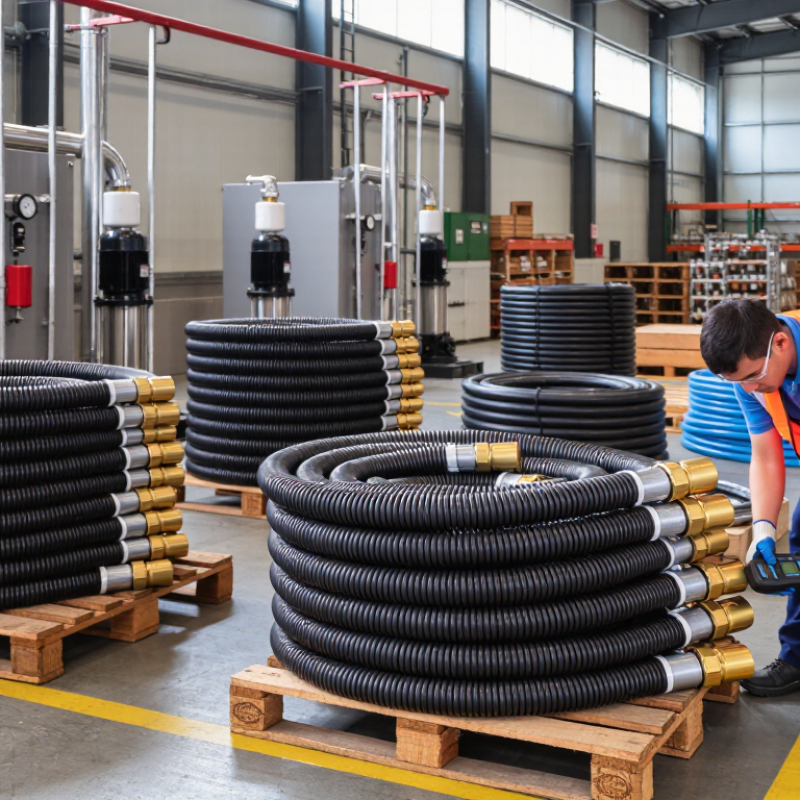
Classify China’s Suction and Discharge Hose Suppliers by Application
China Best Suction And Discharge Hose Suppliers?
Classify China’s Suction and Discharge Hose Suppliers by Application
China’s suction and discharge hose suppliers are best evaluated by application, not catalog size. A hose for water transfer may fail quickly in abrasive slurry service. Experienced buyers check pressure, temperature, media, bend radius, and working environment before requesting quotations.
Agricultural suppliers commonly produce lightweight PVC or thermoplastic hoses for irrigation and fertilizer transfer. Their products need smooth flow, sunlight resistance, and flexible handling around pumps. Industrial suppliers focus on reinforced rubber, PVC, or composite designs for air, water, chemicals, and oils. Ask for material compatibility data. Do not rely on color alone.
Construction and mining suppliers usually serve dewatering, concrete handling, and slurry transfer. These hoses require abrasion-resistant tubes, strong covers, and stable couplings. Marine suppliers emphasize floating layouts, saltwater resistance, and controlled discharge pressure. Food-processing suppliers must provide smooth inner surfaces and traceable materials. Cleanability matters there.
A reliable supplier should explain test methods, not only send a polished datasheet. Request samples, batch records, pressure-test results, and coupling inspection details. Confirm whether stated pressure means working pressure or burst pressure. This distinction is easy to miss. Factory audits can reveal uneven curing, poor storage, or inconsistent crimping. Still, one audit cannot prove every batch is perfect. Field trials remain valuable when hoses face sharp bends, vibration, or cold starts.
China Best Suction And Discharge Hose Suppliers? - Classify China’s Suction and Discharge Hose Suppliers by Application
| Application Category | Typical Conveyed Media | Recommended Hose Construction | Typical Size Range | Typical Working Pressure | Temperature Considerations | Relevant Standards or Requirements | Key Supplier Evaluation Points |
|---|---|---|---|---|---|---|---|
| Water Intake, Irrigation and Drainage | Fresh water, irrigation water, wastewater and non-aggressive liquids | Soft-wall PVC or rubber hose with spiral reinforcement; abrasion-resistant cover for construction sites | 25–300 mm inside diameter | Usually 3–10 bar, depending on diameter and reinforcement | Commonly approximately −20°C to +60°C; confirm the compound and service conditions | Product-specific pressure, vacuum and dimensional testing; drinking-water approval where potable water is involved | Vacuum resistance, kink resistance, lay-flat performance, coupling quality and abrasion resistance |
| Petroleum Transfer and Fuel Delivery | Diesel, gasoline, lubricating oils and selected petroleum-based products | Oil-resistant synthetic rubber tube with textile or steel-wire reinforcement and static-dissipative cover | 25–250 mm inside diameter | Typically 10–20 bar; suction service requires a rated vacuum specification | Often approximately −30°C to +80°C; fuel type and aromatic content affect compatibility | EN 1765 for rubber hose assemblies for oil suction and discharge; static-control and fire-safety requirements may apply | Electrical continuity, fuel compatibility, bend radius, vacuum rating, hydrostatic testing and assembly traceability |
| Chemical Transfer | Acids, alkalis, solvents, alcohols and other industrial chemicals | Chemical-resistant EPDM, UPE, PTFE-lined or other application-specific rubber construction with suitable reinforcement | 19–250 mm inside diameter | Commonly 10–16 bar; actual rating depends on chemical, temperature and hose design | Typical ranges are approximately −30°C to +100°C, with PTFE designs supporting higher temperatures in some applications | EN 12115 for rubber and thermoplastics hoses for liquid or gaseous chemicals; chemical compatibility data is essential | Liner compatibility, permeation resistance, electrical properties, vacuum performance, batch testing and material declarations |
| Food, Beverage and Sanitary Processing | Water, milk, juice, edible oils, wine, beer and liquid food ingredients | Smooth, non-toxic EPDM, silicone or thermoplastic elastomer tube with hygienic, easy-to-clean reinforcement | 19–150 mm inside diameter | Usually 6–16 bar, subject to temperature, cleaning cycle and connection design | Approximately −30°C to +120°C; steam-cleaning capability must be specifically verified | Food-contact regulations such as FDA or EU requirements; hygienic design and cleaning validation may also be required | Smooth bore, low extractables, odor and taste neutrality, sanitary fittings, cleaning-in-place capability and documentation |
| Marine, Dockside and Ship-to-Shore Transfer | Seawater, ballast water, fuel, chemicals and other marine-service liquids | Heavy-duty rubber hose with textile or wire reinforcement, weather-resistant cover and corrosion-resistant end connections | 50–600 mm inside diameter | Typically 10–20 bar for liquid transfer; special marine systems may require higher ratings | Commonly approximately −30°C to +80°C; ozone, saltwater and sunlight resistance are important | Marine classification, port regulations, EN 1765 for oil service where applicable, and project-specific inspection requirements | Flotation or buoyancy options, surge resistance, bend radius, end termination, inspection records and field-repair support |
| Mining, Quarrying and Slurry Handling | Water with sand, mineral slurry, tailings and abrasive solids | Thick abrasion-resistant rubber tube with heavy textile or steel reinforcement and reinforced end areas | 38–600 mm inside diameter | Usually 10–25 bar, depending on diameter, reinforcement and slurry density | Commonly approximately −30°C to +80°C; high-temperature slurry requires a dedicated compound | Application-specific abrasion, pressure, vacuum and impulse tests; mining-site safety requirements may apply | Tube abrasion index, minimum bend radius, weight, wear indicators, coupling retention and replacement availability |
| Construction, Concrete and Cement | Concrete, cement slurry, grout, aggregate and dry cement powder | Heavy-duty wear-resistant rubber or thermoplastic hose; anti-static construction for pneumatic powder conveying | 25–125 mm inside diameter | Typically 40–85 bar for concrete placement; lower ratings apply to many slurry and suction hoses | Usually approximately −30°C to +80°C; concrete temperature and curing conditions must be considered | Concrete delivery and pneumatic conveying requirements; pressure testing and safety procedures for assemblies | Burst-pressure margin, coupling safety, anti-whip restraints, abrasion resistance, flexibility and routine inspection guidance |
| Industrial Air, Dust and Powder Conveying | Compressed air, dust, powders, pellets and granular materials | Abrasion-resistant thermoplastic or rubber tube with anti-static or electrically conductive construction when required | 19–150 mm inside diameter | Approximately 6–20 bar for common industrial service; pneumatic conveying pressure depends on the system | Typically approximately −30°C to +80°C; hot-air applications require heat-rated materials | Electrical continuity or resistance testing where static control is required; application-specific pressure and abrasion testing | Static dissipation, tube wear, airflow efficiency, cleanability, crush resistance and suitability for explosive-dust environments |
| Aircraft Refueling and Aviation Ground Support | Aviation turbine fuel and approved aviation-service fluids | Fuel-resistant, low-permeation rubber hose with static-control properties and aviation-approved couplings | 25–100 mm inside diameter | Commonly 10–20 bar, subject to the refueling system and applicable aviation specification | Often approximately −30°C to +70°C; fuel compatibility and low-temperature flexibility are critical | EN ISO 1825 and applicable aviation-fueling specifications; electrical bonding and cleanliness requirements are important | Fuel cleanliness, electrical continuity, dimensional stability, kink resistance, inspection interval and complete traceability |
| Firefighting and Emergency Water Supply | Fresh water, seawater and fire-suppression solutions where chemically compatible | Flexible rubber or thermoplastic hose with abrasion-resistant cover, high-strength reinforcement and secure couplings | 25–300 mm inside diameter | Approximately 10–40 bar for many systems; confirm the required service and burst ratings | Typically approximately −20°C to +60°C; flame-resistant or heat-resistant options may be required | Applicable fire-service, hose-assembly, pressure-testing and local regulatory requirements | Rapid deployment, coupling security, abrasion resistance, pressure retention, storage life and inspection procedures |
| Hot Water, Steam and Temperature-Intensive Service | Hot water, saturated steam, cleaning solutions and selected thermal fluids | Heat-resistant EPDM or specialty rubber with steam-rated reinforcement and cover | 19–100 mm inside diameter | Commonly 6–18 bar; steam pressure and temperature must be evaluated together | Hot-water service may reach approximately +120°C; saturated-steam ratings can be lower or higher depending on design | Manufacturer steam-service rating, pressure-temperature testing and application-specific safety requirements | Steam rating, cover heat resistance, ozone resistance, bend radius, coupling compatibility and replacement intervals |
Note: Pressure, temperature, diameter and standards shown are typical selection ranges rather than universal limits. Final hose selection should be confirmed against the conveyed medium, concentration, temperature, vacuum level, pressure surges, connection type and applicable local regulations.